Clear corrugated roofing is the wavy, see-through panel you've probably spotted on a greenhouse, carport, or patio cover, and it's the fastest way to add daylight to a structure without framing in a full skylight. This guide breaks down the materials, real price ranges, and installation details that actually determine whether these panels last or fail early. We'll also flag the mistakes our crews get called out to fix most often.
What Is Clear Corrugated Roofing?
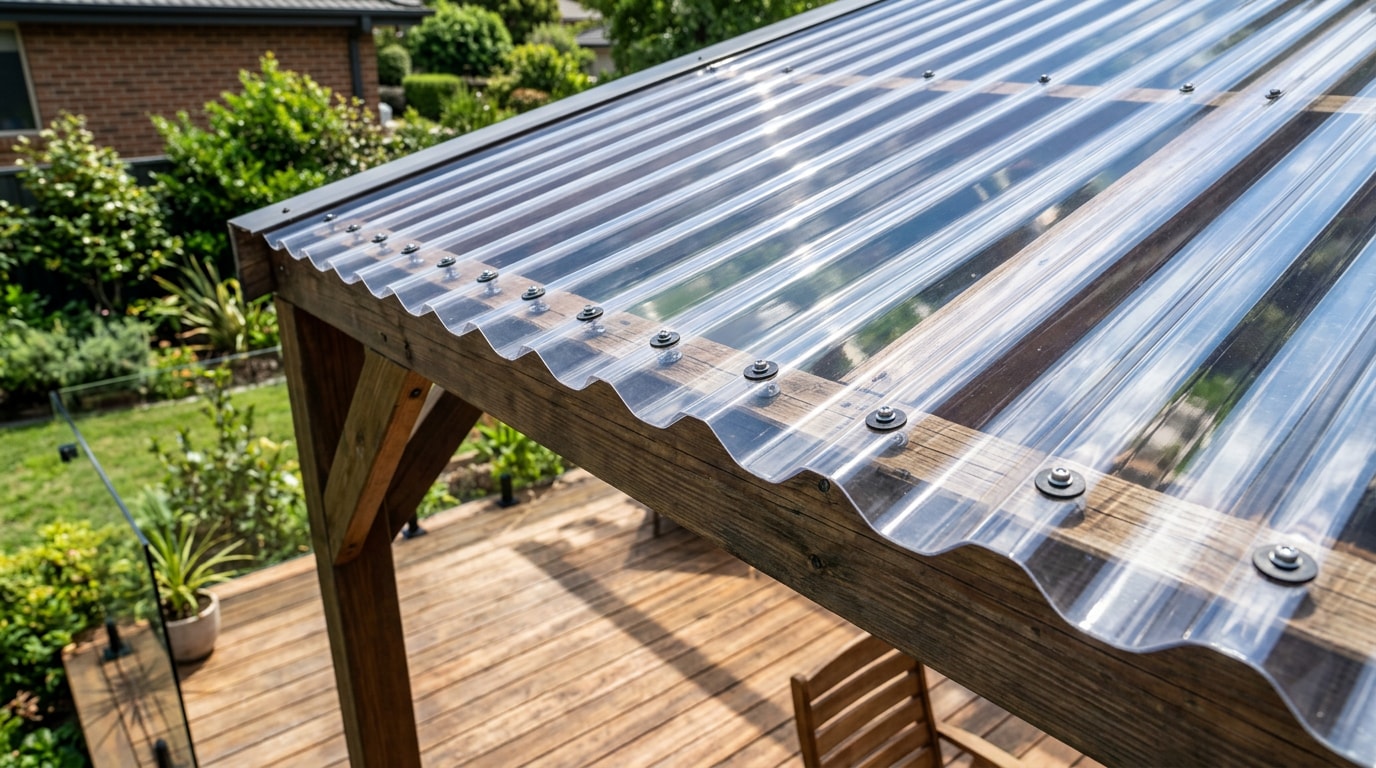
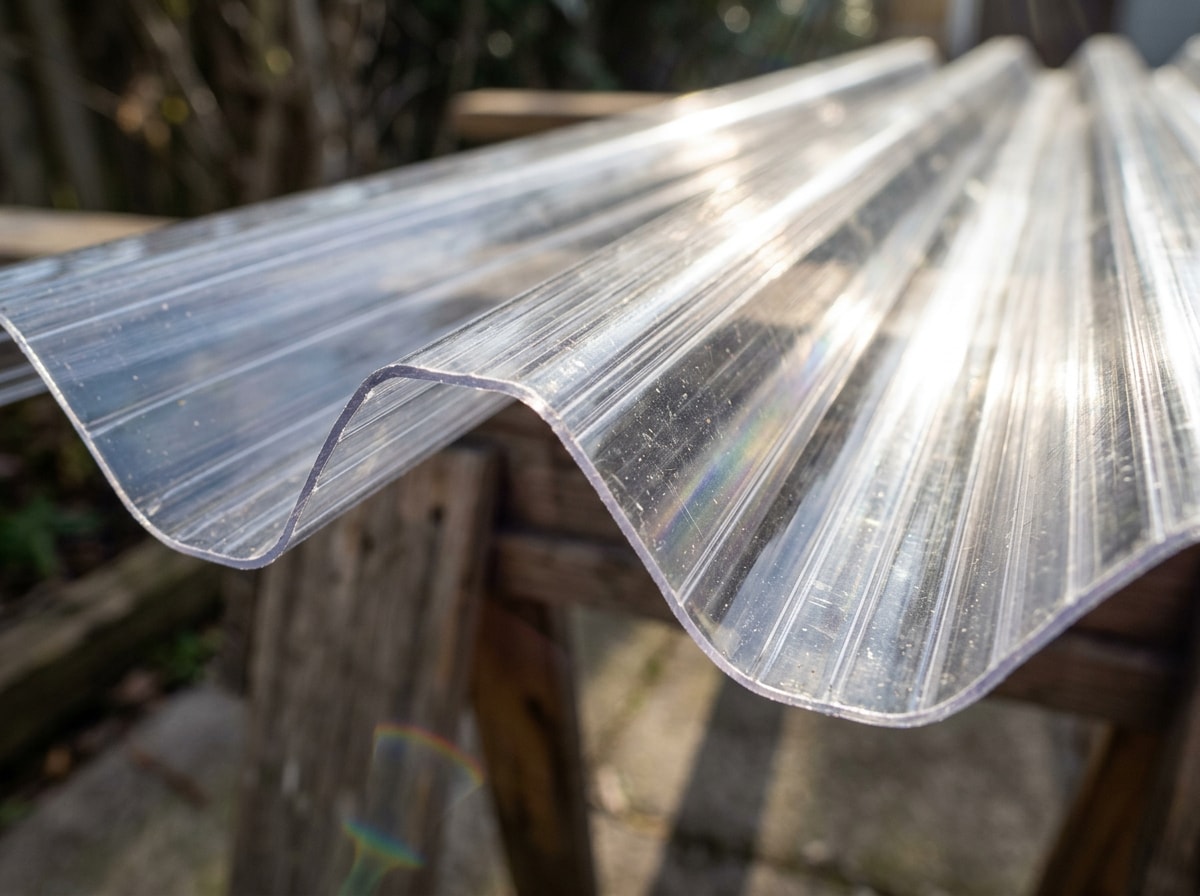
Clear corrugated roofing is a transparent or translucent panel, usually polycarbonate, PVC, or fiberglass-reinforced plastic (FRP), formed into a ridge-and-valley wave profile.
That wave does three jobs at once. It adds stiffness so the sheet can span gaps without heavy framing. It channels rainwater off the surface. And it lets daylight pass straight through.
"Clear" and "translucent" aren't interchangeable. Fully clear panels transmit light almost like glass. Tinted or frosted versions diffuse it, cutting glare and heat while still brightening the space underneath. Light transmission is the whole reason people pick these panels over a solid roof in the first place.
Polycarbonate is the default choice for most buyers because it balances clarity, flexibility, and impact strength better than the alternatives. PVC and FRP each have narrower use cases, covered below.
Polycarbonate vs. PVC vs. Fiberglass: Which Wins?
Material choice drives cost, appearance, and how the roof performs years down the road. Here's how the three options actually compare.
| Material | Clarity & Light | Impact Resistance | Typical Lifespan | Best For |
|---|---|---|---|---|
| Polycarbonate | Highest, stays clear longest with a quality UV coating | Flexes rather than shatters; strong against hail | 10-20+ years with good UV protection | Carports, greenhouses, hail-prone regions |
| PVC | Decent, but softer and more prone to fading | Lower; cracks are more likely under impact | 5-10 years | Budget DIY covers, lean-tos, short-term projects |
| Fiberglass (FRP) | Good initially, dulls as fibers "bloom" to the surface | Rigid, scratch-resistant | 10-15 years | Storage sheds, barns, utility structures |
Polycarbonate flexes rather than shatters under hail or debris strikes, and it tends to hold its clarity longest when the UV coating is genuine rather than a thin surface treatment. FRP is stiffer and more scratch-resistant, but it's prone to fiber "blooming" as it weathers, which gradually dulls the surface and cuts light transmission. PVC undercuts both on price but flexes and discolors faster, which is why corrugated PVC panels aren't typically paired well with asphalt-based roofing products without a separator sheet, and why they tend to show their age sooner than polycarbonate.
So which one actually wins for a given project? For greenhouses, where consistent clarity matters most, polycarbonate is the stronger pick. For carports and anything in a hail-prone region, polycarbonate's flex-not-crack behavior gives it a real edge. FRP tends to make more sense for a shed or barn roof, where scratch resistance and lower cost matter more than optical clarity ten years out.
What Does Clear Corrugated Roofing Cost?
Pricing varies by material, thickness, and panel size, but here's what buyers were seeing at major building-supply retailers heading into 2026:
| Panel Type | Common Sheet Size | Typical Price (per panel) | Best For |
|---|---|---|---|
| Corrugated PVC | 2.2 ft x 8 ft | Lowest-cost clear option on the market | Short-term DIY covers, lean-tos |
| Corrugated Polycarbonate (standard) | 2.2 ft x 8 ft | Roughly $29 | Patios, carports, pergolas |
| Corrugated Polycarbonate (heavy-duty, wide-span) | 26.9 in x 118 in | Roughly $80 | Wide spans, skylight strips, hail-prone areas |
These are per-panel retail prices, not installed costs. Once you add fasteners with sealing washers, closure strips, flashing, and labor, a full patio cover or carport roof typically runs well beyond the sum of the panels alone. Getting an accurate number for your specific structure is faster with a roof inspection than with a per-sheet calculator, since span, pitch, and local wind or snow load all change the materials list.
Common Uses for Clear Corrugated Roofing
Clear corrugated panels show up in a wide range of settings once you understand why they perform well:
- Greenhouses and agricultural buildings, where consistent, even light is essential for plant growth
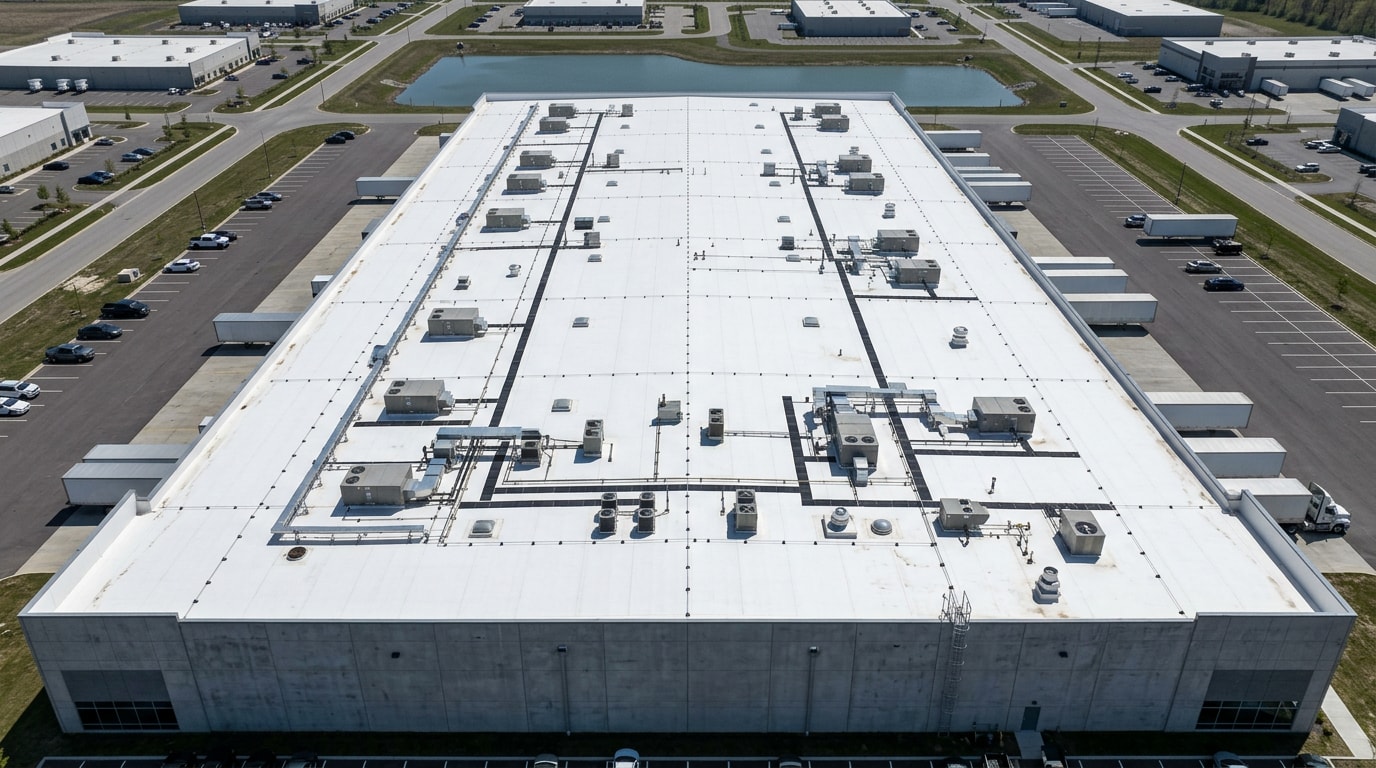
- Industrial and commercial skylights, brightening warehouse or workshop interiors without extra wiring
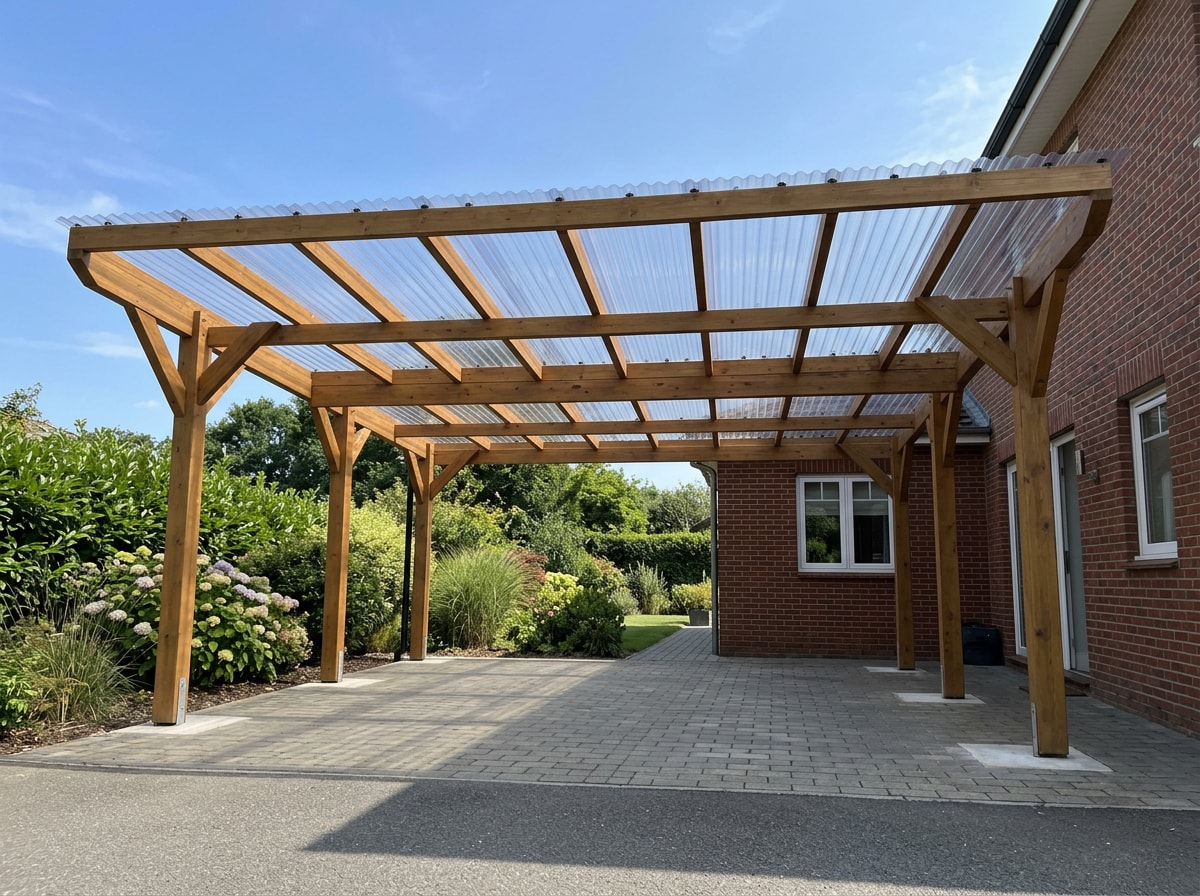
- Pergolas, patio covers, and walkways, shedding rain while still letting sunlight through
- Carports, combining weather protection with an open, daylit feel
- Daylighting strips mixed into standard metal or shingle roofs on barns and workshops
The energy angle is real, not just a marketing line. The U.S. Department of Energy notes that strategically placed daylighting can lower the need for artificial lighting and help manage heating and cooling loads in a building, which is worth factoring in if you're daylighting a commercial space rather than just a backyard patio.
Pros and Cons of Clear Corrugated Roofing
Pros:
- Brightens a space without electrical lighting
- Lighter than glass, with far better impact resistance
- Less structural support needed underneath, which can lower framing costs
- Easy to cut and shape on-site with common tools
- Sheds rain effectively when installed at the correct pitch
Cons:
- Single-layer panels provide limited insulation and can let in significant solar heat
- Lower-grade or uncoated sheets yellow and weaken faster than advertised
- Mismatched corrugation profiles between brands create leak-prone gaps
- Not usually code-compliant as the sole roofing material over a habitable, conditioned room
- Noisier in rain and hail than a solid roof deck
How to Choose the Right Panel
A few practical factors determine whether a panel performs well once it's actually installed, beyond just picking a material.
Match the panel to the application. Define the project first: roof dimensions, wind or snow exposure, how much light you want, and whether the space below is conditioned. A greenhouse wants maximum light; a workshop skylight strip might want less glare and more diffusion.
Check thickness against load. Panels generally run 0.6mm to 2.0mm thick. Heavier snow or hail areas call for panels around 1.0mm or thicker rather than the thinner, light-duty grades. If you're in a Front Range county with real winter snow load, like Jefferson County or Douglas County, don't default to the cheapest sheet in the rack.
Confirm the corrugation profile matches. Corrugation pitch needs to match the existing roofing or framing it's paired with. Mismatched profiles create gaps that leak, and panels from different manufacturers don't always align even when they look similar.
Ask about the UV warranty. A minimum 10-year warranty against yellowing is a reasonable baseline to look for. Light transmission and haze claims on spec sheets are typically tested against ASTM's standard method for transparent plastics, so it's a fair question to ask a supplier which standard they tested to before you take a "88% clear" claim at face value.
Check local code before assuming a basic panel will pass. A single-layer corrugated panel may not meet energy, condensation, or fire requirements for a habitable room addition. Span and support-spacing requirements for roof structures are addressed in the International Building Code's structural design provisions, and local jurisdictions often layer their own snow-load amendments on top of that baseline. If you're unsure whether your project needs a permit, a quick call during a roof inspection is cheaper than redoing the work.
Installation and Performance Guidelines
Getting installation right affects performance as much as the panel choice itself. A few details consistently separate a roof that lasts from one that leaks within a year.
- Minimum roof pitch: at least 10%, or roughly 5.7 degrees, so water drains instead of pooling
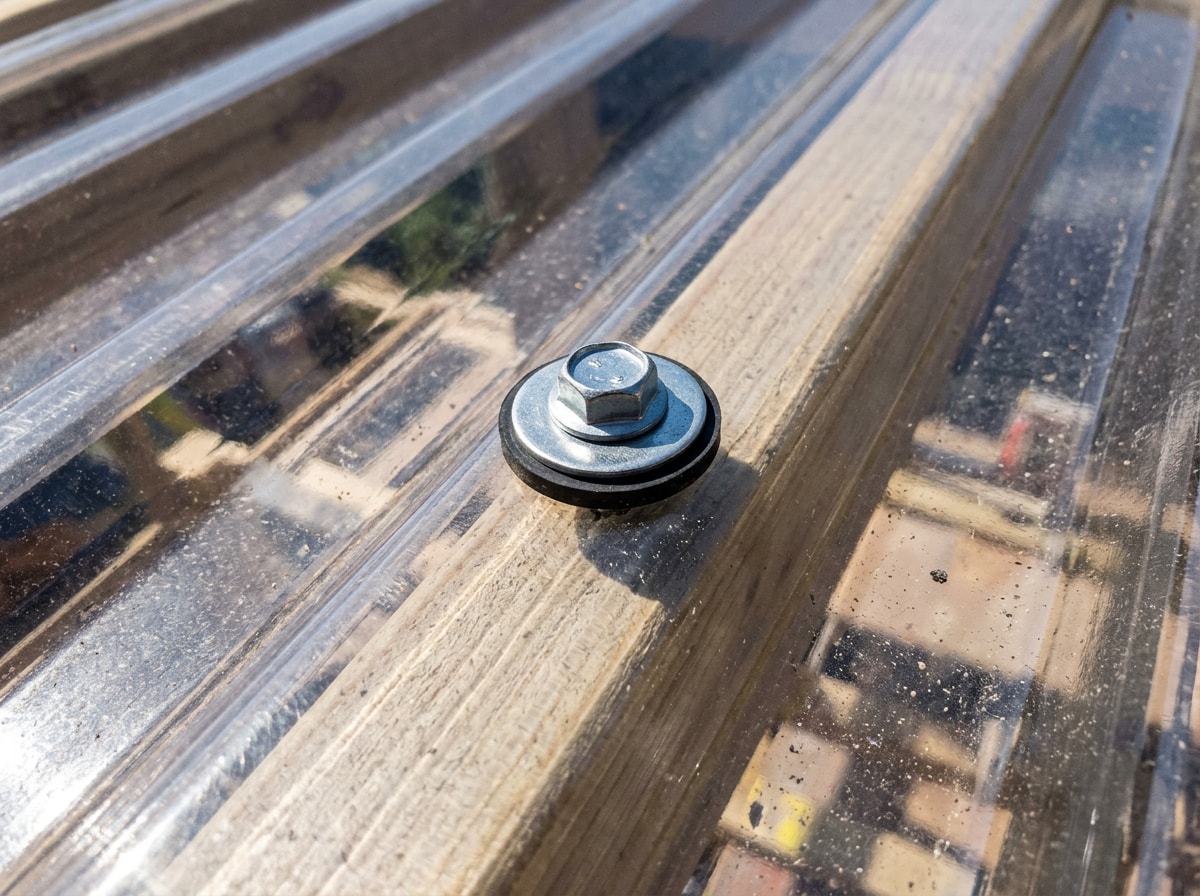
- Fastening point: always at the crest of the corrugation, never the valley, using fasteners rated for polycarbonate with sealing washers
- Thermal expansion: polycarbonate expands and contracts more than metal, so fastener holes need clearance rather than a tight drill fit
- UV orientation: the UV-protected side must face the sun; installing a panel upside down exposes the untreated side and shortens its life significantly
- Overlap: at least one full corrugation, more in exposed or windy locations
- Cleaning: mild soap and water only, no abrasive tools or harsh chemicals that can strip the UV coating
Across the patios, carports, and workshop roofs our crews service around Littleton, Highlands Ranch, and Castle Rock, the single most common callback on clear corrugated panels isn't a bad sheet. It's a missed install detail, usually under-driven fasteners that let a panel work loose in wind, or a panel installed UV-side down that clouded over in a single Colorado summer. Neither mistake shows up on day one, which is exactly why they're easy to overlook during a DIY install.
One more safety note: never walk directly on corrugated panels during installation. They flex and can crack under body weight. Use crawl boards or ladders supported on the underlying framing instead.
If you're weighing clear corrugated panels against a full roof replacement for a larger structure, or you just want a second opinion before you buy a stack of sheets, Crestline Exteriors can walk the project with you. For a deeper look at polycarbonate specifically, including multiwall options for better insulation, see our full polycarbonate roofing sheets guide.
FAQ
How much does clear corrugated roofing cost?
Standard corrugated polycarbonate panels typically run around $29 for a common 2.2-by-8-foot sheet at major retailers, with heavier-duty, wider panels running closer to $80 each. Corrugated PVC is usually the cheapest clear option, while fiberglass falls in between depending on gauge. Installed cost is higher once you add fasteners, flashing, and labor.
Will clear corrugated sheets turn yellow or brittle over time?
Quality panels with a genuine UV coating resist yellowing far better than uncoated or budget sheets. Installing the panel UV-side up and cleaning it with mild soap rather than harsh chemicals helps preserve clarity for years instead of months.
Can I walk on clear corrugated roofing during installation?
No. The panels can flex, crack, or fail unexpectedly under body weight. Use crawl boards or a ladder supported on the underlying roof framework instead of stepping directly on the sheets.
What is the strongest clear corrugated roofing material?
Generally, the thickest polycarbonate sheets with full UV protection on both faces hold up best against hail, wind-blown debris, and long-term yellowing. Thinner single-wall PVC and lower-grade polycarbonate are the easiest to damage.
Can clear corrugated roofing be used on a house roof?
Rarely as the sole material over a conditioned, habitable space. A single-layer panel usually can't meet energy, condensation, or fire requirements for living space, and local building departments typically require a code review before approving it. It works well as a daylighting strip within a larger roof assembly or over an unconditioned structure like a carport or patio.
How much overlap do the panels need?
At least one full corrugation on the sides, with more overlap in windy or exposed locations. Mismatched profiles between different manufacturers' panels create gaps that leak, so stick to one product line for an entire roof section.
Can clear corrugated sheets be cut to size on-site?
Yes. A fine-tooth circular saw or jigsaw works well. Slow, steady cuts with proper blade support help avoid cracking along the cut edge.
Is clear corrugated roofing noisy in the rain?
Yes, more than a solid roof deck, since there's no underlayment or deck to absorb the sound. This is usually a non-issue over a patio or carport but worth considering for a workshop or living space.