Roofing commercial buildings means choosing from flat membrane systems, metal panels, or built-up assemblies, not the asphalt shingles found on a typical house. Material, cost, and lifespan vary widely by system, and the wrong choice can mean a tear-off decades before it's actually needed. This guide breaks down the five major commercial roof systems, what they cost per square foot, and the factors that should decide which one goes on your building.
What Is Commercial Roofing?
Commercial roofing covers the materials, systems, and installation methods used on non-residential buildings. Offices, warehouses, retail centers, multi-family complexes, schools, and industrial facilities all fall into this category. Because these buildings are usually built with flat or low-slope rooflines instead of steep pitches, they need specialized membrane and metal systems rather than standard asphalt shingles.
The work looks different on the ground, too. Large flat roofs, rooftop HVAC units, drains, and parapet walls add complexity that residential crews rarely handle. Commercial jobs also call for different equipment and OSHA-regulated safety protocols, covered in more detail below.
Property owners weighing their options can start with Crestline Exteriors' commercial roofing services to see what a typical project involves.
Types of Commercial Roofing Systems
Five system families cover nearly every commercial roof installed today: single-ply membranes, modified bitumen, built-up roofing, metal, and asphalt shingles on steep-slope sections. The right pick for roofing commercial properties depends on roof slope, budget, and how the building underneath is actually used.
Single-Ply Roofing Systems (TPO, PVC & EPDM)
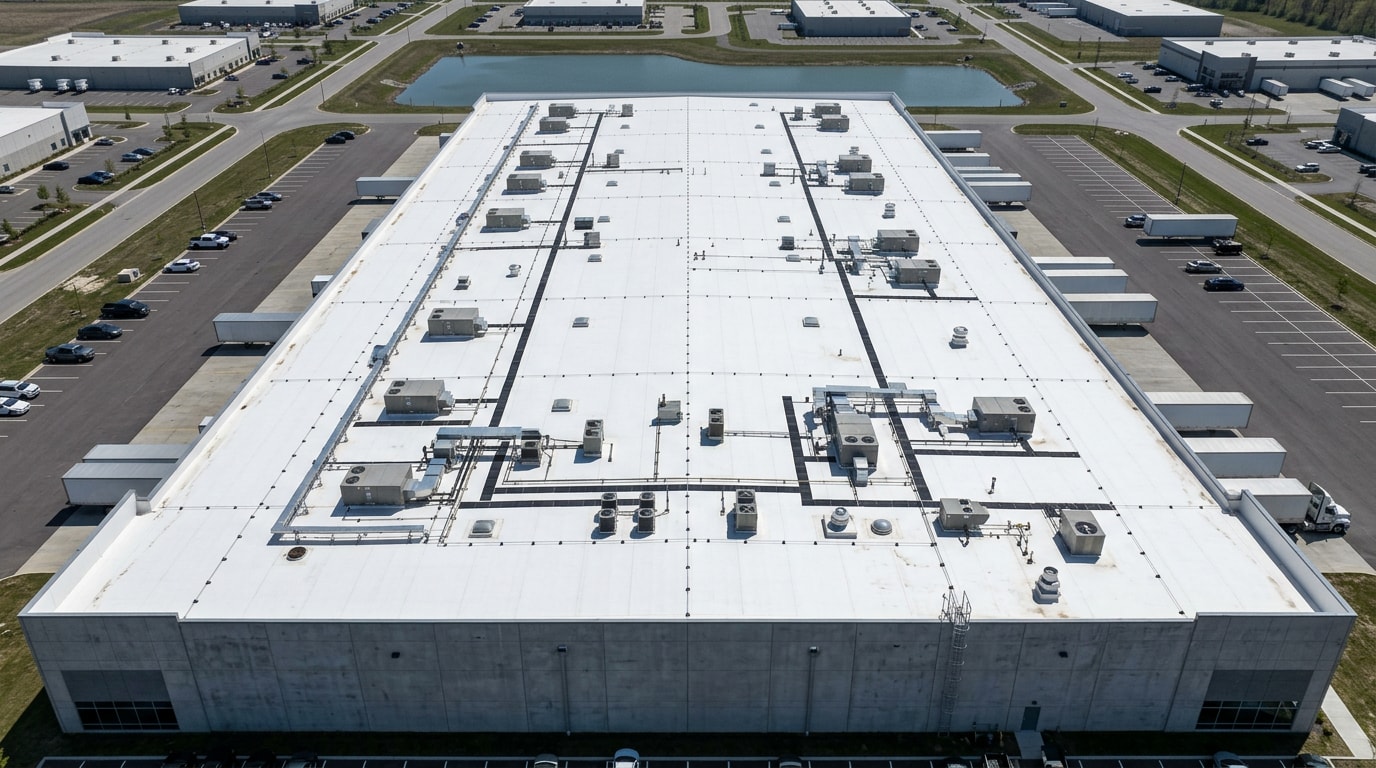
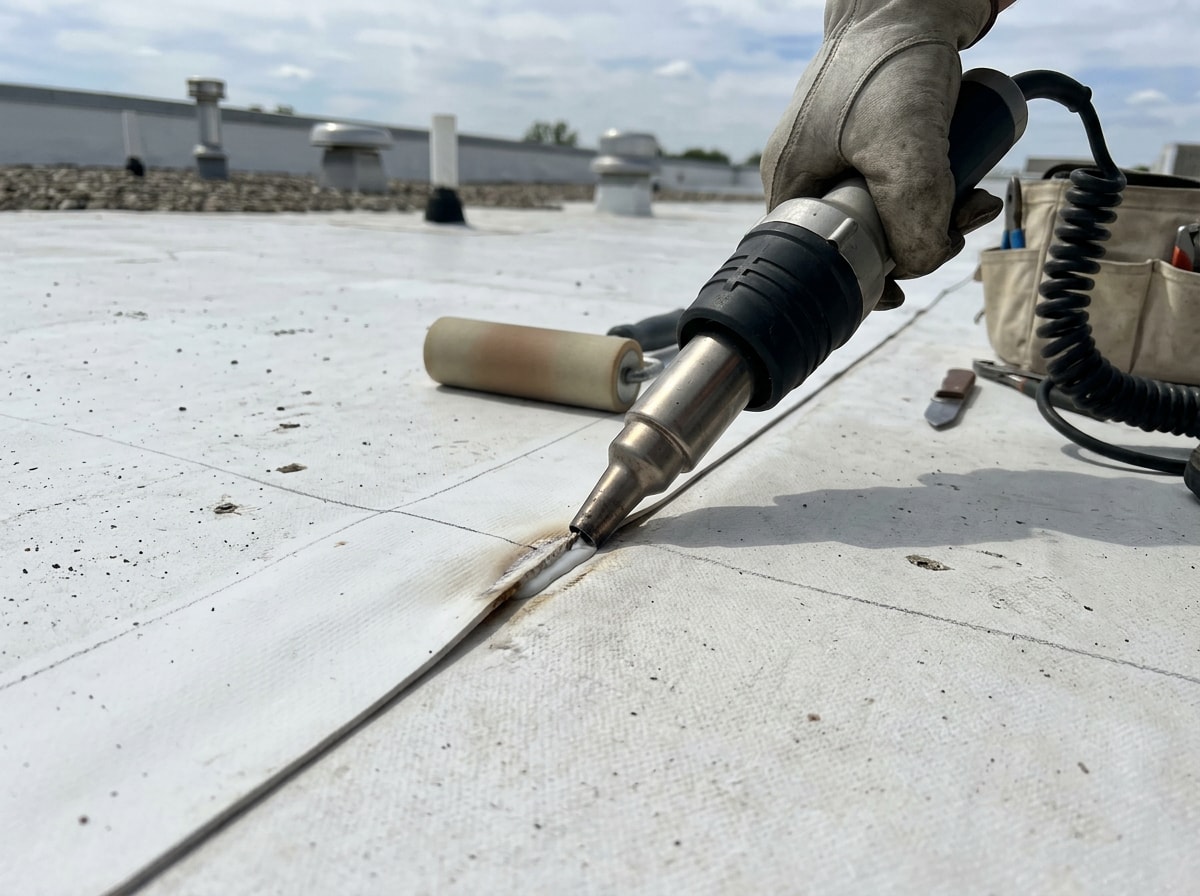
Single-ply membrane roofing is a single factory-manufactured sheet, usually TPO, PVC, or EPDM, rolled out and sealed over the roof deck in one layer. It's the most widely installed flat roof membrane on modern commercial buildings because it goes up quickly, resists UV exposure well, and typically carries long manufacturer warranties.
The three membrane types differ in installation and performance:
- TPO is heat-welded at the seams and usually has a reflective white surface, making it a cost-effective, energy-conscious choice.
- PVC also uses heat-welded seams but resists chemicals, grease, and oils better. It shows up often on restaurants and industrial buildings with rooftop exhaust.
- EPDM is a synthetic rubber sheet, often black, installed with adhesives or mechanical fasteners rather than heat-welding. It holds up well in cold climates and has decades of field history, though it's less reflective than TPO or PVC.
For most new flat commercial roofs, one of these three membranes is the default starting point.
Modified Bitumen Roofing
Modified bitumen roofing is asphalt roofing with polymer modifiers blended in, giving the material more flexibility and better resistance to temperature swings than traditional asphalt alone. It's installed in rolled sheets using torch-application, hot-mopping, or self-adhered methods, often as part of a larger multi-ply assembly.
This polymer-modified roofing shows up often on schools, government buildings, and additions where a proven, moderately priced system is specified. It's also frequently paired with a built-up base layer for extra durability.
Because modified bitumen roofs are asphalt-based, they respond well to protective coatings that extend service life and improve reflectivity. A periodic roof coating service can add years to a modified bitumen roof without a full tear-off.
Built-Up Roofing (BUR)
Built-up roofing, often called a tar and gravel roof, alternates layers of asphalt or bitumen with reinforcing fabric, finished with a gravel or mineral-surfaced cap sheet. This multi-ply method has been used on commercial buildings for more than a century, and some BUR roofs installed decades ago are still in service today.
The trade-off is weight and labor. BUR assemblies are heavier than single-ply membranes, so the building's structure has to support them, and installation takes more time and skilled labor.
BUR still makes sense on buildings that already have a BUR-rated deck and structure, on roofs that see heavy foot traffic, or where a gravel surface is specified for fire or wind-uplift reasons. For new construction or re-roofing where structural weight or budget is a concern, single-ply membranes have mostly taken over because they install faster and cost less in labor. The National Roofing Contractors Association publishes current best-practice guidelines for designing and installing built-up, polymer-modified bitumen, and single-ply membrane roof systems. You can review that technical guidance directly before specifying a BUR assembly.
Metal Roofing (Standing Seam & Screw-Down)
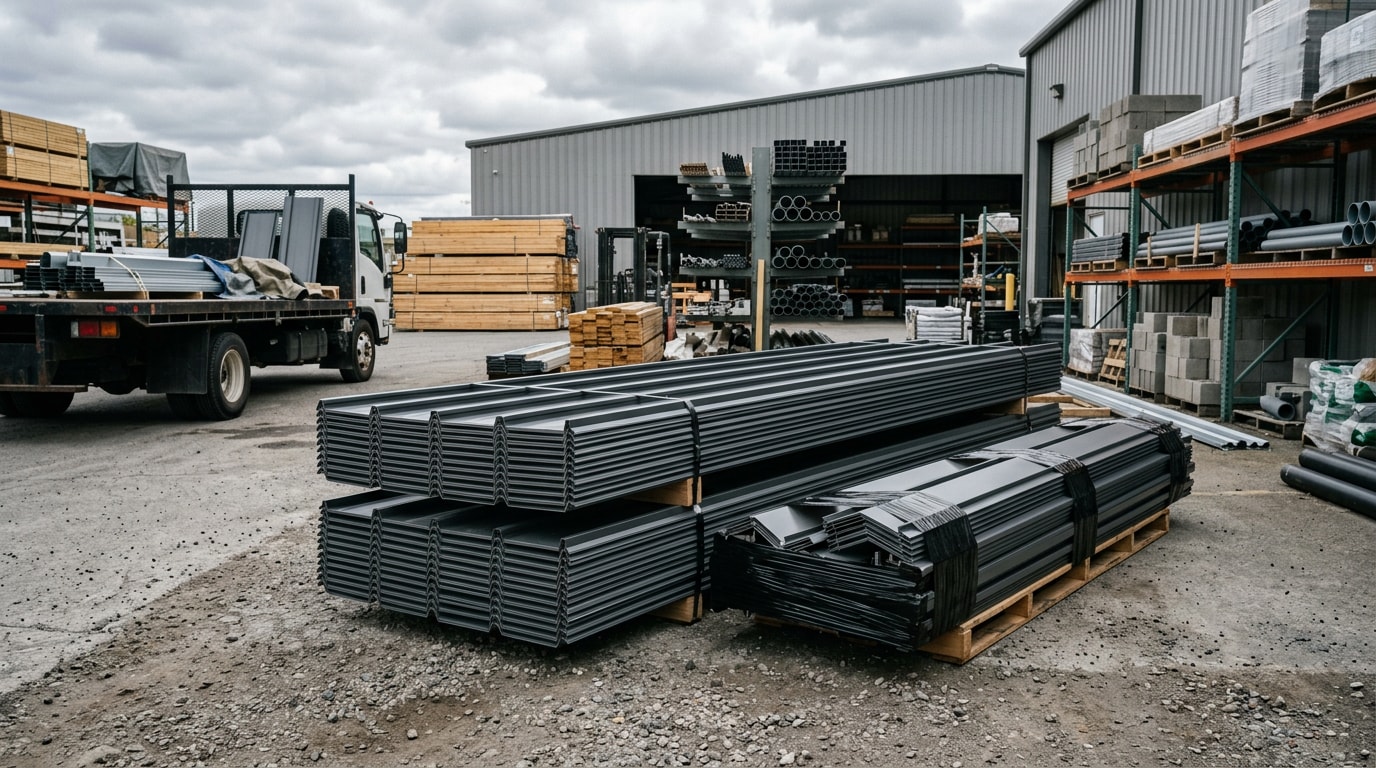
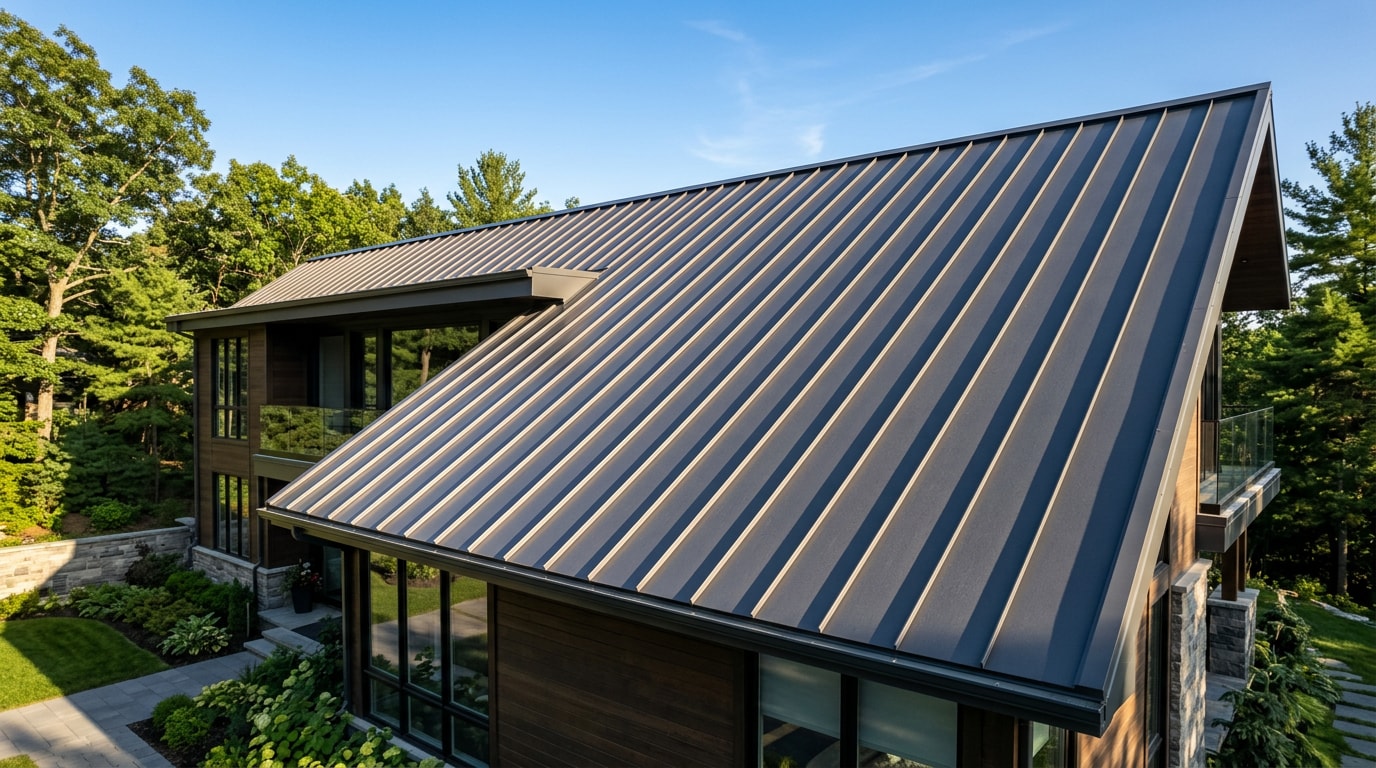
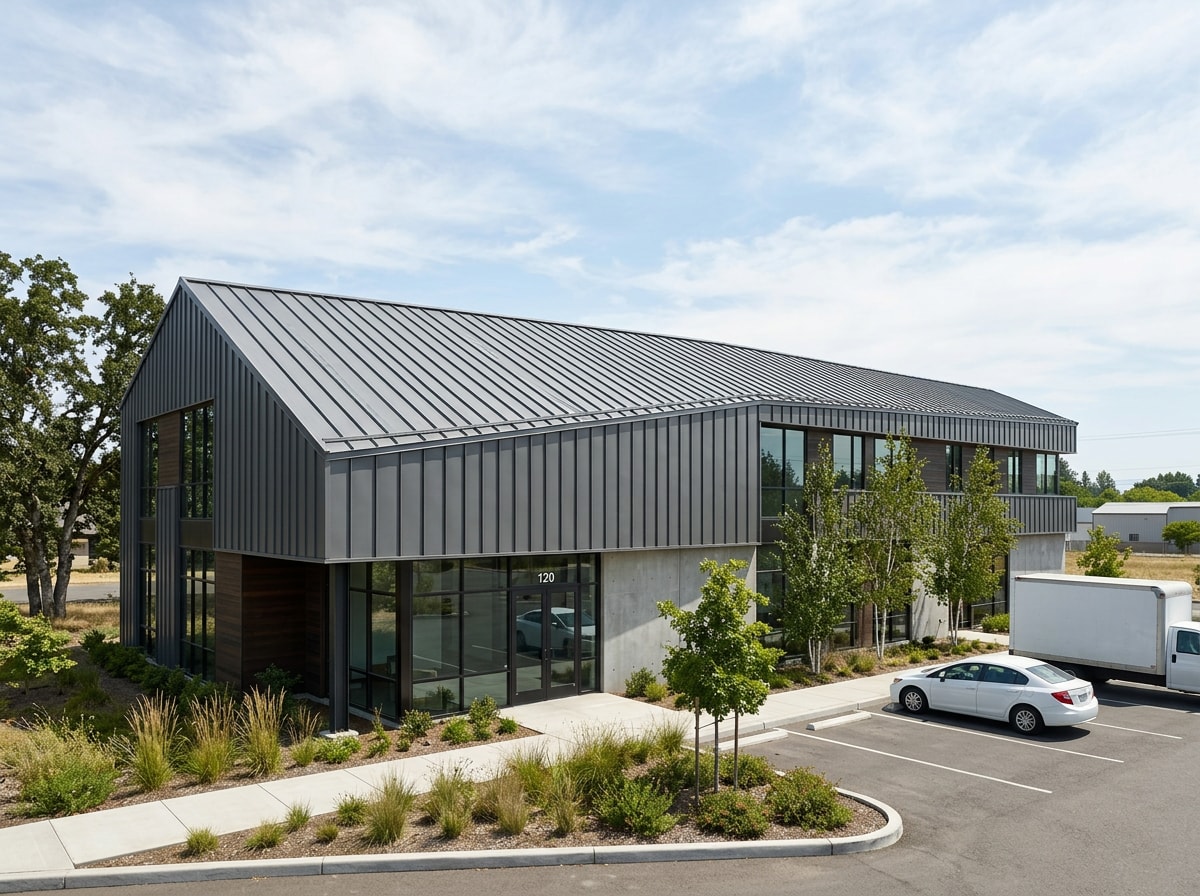
Commercial metal roofing comes in two main installation styles. Standing seam metal panels interlock at raised seams with concealed fasteners, keeping screws out of the weather and giving the system a long service life with minimal upkeep. Screw-down panels, sometimes called through-fastened panels, cost less upfront and attach with exposed fasteners driven directly through the panel into the structure below.
Steel and aluminum are the most common materials for both styles, chosen for strength, weight, and corrosion resistance. Metal roofing suits steeper-slope sections of commercial buildings particularly well, including entryways, canopies, and mansard-style facades, where water needs to shed quickly.
Because exposed fasteners on screw-down panels can loosen or wear over time, they generally need more routine maintenance than standing seam systems.
Asphalt Shingles on Commercial Buildings
Commercial buildings aren't limited to flat roof systems. Steep-slope commercial roof sections, such as office facades, clubhouse entrances, or mixed-use street-level storefronts, sometimes use shingles rather than membrane or metal.
When they do, it's usually upgraded commercial asphalt shingles or architectural shingles rather than the basic product common on houses. Architectural shingles have a heavier, multi-layered construction that holds up better under commercial wind and foot-traffic exposure, and their dimensional look suits higher-end building designs.
Core Components of a Commercial Roof
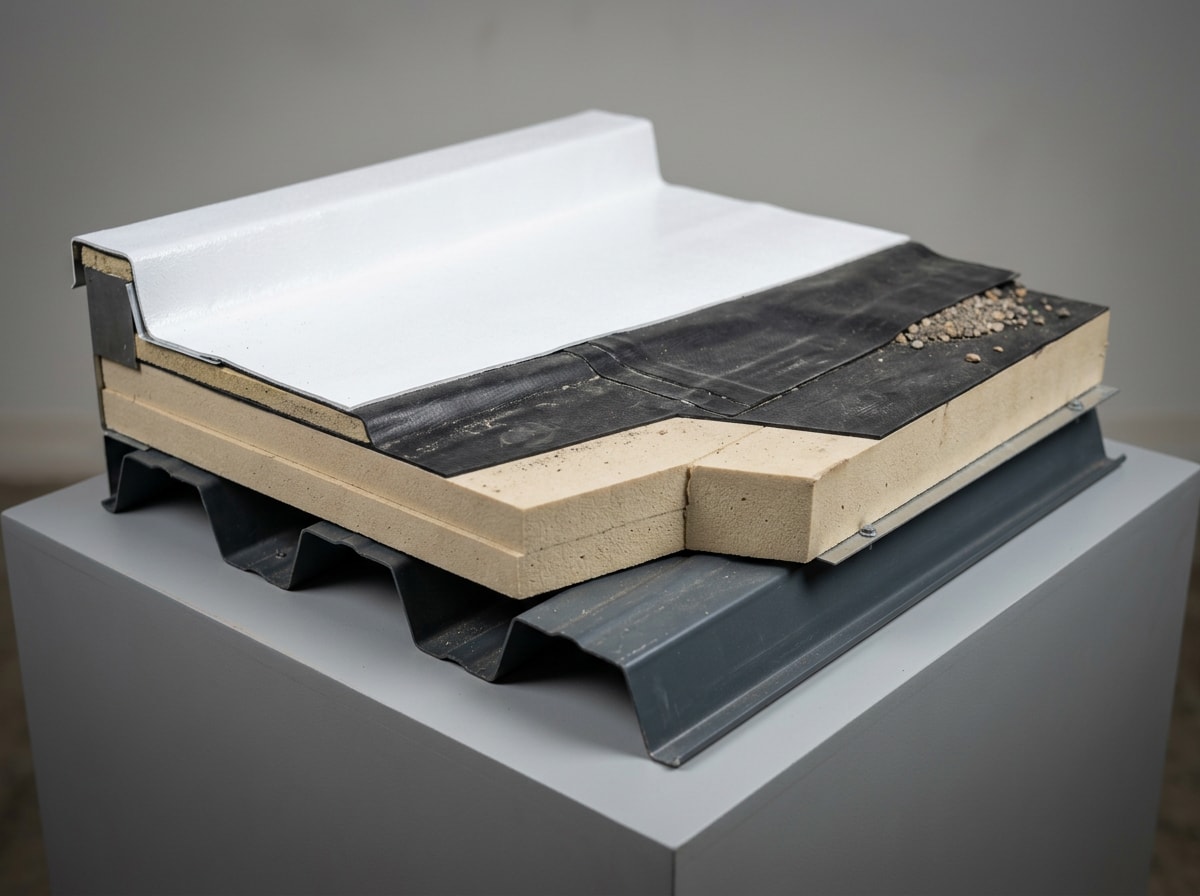
Regardless of which system sits on top, most commercial roofs share the same layered assembly:
- Roof decking (steel, wood, or concrete) forms the structural base everything else attaches to.
- Insulation sits above the deck and affects both energy performance and how the membrane is fastened or adhered.
- The waterproofing layer, whether single-ply membrane, modified bitumen sheet, BUR cap sheet, or metal panel, is what actually keeps water out.
- A protective or reflective coating often finishes the system, shielding the membrane from UV exposure and boosting energy efficiency.
Two roofs using the same membrane brand can still perform very differently. Insulation thickness, decking condition, and installation quality matter as much as the top layer. A routine commercial roofing maintenance plan catches these weak points before they turn into leaks. If an existing roof is underperforming, commercial roofing repair services can identify which layer is actually the problem.
How to Compare Commercial Roof Costs
The cost of roofing commercial buildings depends on more than material choice. System type, total roof size, roof access, slope, and whether an old roof needs tearing off first all factor into the final price. Cost per square foot also shifts based on local labor rates and how much insulation or deck repair the project needs.
Lifespan matters just as much as the upfront price, since a cheaper roof that needs replacing twice as often can cost more over the life of the building. Here's a rough, regional comparison across the five system types covered above:
| System | Typical Cost per Sq. Ft.* | Expected Lifespan |
|---|---|---|
| Single-ply (TPO/PVC/EPDM) | $5-$9 | 20-30 years |
| Modified bitumen | $4-$8 | 15-20 years |
| Built-up roofing (BUR) | $4-$8 | 20-30 years with maintenance |
| Standing seam metal | $8-$14 | 40-60+ years |
| Screw-down metal panels | $5-$9 | 25-40 years |
| Commercial asphalt shingles | $4-$7 | 20-25 years |
*Figures are general planning ranges, not quotes. Actual pricing depends on building size, access, roof condition, and local market conditions.
Metal systems cost more upfront but can outlast two or three membrane replacements, which changes the math for buildings planned to stay in use for decades. Property owners planning a near-term tear-off can review commercial roofing replacement options, or get a free estimate based on their building's actual condition and square footage.

Safety and Code Compliance on Commercial Roofs
Commercial roof work carries safety requirements that residential jobs don't. Most commercial roofs are classified as low-slope, and employees working on them with unprotected sides or edges 6 feet or more above lower levels must be protected from falling by guardrail systems, safety net systems, personal fall arrest systems, or a combination of warning line and guardrail, safety net, personal fall arrest, or safety monitoring systems.
Any commercial roofing crew has to plan for this before work starts, since guardrails, anchor points, or warning lines typically go up before work on membranes, metal, or BUR assemblies can begin. Crews that work across both flat commercial roofs and steeper residential ones often set up fall protection differently for each job, since the rules split by slope rather than applying one standard everywhere.
Local building departments also enforce wind-uplift ratings, insulation R-values, and fire classifications for commercial roof assemblies, so a permit review is worth doing before committing to a system. A roof inspection before bidding helps confirm which code requirements apply to an existing building.
Key Factors in Selecting a Commercial Roofing System
Once you've compared system types and costs, two practical factors usually decide which commercial roofing system actually gets installed.
Building Design and Use
Roof slope sets the baseline. Flat and low-slope roofs need membrane or BUR systems, while steeper sections can take metal or shingles. Structural load capacity matters too: a BUR or ballasted system is heavier than a mechanically attached single-ply membrane, so older decks may not support every option.
Building use plays in as well. A warehouse roof that sees regular foot traffic for HVAC servicing needs more puncture resistance than an office roof that's rarely walked on. Cold storage buildings also have different insulation needs than standard office space.
Energy Efficiency
Reflective membranes, often called cool roofs, reduce how much heat a building absorbs, which can lower cooling costs in warmer months. A cool roof is made of a material or has a coating that can lower the roof surface temperature, decreasing the amount of heat transferred into a residential or commercial building. TPO and PVC membranes are naturally more reflective than EPDM or asphalt-based systems, and some products are formulated specifically for high solar reflectance.
Cool roofing performance isn't just marketing language. ENERGY STAR's guidance on cool roofs explains how solar reflectance and thermal emittance affect a roof's energy performance. If reducing cooling load is a priority, ask what reflectance rating a proposed membrane actually carries.
Working through these factors with Crestline Exteriors' commercial roofing repair and replacement services can narrow the system choice to one or two realistic options before pricing out a project. Contact Crestline Exteriors for a free estimate once you've settled on a direction, or visit the homepage to see the full range of exterior services available.
FAQ
What Is the Most Common Type of Commercial Roofing?
Flat and low-slope single-ply membranes, TPO, EPDM, and PVC, are the most common commercial roofing systems installed today. They dominate new construction and re-roofing projects because they install faster than BUR or modified bitumen, cost less than metal upfront, and perform reliably across most climates and building types.
How Much Does Commercial Roofing Cost per Square Foot?
Most commercial roof systems run roughly $4 to $14 per square foot installed, depending on the material. Single-ply membranes and asphalt-based systems sit at the lower end of that range, while standing seam metal runs higher due to material and labor costs. Roof size, access, slope, and tear-off needs all push the final number up or down.
What Is the Cheapest Commercial Roofing System?
Modified bitumen and built-up roofing typically have the lowest upfront installed cost among common commercial systems, with single-ply membranes close behind. The cheapest option to install isn't always the cheapest over time, since a shorter lifespan can mean an earlier, costly replacement.
How Long Does a Commercial Roof Last?
Lifespan varies by system. Single-ply membranes and BUR typically last 20 to 30 years with regular maintenance, modified bitumen runs closer to 15 to 20 years, and standing seam metal can last 40 to 60 years or more. Actual commercial roof lifespan depends heavily on installation quality, climate, and upkeep, so a roof inspection every year or two helps catch problems before they shorten a roof's service life.
What Is the Best Commercial Roofing Material?
There isn't one best commercial roofing material for every building. The right choice for roofing commercial buildings depends on slope, budget, climate, and how the space is used, the same factors covered in the selection section above. A warehouse prioritizing low upfront cost, a building planned for fifty years of use, and a restaurant needing grease resistance will each land on a different system.
How Do TPO and PVC Roofing Systems Differ?
TPO is generally the more cost-effective of the two single-ply membranes and offers good UV resistance, making it a popular default choice. PVC membrane costs more but resists chemicals, grease, and oils better, which matters for restaurants or industrial sites with rooftop exhaust. Both need to meet local wind-uplift and fire ratings set by the building department before installation.