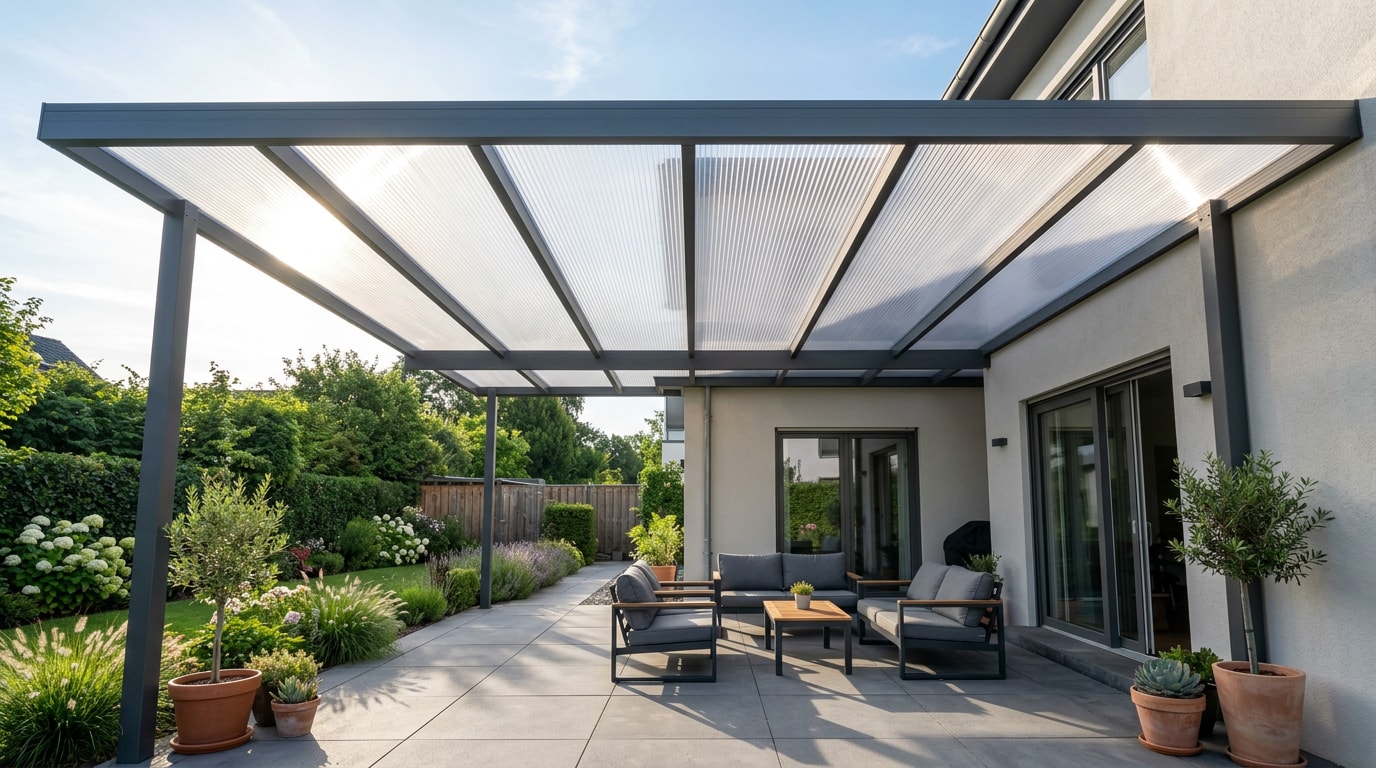
Polycarbonate roofing sheets are the material of choice for patio covers, carports, and greenhouses that need natural light without the weight or fragility of glass. They come in three structural types, a dozen thickness options, and price points ranging from budget corrugated panels to insulated multiwall systems built for four-season spaces. Here's exactly which one fits your project, and what a Front Range hailstorm actually does to each type.
What Are Polycarbonate Roofing Sheets?
Polycarbonate roofing sheets are rigid panels made from a tough, impact-resistant thermoplastic that lets light through while shielding a structure from rain, wind, and UV exposure. They're a category of plastic roof sheets prized for being far lighter and harder to shatter than glass, which is why they show up everywhere from greenhouses to industrial skylights.
Sheets come in two broad structural families: solid, which look and perform like glass, and multiwall, which trap air between internal ribs for added insulation. A reputable UV-protected sheet carries a co-extruded protective layer bonded onto one surface during manufacturing, which is what stops the yellowing and surface chalking that cheaper, unprotected sheets develop within a year or two of sun exposure.
Types of Polycarbonate Roofing Sheets
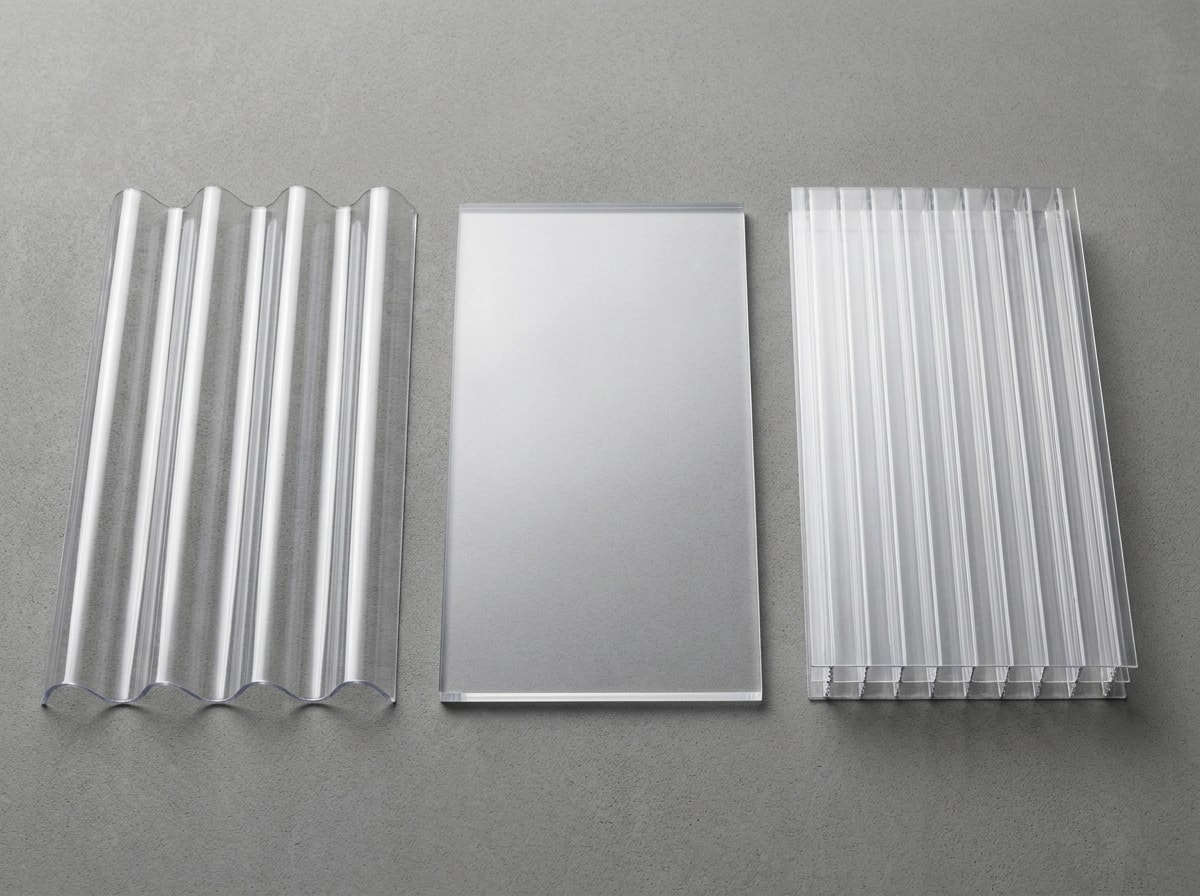
Most polycarbonate roofing sheets fall into three categories, and picking the right one depends on whether you need clarity, insulation, or raw affordability.
Solid Polycarbonate Sheets
Solid sheets are built to mimic the look of glass while standing up to far more abuse. Because they have no internal air channels, they stay completely clear, which makes them the go-to choice for canopies, covered walkways, and anywhere visual clarity matters more than insulation. The trade-off is weaker thermal performance, since there's no air gap to slow heat transfer.
Multiwall Polycarbonate Sheets (Twin-Wall & Triple-Wall)
Multiwall sheets use internal ribs to create hollow air channels running the length of the panel. That trapped air is what gives them noticeably better insulation and strength than solid sheets of the same material. Twin-wall versions have a single row of channels; triple-wall adds a middle layer, creating two rows of air pockets.
At equivalent overall thickness, triple-wall sheets are generally more rigid and better insulated than twin-wall, though they also cost more and weigh slightly more per square meter. Both are popular for conservatory roofs and commercial glazing where year-round comfort matters.
If you're weighing insulated panels against a full roof system, our roof installation team can walk through load and R-value trade-offs during a site visit — just get a free estimate and we'll bring the numbers.
Corrugated Polycarbonate Sheets
Corrugated sheets use a wave-like profile that adds structural rigidity without adding material thickness, and the ridges help rainwater shed quickly instead of pooling. They're a common pick for carports, garden sheds, and lean-to roofs where budget and simplicity matter more than insulation.
| Sheet Type | Typical Thickness | Light Transmission | Approx. Price per m² (2026) | Typical Lifespan |
|---|---|---|---|---|
| Corrugated | 0.8mm–1.2mm | 75%–85% | $15–$25 | 10–15 years |
| Solid | 2mm–10mm | 80%–90% | $20–$45 | 15–20 years |
| Multiwall | 10mm–25mm | 55%–80% | $25–$60 | 15–25 years |
Figures vary by manufacturer and UV-coating quality, so treat these as planning estimates rather than fixed quotes.
Polycarbonate Roofing Thickness Guide
Thickness drives both insulation and structural capacity, and getting it wrong is one of the most common planning mistakes. Snow load, wind exposure, and purlin spacing all affect what's actually suitable for a given roof, which is why a panel that works fine in a mild coastal climate can sag or crack under a Colorado snow load.
| Thickness | Common Sheet Type | Approx. U-value (W/m²K) | Light Transmission |
|---|---|---|---|
| 4mm–6mm | Twin-wall | 3.3–3.6 | 70%–80% |
| 10mm | Twin-wall | 2.7–2.9 | 65%–75% |
| 16mm | Twin/Triple-wall | 1.5–1.8 | 55%–65% |
| 25mm | Triple-wall | 1.0–1.2 | 50%–60% |
Lower U-values mean better insulation, so thicker multiwall sheets suit year-round living spaces while thinner sheets are fine for sheds or carports. For broader context on how U-factor is measured and why a lower number always means better performance, see this Department of Energy resource on window and glazing U-factor.
Not sure which thickness your framing can carry? A roof inspection will confirm span and load capacity before you order material.
Advantages of Polycarbonate Roofing Sheets
The reasons polycarbonate dominates so many roofing categories come down to five practical strengths.
High Impact Resistance
Manufacturers such as Palram's Suntuf line often describe polycarbonate as up to 250 times more impact-resistant than glass of comparable thickness. That toughness is why it shows up in skylights, warehouse roofing, and anywhere hailstorms or falling branches are a concern, and why it holds up in vandalism-prone areas like bus shelters and schools.
Lightweight and Easy to Install
Compared to glass or metal roofing, polycarbonate sheets are considerably lighter, which cuts transport costs and reduces the structural support needed underneath. Lower weight also means lower labor costs, since fewer people and less equipment are needed to lift and secure panels.
Excellent Light Transmission
Clear polycarbonate roofing sheets can let through up to 90% of natural light, which makes them well suited to greenhouses, atriums, and residential skylights. That transmission reduces reliance on artificial lighting during daylight hours, a real benefit for anyone trying to cut energy use in a sunroom or workshop.
UV Protection
Most quality polycarbonate roofing sheets include a co-extruded UV-protective layer bonded to one or both faces during manufacturing. This layer absorbs ultraviolet radiation before it can break down the polymer chains underneath, which is what prevents yellowing, haze, and brittleness over time. Outdoor exposure testing on UV-stabilized polycarbonate sheeting has shown that surface chain scission from UV radiation is the primary driver of long-term embrittlement, which is exactly what a good coating is designed to slow down.
Thermal Insulation (Multiwall Sheets)
Multiwall sheets reduce heat transfer because trapped air between the internal ribs acts as an insulating buffer, much like double glazing does in windows. That's the same mechanism behind the lower U-values shown in the thickness table above.
Disadvantages of Polycarbonate Roofing Sheets
Polycarbonate isn't without drawbacks, and it's worth weighing these honestly before committing to a full roof.
- Surface scratching. The outer layer is softer than glass and can mark during cleaning or installation.
- Rain noise. Thinner sheets without a sound-dampening layer can be noisy in heavy rain.
- Thermal expansion. Polycarbonate expands and contracts more than metal or glass as temperatures shift, and panels installed without expansion gaps can buckle or pull loose over time.
None of these are usually deal-breakers. Proper fixings with allowance for movement, routine gentle cleaning, and choosing a slightly thicker sheet for noise-sensitive spaces address most of these concerns.
Colorado Considerations: Hail, Snow Load, and High-Altitude UV
Most polycarbonate buying guides are written for mild, low-snow climates. That's a problem along the Front Range, where panels face three stresses most guides never mention.
Hail is the big one. In our inspections across Jefferson County and Douglas County after summer storms, impact-rated polycarbonate panels typically come away dented or scuffed where asphalt shingles and acrylic skylights crack outright. If you've had a recent storm roll through and you're not sure whether your patio cover or skylight took damage, our storm damage roofing guide walks through what to document for an insurance claim, and emergency roof repair is available if a panel needs covering right away.
Snow load matters just as much. Denver-metro building departments size roof structures for ground snow loads well above what a typical Suntuf or twin-wall spec sheet assumes for a coastal climate, so purlin spacing on a 10mm panel in Highlands Ranch should be tighter than the same panel in a mild climate. And at altitude, UV intensity is higher year-round, which shortens the service life of unprotected or thin sheets faster than their rated lifespan would suggest.
None of this means skip polycarbonate. It means spec it for the local conditions. Crestline Exteriors serves Denver, Aurora, Littleton, and the surrounding counties, and a quick roof inspection before you buy sheets can save a reorder after the first real snow load.
Polycarbonate vs Glass vs PVC Roofing: Full Comparison
Polycarbonate, double-glazed glass, and solid PVC sheet each solve the roofing problem differently, and the right pick depends on budget and how hands-on the installation will be.
| Material | Clarity | Impact Resistance | Install Difficulty | Relative Cost |
|---|---|---|---|---|
| Glass | Best | Lowest | Professional required | Highest |
| PVC | Fair, yellows faster | Moderate | Easy DIY | Lowest |
| Polycarbonate | Good | Highest | DIY-friendly | Mid-range |
Glass offers the best clarity and scratch resistance but costs considerably more and requires professional installation due to weight and breakage risk. PVC sheet is the cheapest of the three and easy to cut, but it yellows faster without UV treatment and offers less impact resistance than polycarbonate.
For most sheds, conservatories, and carports, that middle position is exactly why polycarbonate roofing sheets remain the most commonly specified option. For anything larger than a small outbuilding, it's also worth comparing against the broader roofing contractor services available for full roof systems.
Installation: What You Need to Know
Every advantage covered above — UV resistance, insulation, impact strength — only holds up if the sheets go in correctly. A poorly installed roof undermines even the best-specified material.
Quick installation checklist:
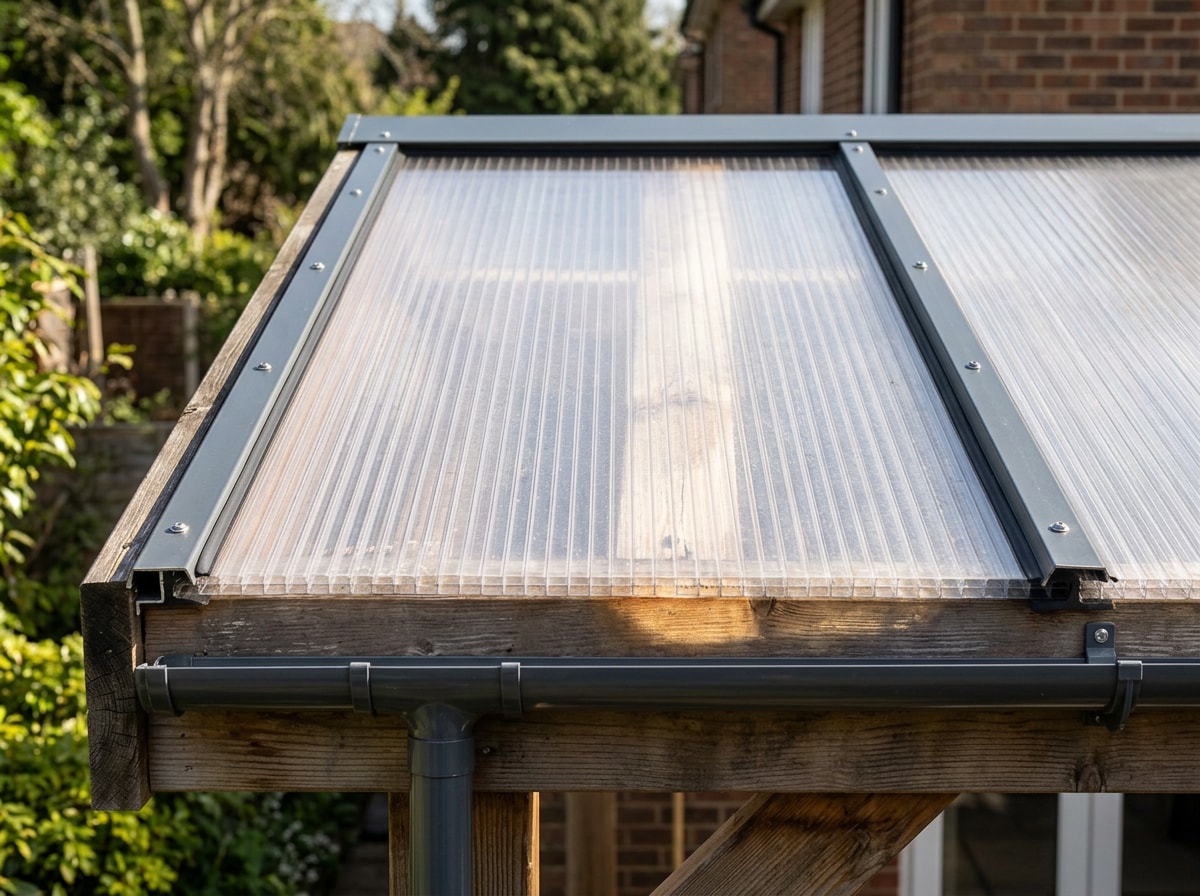
- Ribs run vertically, from ridge to eaves, never horizontally.
- Leave expansion gaps at every fixing point to allow for thermal movement.
- Use the correct UV-coated face up, confirmed by the protective film marking.
- Match minimum roof pitch to code requirements for drainage.
- Use manufacturer-specified fixings and washers, not generic screws.
In multiwall polycarbonate, the internal ribs must run in the same direction as the roof slope so condensation inside the channels can drain out instead of pooling. Installing panels with ribs running horizontally is a common DIY mistake, and it traps moisture that can lead to algae growth or internal fogging within the channels.
Roof pitch matters too. Most low-slope roof coverings, including lightweight plastic glazing, need a minimum design slope for proper drainage under the International Residential Code's roof assembly requirements, and skipping that minimum is a common reason patio covers develop ponding and leaks. If you'd rather have a licensed crew handle the layout and flashing details, roof installation covers exactly that.
For a broader look at how flat and low-slope coverings compare on cost and lifespan, our flat roofing company guide breaks down materials beyond polycarbonate for larger roof sections.
FAQ
How Long Do Polycarbonate Roofing Sheets Last?
Most polycarbonate roofing sheets last between 10 and 25 years, depending mainly on thickness and the quality of the UV coating applied during manufacturing. Thinner corrugated sheets sit at the lower end of that range, while thicker, well-coated multiwall sheets can last closer to 25 years.
How Much Do Polycarbonate Roofing Sheets Cost?
Prices generally range from around $15 to $60 per square meter, with thickness, UV coating quality, and sheet type being the main cost drivers. Thicker, better-insulated multiwall sheets sit at the higher end, while basic corrugated sheets are the most budget-friendly option.
Which Way Up Do Polycarbonate Sheets Go?
The UV-protected face always goes up, facing the sun. That side is typically marked with a protective film during shipping, and installing it upside down leaves the unprotected surface exposed to degradation far sooner than intended.
Can You Walk on Polycarbonate Roofing Sheets?
Not without spreading your weight first. Standard thickness panels will flex or crack under direct foot pressure between supports. Use a roof ladder or crawl board to distribute weight across the framing if you need to access the roof.
Is Polycarbonate Roofing Waterproof?
The sheets themselves are waterproof, but leaks almost always happen at the joints, end caps, and fixing points rather than through the panel. Correct flashing, closure strips, and properly torqued fixings are what actually keep a polycarbonate roof dry.
What Thickness Is Best for a Patio or Carport Roof?
For most patio covers and carports, 10mm twin-wall strikes the best balance of cost, insulation, and strength. Step up to 16mm or triple-wall if the structure spans wider gaps or sits in a heavy snow-load area.