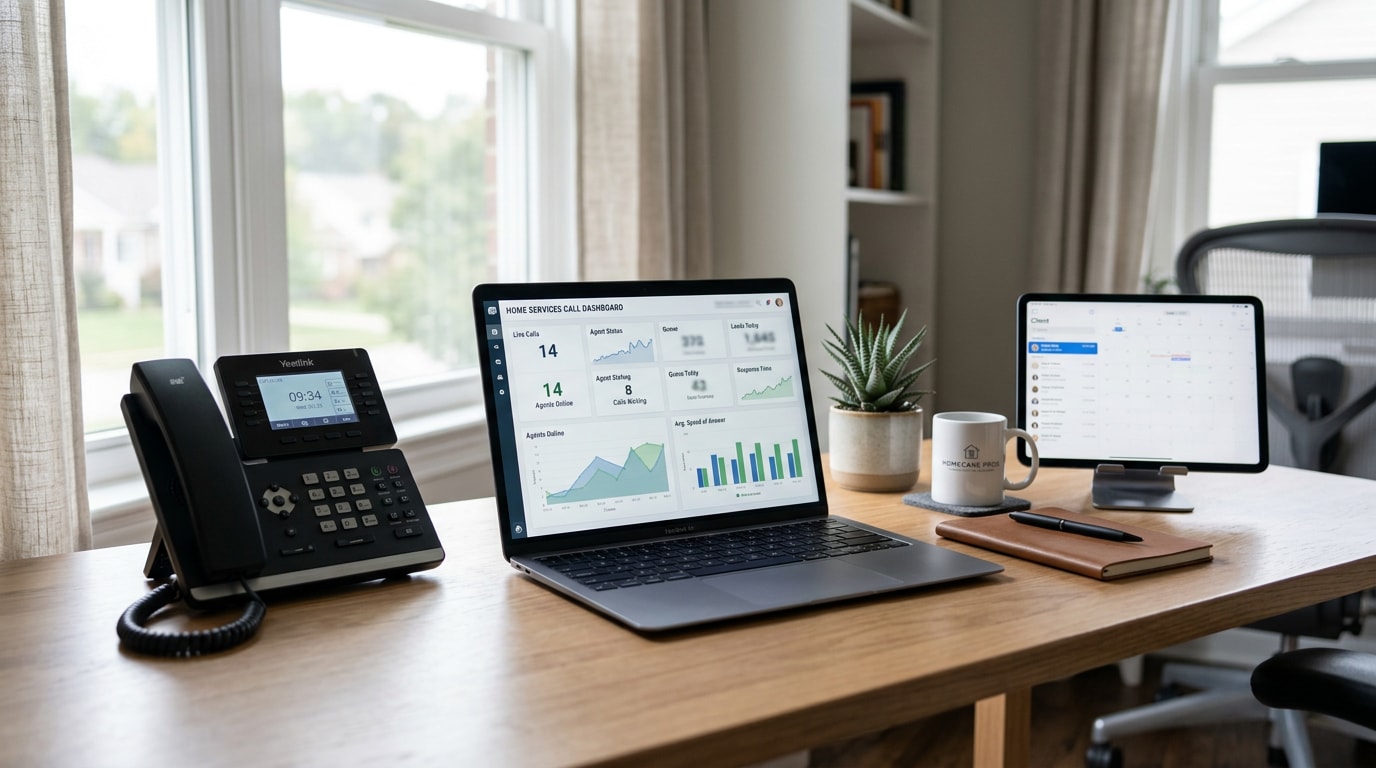
A roofing answering service picks up the phone when your crew is on a roof, not sitting in an office, so a storm call never turns into a voicemail nobody returns. Homeowners who hit voicemail during a hailstorm rarely wait around, they call the next name on the list. Here's what these services actually do, what they cost in 2026, and how to pick one that won't buckle the first time a hailstorm doubles your call volume.
What Is a Roofing Answering Service?
A roofing answering service is a live or AI-staffed phone line that answers, qualifies, and routes incoming calls for a roofing company whenever in-house staff can't pick up. It captures the caller's name, address, roof issue, and urgency level, then sends that information to the right person instead of letting it sit in a voicemail inbox.
The difference from plain voicemail is action. Voicemail records a message and waits. A live operator or an AI agent asks follow-up questions, flags urgent jobs, and often books the inspection before the call even ends.
Three terms get used almost interchangeably in this space, but they're not the same thing:
- Live answering service — real human agents, usually in a shared call center, answering under your company name.
- Virtual receptionist — can be a human or software-based agent working remotely, often bundled with light admin tasks.
- AI receptionist — conversational AI that handles the entire call without a human on the line, unless the caller asks for one.
Live Answering Service vs. AI Receptionist vs. In-House Staff
Pricing and capacity vary more than most roofing owners expect. The table below compares the three options a roofing company actually chooses between.
| Option | Availability | Concurrent calls | Typical 2026 cost | Best for |
|---|---|---|---|---|
| Live answering service | 24/7 via shared agent pool | Limited by staffing on duty | $1–$2 per minute or $300–$800/month flat plans | Brands that want a human voice on every call |
| AI receptionist | 24/7, no staffing limits | Effectively unlimited, simultaneous | $100–$400/month flat-rate | Storm-prone markets with unpredictable call spikes |
| In-house receptionist | Business hours only | One call at a time | Salary plus overhead, well above either option annually | Companies with steady, predictable volume and office space to spare |
The U.S. Bureau of Labor Statistics tracks national wage data for this comparison. Receptionists do tasks such as answering phones, receiving visitors, and providing information about their organization to the public , and the median annual wage for this group was $47,450 in May 2025 . That figure doesn't include payroll taxes, benefits, or the fact that a single in-house hire still goes home at 5 p.m. and can only handle one caller at a time.
How Much Does a Roofing Answering Service Cost in 2026?
Pricing falls into three general buckets. Which one makes sense depends almost entirely on how your call volume behaves during storm season versus a normal week.
The Three Pricing Models
- Flat-rate AI plans typically run $100–$400 per month regardless of call volume, since software doesn't need overtime pay during a surge.
- Hybrid or per-call plans charge a base fee plus $1–$3 per handled call, which scales predictably but climbs fast during a busy week.
- Per-minute live-agent billing usually runs $1–$2 per minute. A normal week at 200 minutes might cost $250. A storm weekend pushing 600 minutes could nearly triple that bill overnight.
Why Storm Season Breaks the Math
This is where a lot of roofing companies get burned on per-minute contracts. A single hailstorm can generate days of calls in a matter of hours, and billing that was reasonable in March can turn into a surprise invoice in June.
Colorado roofers feel this more than most. The Colorado Division of Insurance has identified hail as the number one cost driver of insurance in the state , which gives some sense of how concentrated storm-driven call volume can get for contractors working the Front Range. A flat-rate or capped plan removes that variable before it becomes a budgeting problem.
Key Features to Look for in a Roofing Answering Service
Not every provider is built for the trade. A generic call center and a roofing-trained one produce very different outcomes.
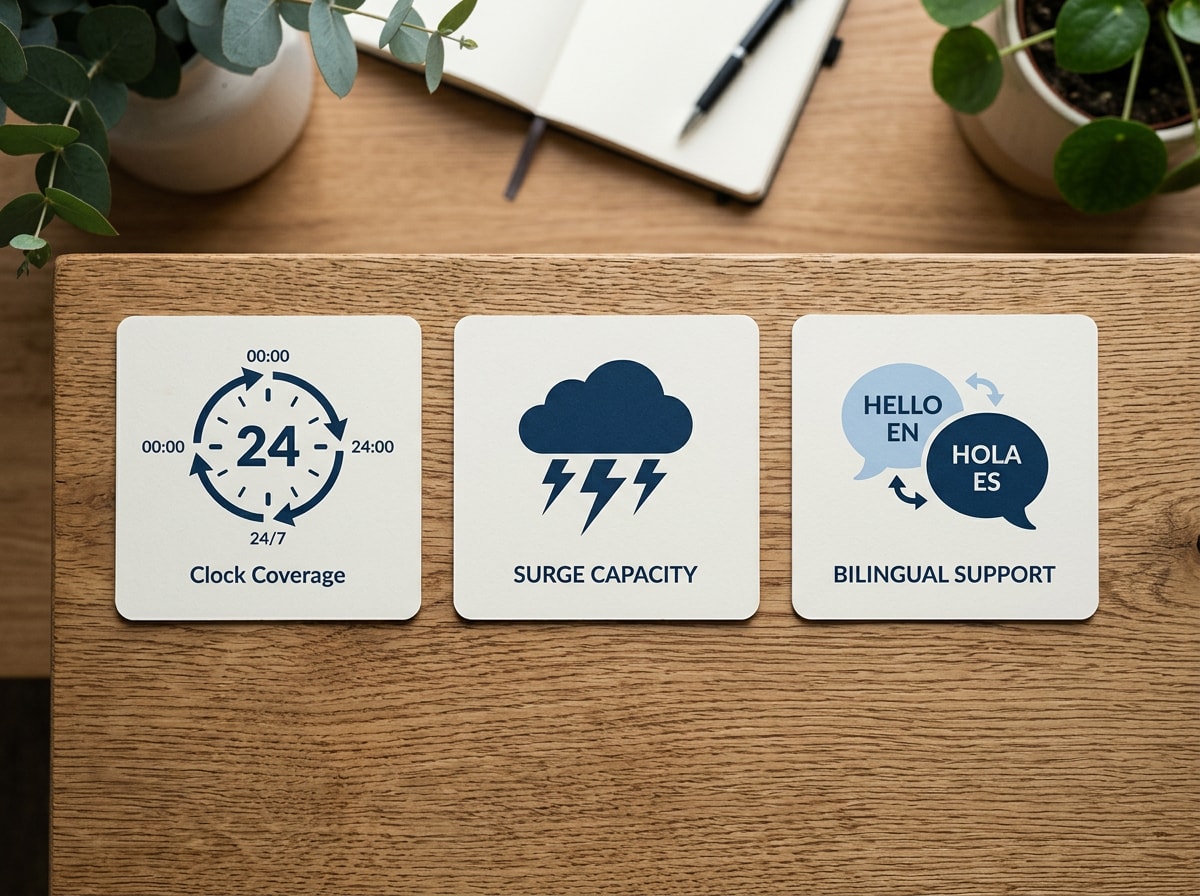
24/7 Coverage and Storm Surge Scaling
Hail doesn't check your office hours. After-hours and round-the-clock coverage mean a 9 p.m. Friday storm gets captured the moment it happens, not three days later once the backlog clears.
Roofing-Specific Lead Intake
A generic script asks for a name and number. A roofing-trained script asks about roof type, approximate age, the date of the storm, whether there's an active leak, and whether an insurance claim is already in motion. That level of detail is what separates real lead qualification from simple message-taking.
Bilingual Support
The number of people who spoke a language other than English at home nearly tripled from 23.1 million in 1980 to 67.8 million in 2019 , according to the U.S. Census Bureau, and Spanish was the most common non-English language spoken in U.S. homes in 2019 . An answering service without a Spanish-speaking option, human or AI, loses leads in a lot of markets before the conversation even starts.
CRM and Dispatch Integration
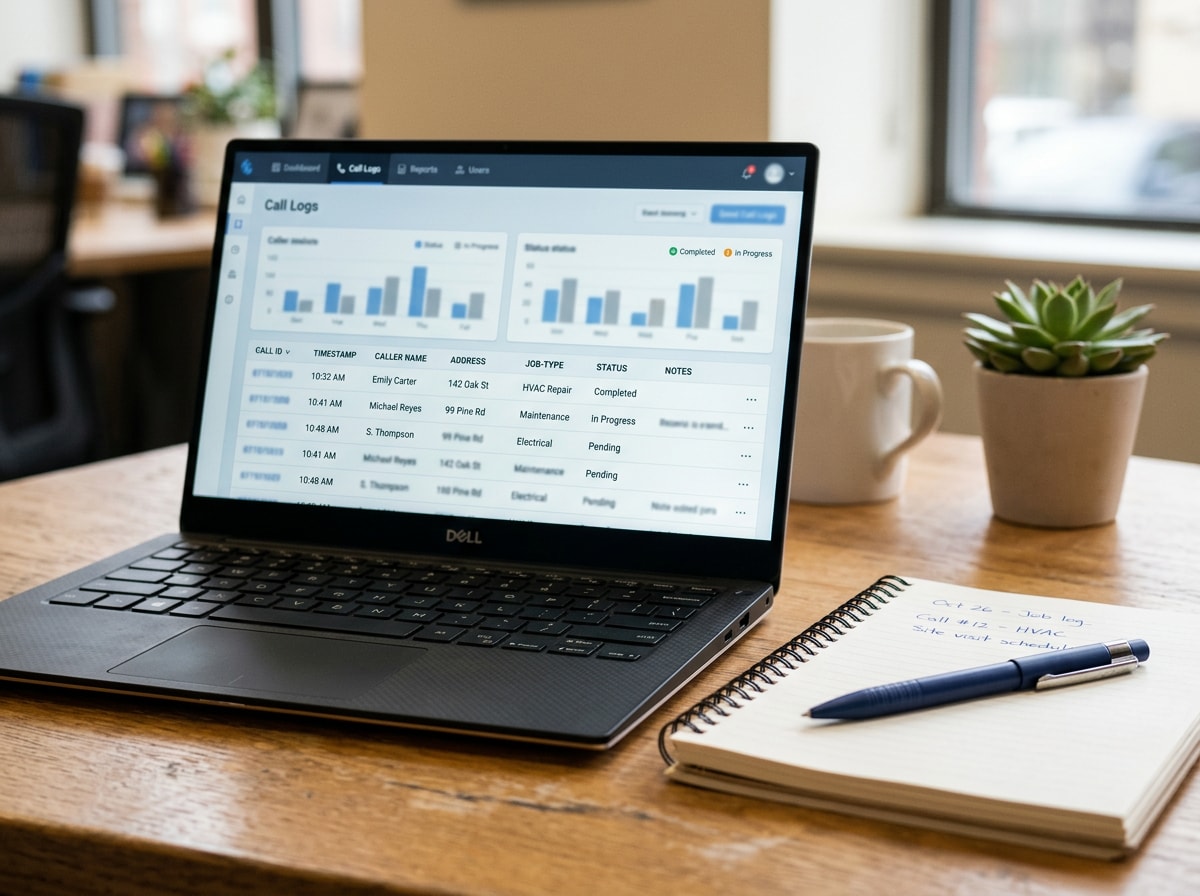
A roofing answering service only pays off when it connects to the scheduling and dispatch tools you already use. Instead of a message sitting in an inbox, the call becomes a calendar entry or a routed text to the right crew lead.
How It Works: From Missed Call to Booked Job
Here's what a well-built setup looks like in practice. A homeowner calls at 11 p.m. after a storm, reports an active leak, and gives an address. The service logs the details, flags it as urgent, and the on-call estimator sees a ready-to-call lead waiting at 6 a.m., not a vague voicemail to decode.
We've watched this play out on our own phones. During Front Range hail season, Crestline Exteriors routes after-hours storm calls straight into next-day roof inspection slots, and the calls that mention an active leak get flagged for our emergency roof repair team before the crew even clocks in. The detail the intake script captures up front is what determines whether that first callback sounds prepared or sounds like a cold call.
Is a Roofing Answering Service Worth It?
A missed roofing lead doesn't just cost a phone call, it costs the entire project. Even a modest flat-rate plan pays for itself if it saves a single job a quarter that would otherwise have gone to voicemail. For a sense of what one captured roof replacement is actually worth in today's market, our roofing replacement cost guide breaks down current pricing by material and size.
Framed that way, the math is simple: if a plan costs $300 a month and helps land even one additional job per quarter, it clears its own cost several times over. The real risk isn't overpaying for coverage, it's the cost of a missed call that never shows up as a line item anywhere.
How to Choose the Right Roofing Answering Service
Before signing a contract, get a straight answer on each of these:
- How is overflow handled during a storm surge, and is there a cap on simultaneous calls?
- Does the script ask roofing-specific questions, or is it a generic intake form?
- Is bilingual support included, or billed as an add-on?
- How fast does an urgent call reach your on-call team, by text, email, or live transfer?
- Does it integrate with the CRM or field service software your office already runs?
- Is pricing flat-rate, per-minute, or per-call, and what happens the month a storm triples your volume?
If you'd rather talk through how a roofing company actually operates day to day than compare phone vendors, get a free estimate from the team at Crestline Exteriors and ask us how we handle our own call overflow.
FAQ
What is a roofing answering service?
It's a live or AI-staffed phone line that answers calls for a roofing company when in-house staff can't, captures the caller's details and urgency level, and routes the information to the right person instead of letting it sit in voicemail.
How much does a roofing answering service cost?
Flat-rate AI plans typically run $100–$400 a month. Live-agent plans run $1–$2 per minute or $300–$800 a month on flat packages. Hybrid per-call plans add $1–$3 per handled call on top of a base fee.
Is an AI answering service suitable for small roofing companies?
Yes. Flat-rate AI plans scale down as easily as they scale up, so a solo roofer or two-person crew isn't paying enterprise-level fees just to stop missing calls.
How does a roofing answering service handle storm-season call surges?
Quality providers use overflow routing or AI instances that can field dozens of simultaneous calls, so no caller gets a busy signal right after a hailstorm. Ask any provider upfront how they handle a sudden spike before you sign.
Does the service offer real-time message delivery for urgent calls?
Urgent situations, like an active leak or a request for an emergency tarp, should reach your team within minutes through SMS, an instant email recap, or a live transfer, not a message waiting in a queue.
Can a roofing answering service integrate with my CRM or field service software?
Most modern providers integrate with common roofing CRMs and field service platforms so a call becomes a calendar entry or dispatch ticket automatically. Confirm this integration list before signing, since it varies a lot by provider.
Do roofing answering services offer bilingual support?
Many do, either through bilingual human agents or AI that detects and responds in the caller's language. Given how many homeowners in a given market may prefer Spanish, this is worth confirming rather than assuming.