Roofing inspections catch small problems while they're still cheap to fix, yet most homeowners only book one after a ceiling stain shows up. A routine inspection costs a fraction of an emergency repair and can add years to a roof's service life. This guide covers what inspectors check, how often you actually need one, what the visit feels like, and what it costs in 2026.
What Is a Roof Inspection, and Why It Matters
A roof inspection is a visual assessment performed by a roofing professional to evaluate the condition, safety, and remaining lifespan of a roof system. It covers the exterior surface, flashing, and drainage, plus the attic, to catch problems before they become expensive repairs.
Most homeowners hire a licensed roofer for a standard visual check. Insurance claims and pre-purchase deals sometimes call for a certified home inspector with formal credentials instead. Either way, the goal is the same: find small issues while they're still inexpensive to fix.
A documented inspection can also support insurance claims, satisfy manufacturer warranty requirements, and reassure buyers or lenders during a home sale. If it's been a while since your last one, our roof inspection) team can walk you through what a visit involves for your specific roof type. You can also browse our homepage to see the full range of roofing and exterior services we offer around the Denver metro.
What a Roof Inspection Covers
A thorough inspection looks at two zones: the exterior, which includes everything from the roof deck up, and the interior, which reveals what's happening beneath the surface. Skipping either one leaves gaps in the picture.
Exterior Checklist
On the exterior, inspectors typically check:
- Shingles or tiles for cracking, curling, or missing pieces
- Flashing around chimneys, vents, and valleys
- Gutters and downspouts for clogs or separation
- Soffits and fascia for rot or pest damage
- Roof penetrations, skylights, and pipe boots for failed sealant
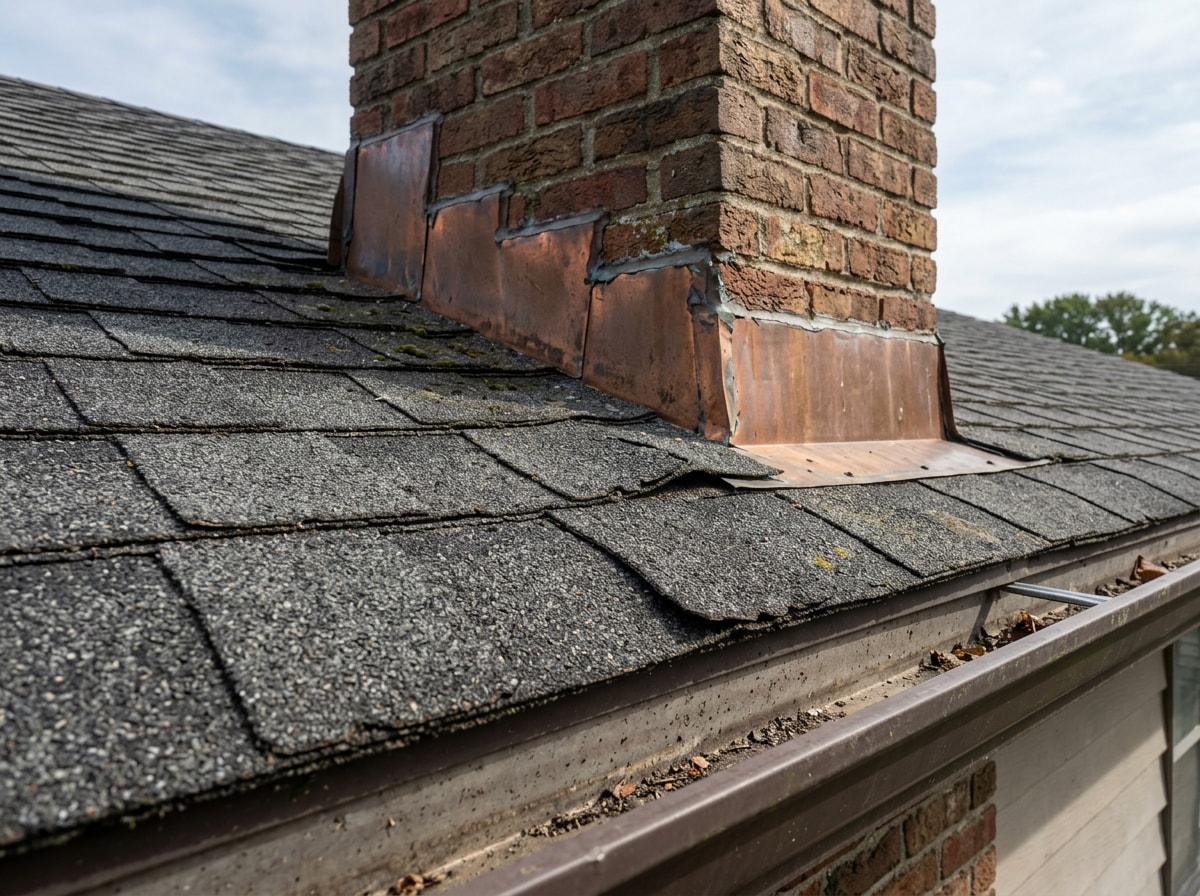
One detail that's easy to miss: kick-out flashing. This small metal piece directs water away from a sidewall into the gutter where a roofline meets a wall. Without it, water runs down the siding instead of draining properly, and the resulting moisture damage can stay hidden inside the wall for years before it surfaces as a stain or soft spot.
Interior and Attic Checklist
Inside, inspectors look at the attic for water stains, daylight through the roof deck, poor ventilation, and compressed or damp insulation. These interior clues often confirm what's visible outside. According to the U.S. Department of Energy's guidance on durable attics, moisture is the number one threat to an attic, and it can enter from leaks, improperly installed flashing, or escaping water vapor when ventilation is inadequate.
Drone and Infrared Inspection Technology
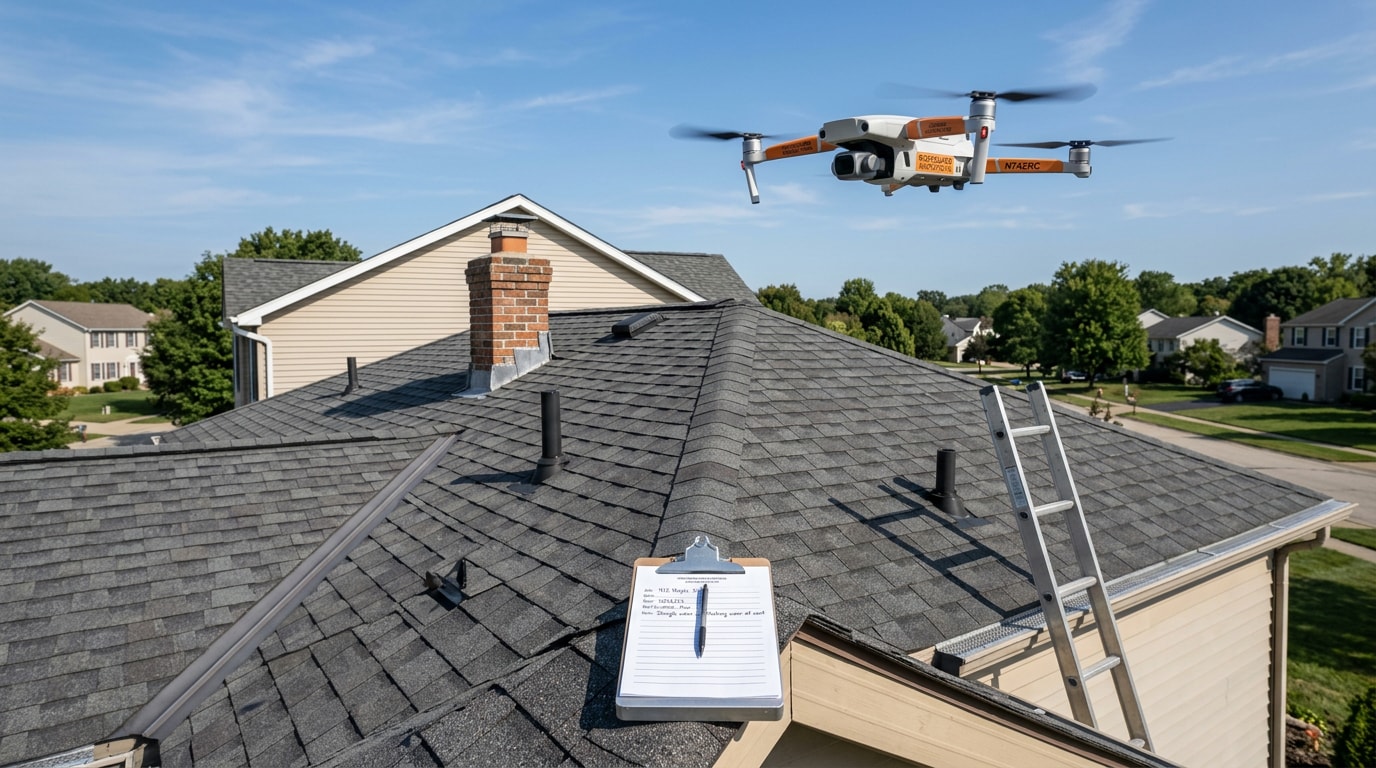
Modern inspections increasingly use drones to capture detailed images from above, which is especially useful on steep or hard-to-reach roofs. Infrared scans go a step further, revealing trapped moisture before it becomes visible to the naked eye.
A standard visual inspection is usually enough for a roof in average condition with reasonable access. Drone and infrared tools earn their higher cost when the roof is too steep to walk safely, when there's a suspected leak with no obvious entry point, or when an insurance claim needs documented proof of storm damage.
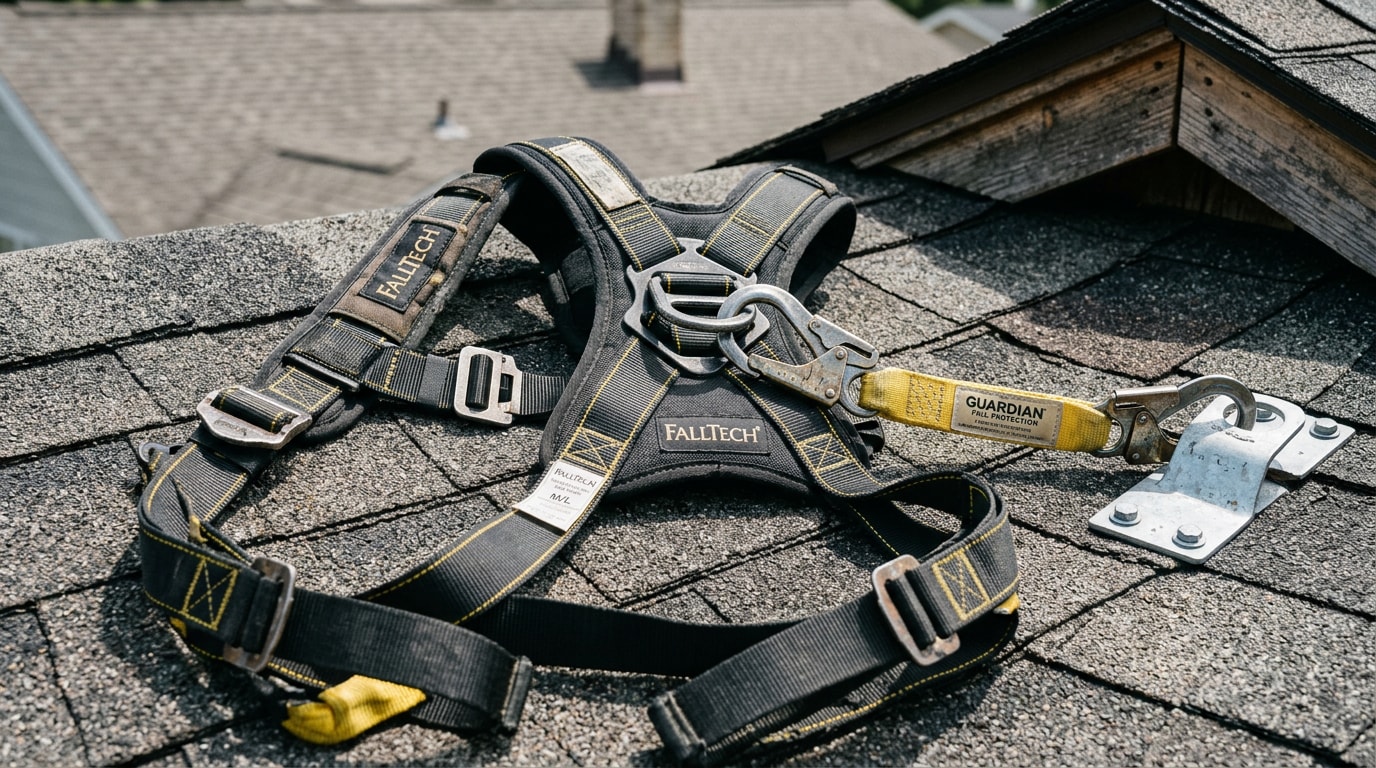
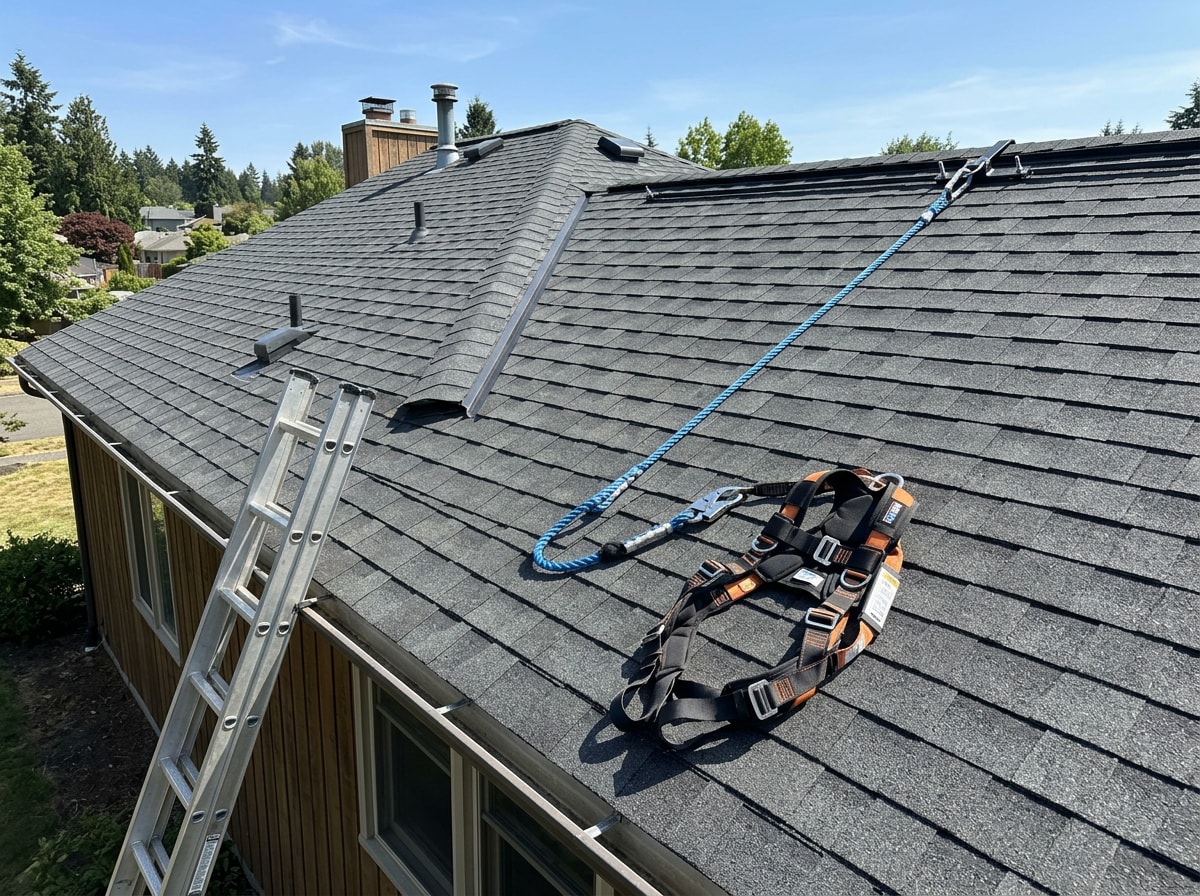
Fall protection matters any time someone is working at height. Under OSHA's fall protection guidance for residential construction, falls are the leading cause of work-related deaths in residential construction, which is exactly why a licensed roofer walking the roof should always use proper anchors and harnesses rather than a homeowner climbing up with a ladder.
How Often You Need a Roofing Inspection
A lot of homeowner advice stops at "once a year," but that undersells it. The National Roofing Contractors Association recommends scheduling roof inspections at least twice per year, ideally in spring and fall, to catch winter damage before it worsens and confirm the roof is ready for the next cold season.
Several situations call for an inspection outside that normal schedule:
- The roof is nearing the end of its expected lifespan (typically 20 to 30 years depending on material)
- There's an active leak or visible interior water stain
- A storm brought high winds, hail, or heavy snow, even if damage isn't obvious from the ground
- You're buying or selling a home
- Debris, equipment work, or a satellite/solar install recently disturbed the roof surface
Wind can lift and reseat shingles without ever tearing them off, so storm damage frequently goes unnoticed until a leak develops weeks or months later. If you've had severe weather recently, it's worth scheduling a roof repair) evaluation even if the roof looks fine from the yard, and our emergency roof repair) team is available when a leak can't wait for a scheduled visit.
What to Expect During the Inspection Process
The process usually starts with a scheduled appointment and a quick rundown of any known issues over the phone or by email. Clear the yard and remove debris near the roofline before the inspector arrives.
On-site, the inspector typically starts with a ground-level walk around the home, checking for sagging, missing shingles, or gutter issues visible from below. Next comes the roof-level or drone-assisted check, where they examine the surface, flashing, and penetrations up close.
If the attic is accessible, they'll check for water stains, ventilation gaps, and insulation condition from inside. The visit usually wraps up with a short conversation about findings, followed by a written report within a day or two.
One thing worth knowing if you ever order a standalone home inspection instead of a roofer's visit: InterNACHI's Standards of Practice specifically state that general home inspectors are not required to walk the roof, predict its remaining service life, or warrant its condition. That's a meaningfully different scope than a licensed roofing contractor's inspection, which is one reason a dedicated roof inspection often catches more than a general home inspection does.
Roofing Inspection Cost in 2026
Pricing depends on roof size, material, slope, and how easy the roof is to access safely. Across the industry, standard visual inspections typically run $125 to $350, while specialized methods cost more because of the added equipment and expertise.
| Inspection Type | Typical Price Range | Best Use Case | Typical Turnaround |
|---|---|---|---|
| Standard Visual | $125 – $350 | Routine annual or biannual checkups, real estate transactions | Same day |
| Drone Inspection | $150 – $400 | Steep slopes, high roofs, limited safe access | 1–2 days for report |
| Infrared/Thermal Scan | $400 – $600 | Hidden moisture detection, aging roofs, insurance claims | 2–3 days for full report |
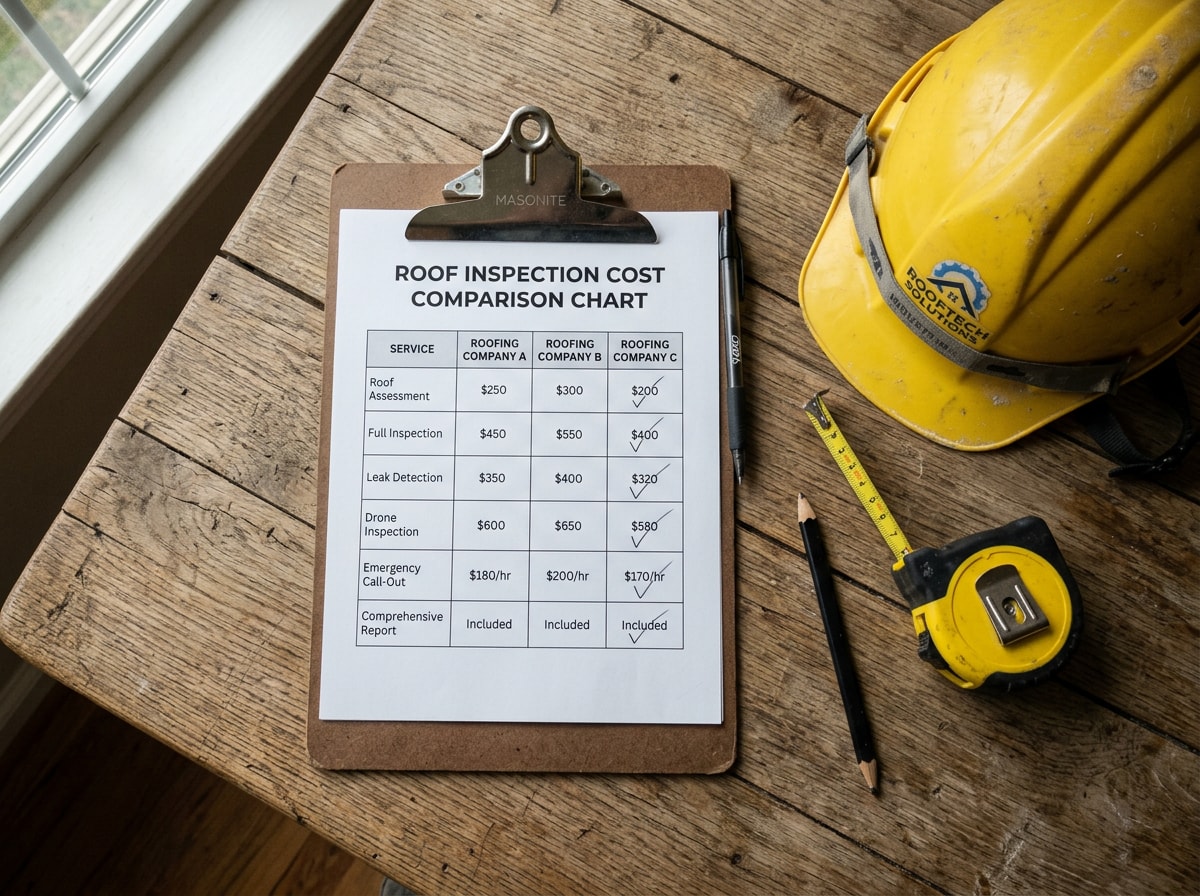
A free inspection offered by a contractor usually makes sense when you already suspect a problem and want a repair estimate. An independent, paid inspection is the better choice when you need an unbiased report, such as before buying a house or filing an insurance claim, since there's no incentive to recommend unnecessary work. If a roofer's walk-through turns up widespread wear rather than a spot repair, ask about roof replacement) options before committing to a patch job that won't hold for long.
What Your Inspection Report Should Include
A professional report should include basic property information: address, inspection date, inspector's name and credentials, roof age, and estimated remaining service life. It should also list roof type and materials, including manufacturer, product line, color, installation date, and number of layers.
Beyond the basics, a solid report documents specific findings with photos, notes on flashing and drainage condition, and clear recommendations ranked by urgency. Some reports double as a roof certification letter, which can be useful for insurance or resale purposes.
If you're not sure what to expect from a written report, ask the inspector for a sample before booking. Our detailed room-by-room checklist walks through exactly what should be documented item by item, so you know what a complete report looks like before you pay for one.
DIY Checks and Preventive Maintenance Between Inspections
Between professional visits, a quick check from the ground can catch obvious problems early. Look for granule loss in gutters, visible debris piles, sagging sections, or shingles that look out of place after a storm. Stay off the roof itself; this kind of ground-level check is what the NRCA recommends for homeowners who aren't comfortable on a ladder, leaving the roof-level work to a professional.
Simple maintenance also extends roof life between inspections:
- Clean gutters at least twice a year
- Trim overhanging branches away from the roofline
- Clear moss or debris from valleys
- Make sure attic vents aren't blocked by insulation
Proper attic ventilation plays a bigger role here than most homeowners realize, since trapped heat and moisture can shorten a roof's lifespan and damage insulation and wood framing. If any of your own checks turn up something concerning, our roof repair page outlines next steps and typical timelines, and homeowners in the Littleton area can see our local service details on the Littleton, CO page.
FAQ
How long does a roof inspection take?
A standard inspection usually takes between 45 minutes and 2 hours, depending on roof size and complexity. Larger roofs, steep pitches, or limited attic access push the visit toward the longer end of that range.
Are roof inspections free?
Some roofing companies offer free basic inspections tied to a repair or replacement estimate. Others charge a fee for more detailed evaluations or a written report, especially independent or certified inspections where there's no sales incentive involved.
What's the difference between a roof inspection and a roof estimate?
A roofing estimate provides a quote for fixing a known problem, like a confirmed leak or storm damage. A roof inspection searches for hidden issues you may not already know about, making it a broader diagnostic step rather than a repair quote.
How do I know if I need a roof inspection?
Schedule one if you notice cracked, curled, or missing shingles, active leaks, water stains, or rotting wood near the roofline. If it's been over six months since your last inspection, that's also a reasonable trigger on its own, especially heading into spring or fall.
Can I inspect my own roof?
You can do a ground-level visual check with binoculars, looking for obvious sagging, missing shingles, or debris in gutters. Climbing onto the roof itself isn't recommended; falls are the leading cause of work-related deaths in residential construction, which is why licensed inspectors use harnesses and anchors that most homeowners don't have.
Do I need a roof inspection to sell my house?
It's not always legally required, but many buyers and lenders request one, and a clean report can prevent a deal from stalling during negotiations. A documented inspection also gives you leverage to address issues on your own terms rather than reacting to a buyer's inspector.
Ready to get your roof checked before the next storm season? Get a free estimate from our team and we'll walk your roof, attic, and gutters so you know exactly where things stand.