Commercial roofing maintenance is the single biggest factor separating a roof that lasts its full service life from one that fails early. Skip it for a season or two, and a cracked seam or clogged drain turns into interior water damage, mold remediation, and a replacement years ahead of schedule. This guide breaks down exactly what a solid maintenance program looks like, including inspection schedules, checklists, roof-type specifics, and the warranty rules most building owners don't find out about until it's too late.
Why Commercial Roofing Maintenance Matters
A maintenance program isn't a line item you can defer indefinitely. Small issues like a cracked seam or a clogged drain are inexpensive to fix when caught early. Left alone, they become leaks that damage insulation, decking, interior finishes, and equipment.
Our crews inspect commercial flat roofs across the Denver metro year-round, and the pattern is consistent: the roofs that fail early are almost never the ones with the oldest membrane. They're the ones where nobody checked the drains after the last hailstorm.
Property managers who treat maintenance as routine, rather than reactive, spend less over the life of the roof and avoid the operational chaos of emergency repairs. A commercial roofing system built with the right materials still needs that follow-through to perform as designed.
How Often Should a Commercial Roof Be Inspected?
Twice a year, at minimum. The National Roofing Contractors Association's own resources note that biannual inspections often can uncover cracked, warped or missing shingles, loose seams and deteriorated flashings, and excessive surface granules accumulating in gutters or downspouts , which is why spring and fall are the standard schedule across the industry.
Add an extra inspection after any major hailstorm, high-wind event, or heavy snow load. These are also the moments when visible interior signs matter most: cracked paint, discolored plasterboard, and peeling wallpaper indoors are all signs of damaged roof areas even before a leak becomes obvious from the street.
A scheduled roof inspection should check the membrane, flashing, drainage, and seams, and cross-reference anything found on the roof against conditions inside the building. For a closer look at what that visit actually involves, our roofing inspections guide walks through the full process and typical costs.
The Commercial Roofing Maintenance Checklist
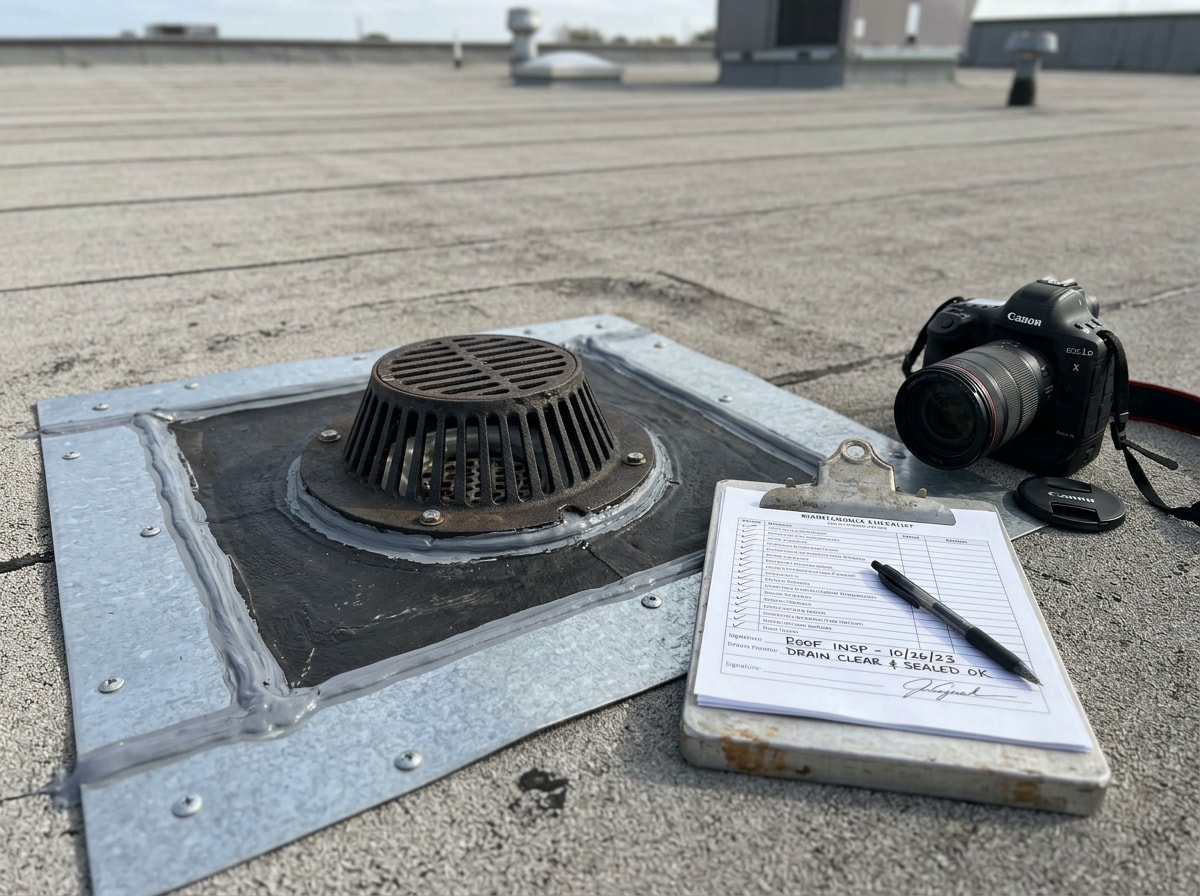
A thorough checklist covers four core areas, repeated on a consistent schedule rather than performed once and forgotten.
- Drainage systems. Clear debris from drains, scuppers, and gutters at every visit, and confirm water actually flows off the roof instead of pooling near low points. Blocked drainage is one of the fastest routes to ponding water and interior leaks, and a neglected gutter repair is often the cheapest fix on the whole list.
- Membrane seams. Check that seams are fully adhered or welded, with no lifting, cracking, or separation. Seam failure is a leading cause of leaks on single-ply systems in particular.
- Flashing and penetrations. Inspect flashing around curbs, pipes, vents, and parapet walls, since these transition points see the most movement and are where most leaks originate.
- Documentation and timely repair. Record every finding with photos, dates, and notes, and schedule repairs for any issue identified, even minor ones, before the next inspection cycle. Deferred small repairs are how manageable problems become roof-wide replacements.
Building this into a recurring plan gives property managers a predictable budget line instead of surprise capital expenses. If a punch list has already grown past small fixes, a commercial roofing repair visit can reset the baseline before the next scheduled inspection.
Common Causes of Commercial Roof Damage and Leaks
The leading causes of commercial roof failure are ponding water, UV-driven membrane breakdown, storm impact, and stress from rooftop equipment like HVAC units. Left unaddressed, any one of these can shorten a roof's service life by years.
Ponding water, meaning standing water that doesn't drain within 48 hours, is one of the most underestimated problems on flat and low-slope roofs. It accelerates membrane breakdown, adds structural weight, and creates conditions for algae and organic growth. UV exposure slowly dries out and embrittles membranes over years of sun exposure, while storms and foot traffic from maintenance crews or equipment technicians create punctures and seam stress.
None of these failure modes happen overnight, which is exactly why routine inspection catches them while they're still cheap to fix. If a storm has already caused visible damage, don't wait for the next scheduled visit. An emergency roof repair can stop active water intrusion before it spreads into insulation and decking.
Maintenance by Roof Type
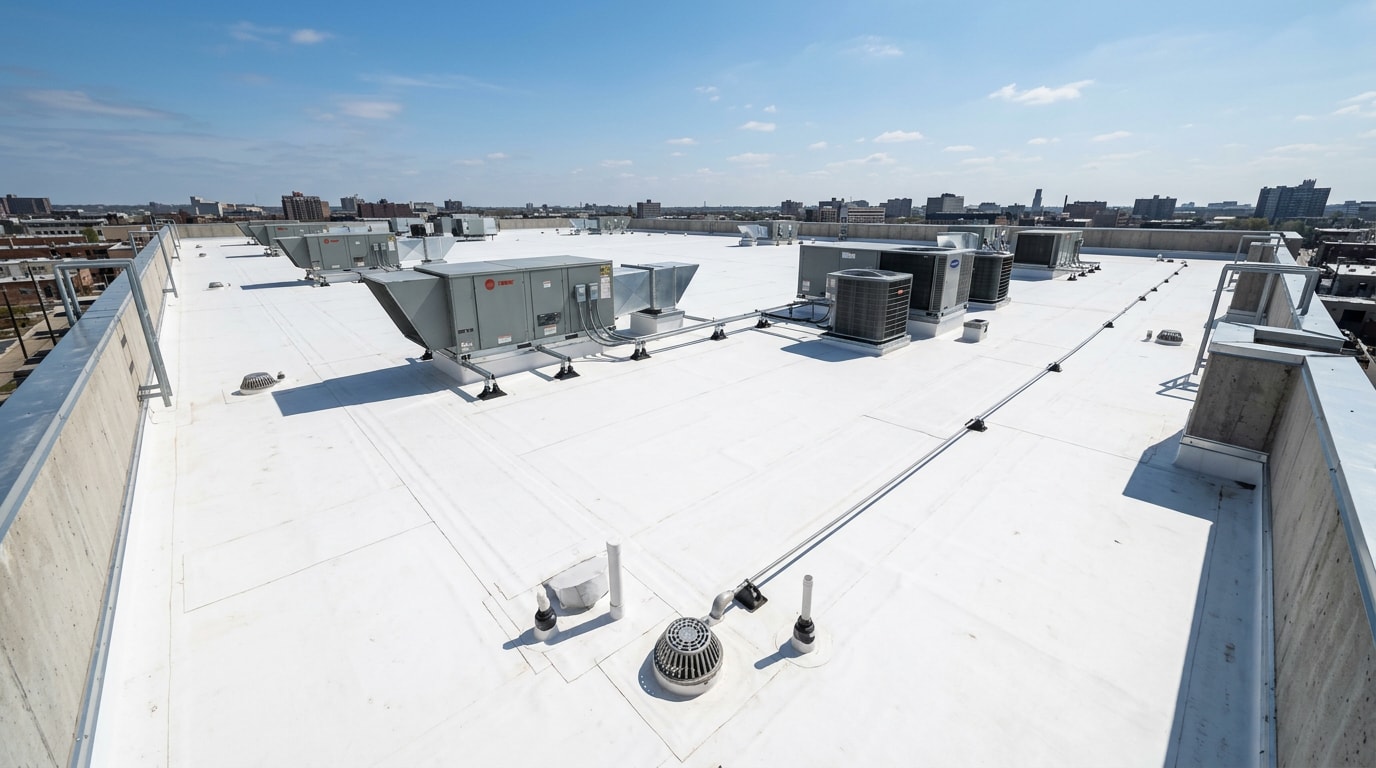
Not every flat or low-slope roof behaves the same way under stress. Maintenance tasks shift depending on whether a building has a single-ply membrane, a built-up system, or modified bitumen.
| Roof System | Primary Vulnerability | Key Maintenance Focus |
|---|---|---|
| TPO / PVC (single-ply) | Seam separation, UV-driven granule or coating wear | Seam inspection, edge shrinkage checks |
| EPDM (single-ply) | Adhesive/tape seam lifting | Seam taping, puncture checks |
| Built-Up Roofing (BUR) | Alligatoring, surface cracking | Coating reapplication, ponding monitoring |
| Modified Bitumen | Blistering, granule loss | Cap sheet inspection, flashing laps |
Single-Ply Membranes (TPO, PVC, EPDM)
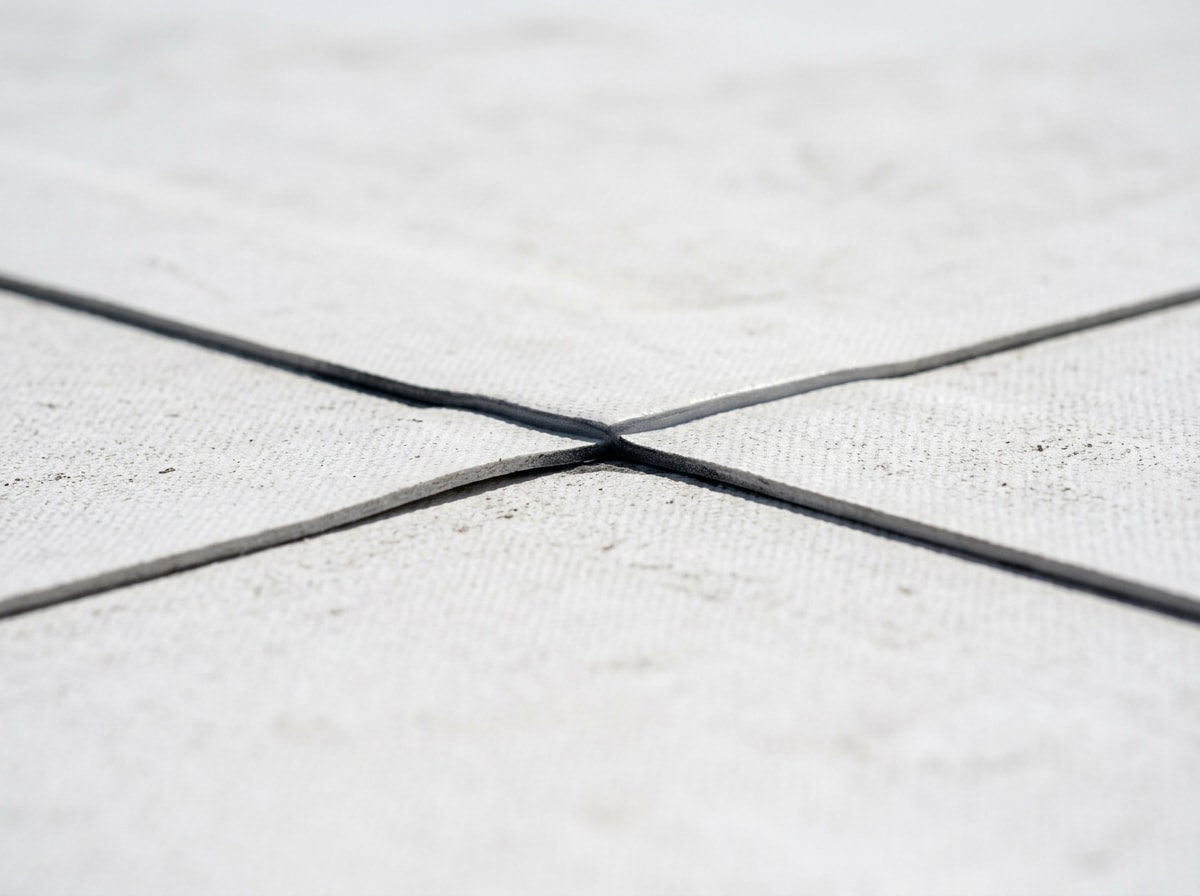
TPO, PVC, and EPDM are thin, flexible single-ply systems installed in large sheets with heat-welded or adhered seams. Their main vulnerability is physical damage, such as punctures from foot traffic or dropped tools, along with seam separation as the membrane expands and contracts with temperature swings.
Single-ply maintenance focuses heavily on seam integrity, since one open seam can let water track widely underneath the membrane before it shows up as an interior leak. Inspectors also check for shrinkage at the membrane's edges and look for granule or coating wear on TPO specifically, which signals UV degradation.
EPDM tends to be more puncture-resistant than TPO but relies on adhesive-bonded or taped seams that need periodic inspection for lifting. PVC holds up well against grease and chemical exposure, which makes it a common choice for restaurants and food-service buildings, but its seams still require the same routine scrutiny as any single-ply system. A roof coating can also extend a worn single-ply system's service life before full replacement becomes necessary.
Built-Up Roofing (BUR) and Modified Bitumen
BUR and modified bitumen systems age differently than single-ply membranes, and their warning signs look different too. Alligatoring, a cracked, reptile-skin pattern on the roof surface, signals that the asphalt coating has dried out and lost flexibility. Left unaddressed, it leads to water infiltration through the cracks.
Blistering, where pockets of trapped air or moisture form bubbles under the surface, weakens the membrane and often expands over time, especially under direct sun. Granule loss on modified bitumen caps exposes the underlying asphalt to UV rays and accelerates aging. None of these issues cause immediate leaks on their own, but they're reliable indicators that a roof is approaching the end of its service life. Catching alligatoring or blistering early, and recoating or patching before it spreads, can add several years to a roof's usable life.
Budgeting and Warranty Protection
Maintenance isn't just about catching leaks. It's also what keeps a roof's financial protections intact.
Most manufacturer warranties, including No Dollar Limit (NDL) warranties, require the building owner to perform regular, documented preventative maintenance as a condition of coverage. Warranty compliance isn't automatic just because a certified contractor installed the roof; it depends on what happens afterward. If a leak traces back to something preventable, like a blocked drain that caused ponding and eventual membrane failure, many manufacturers will deny the claim and void the remaining coverage.
Some manufacturers take this further and reward documented upkeep directly. GAF's WellRoof Guarantee Extension, available through its PlatinumElite Commercial Contractors, can turn annual inspections and repairs into up to a 25% extension of certain eligible guarantee durations, up to a maximum of 35 years . In practical terms, that program alone can add anywhere from 2½ to 5 more years of coverage on an eligible roof system, simply for keeping up with the inspections a building owner should be doing anyway.
Keeping inspection records, repair invoices, and photos isn't just good practice. It's often the exact documentation a manufacturer will request if a warranty claim is ever filed. Building owners facing visible wear or a failed section should consult a commercial roofing replacement professional before damage progresses far enough to jeopardize that coverage entirely.
Safety Requirements for Maintenance Staff
Roof maintenance work carries real fall-hazard risk, and that risk doesn't shrink just because the work feels routine. Any program that puts staff on a rooftop needs documented safety procedures, not just a technical checklist.
Per OSHA's construction standard, each employee on a walking or working surface with an unprotected side or edge six feet or more above a lower level must be protected from falling by guardrail systems, safety net systems, or personal fall arrest systems . That standard applies to most commercial flat roofs, which makes anchors, harnesses, and lanyards non-negotiable for in-house staff handling inspections or repairs themselves. For a closer look at the equipment itself, see our roofing harness guide, which covers OSHA rules and how to choose the right setup.
Given the equipment, training, and liability involved, many building owners find it's simpler and safer to have a licensed professional handle rooftop access. Contact Crestline Exteriors to schedule an inspection instead of sending untrained staff onto the roof, or visit our homepage to see the full range of commercial roofing services we provide across the Denver metro.
FAQ
How often should a commercial roof be inspected?
At least twice a year, typically spring and fall, plus an extra inspection after any major storm, hail event, or high-wind incident. This schedule catches seasonal wear before it compounds and documents the roof's condition for warranty purposes.
What does commercial roof maintenance include?
Core tasks include routine inspections, clearing debris and drains, checking seams and flashing, completing minor repairs as issues arise, and keeping written documentation of every visit. Together, these tasks form the backbone of any maintenance program.
What problems commonly cause commercial roof leaks?
Common causes include open or failed seams, damaged or deteriorated flashing, punctures from foot traffic or debris, blocked drains causing ponding water, and sealant that's dried out or pulled away from penetrations. Most of these are preventable with routine inspection.
How long does a well-maintained commercial roof last?
Most commercial roofing systems are designed for 20 to 30 years of service, depending on the material. Whether a roof reaches that range or fails early comes down almost entirely to how consistently it's inspected and repaired.
How can I extend the lifespan of my commercial roof?
Follow a documented maintenance program, keep drains and gutters clear, address minor repairs promptly, and schedule inspections twice a year. Consistency matters more than any single repair.