Snap lock metal roofing is the standing seam profile most contractors reach for first because the panels click together by hand, no seamer, heat, or sealant required. If you've seen the term on a quote and wondered how it differs from other metal roof systems, this guide covers the design, honest pros and cons, material choices, and what a correct installation actually looks like.
What Is Snap Lock Standing Seam Metal Roofing?
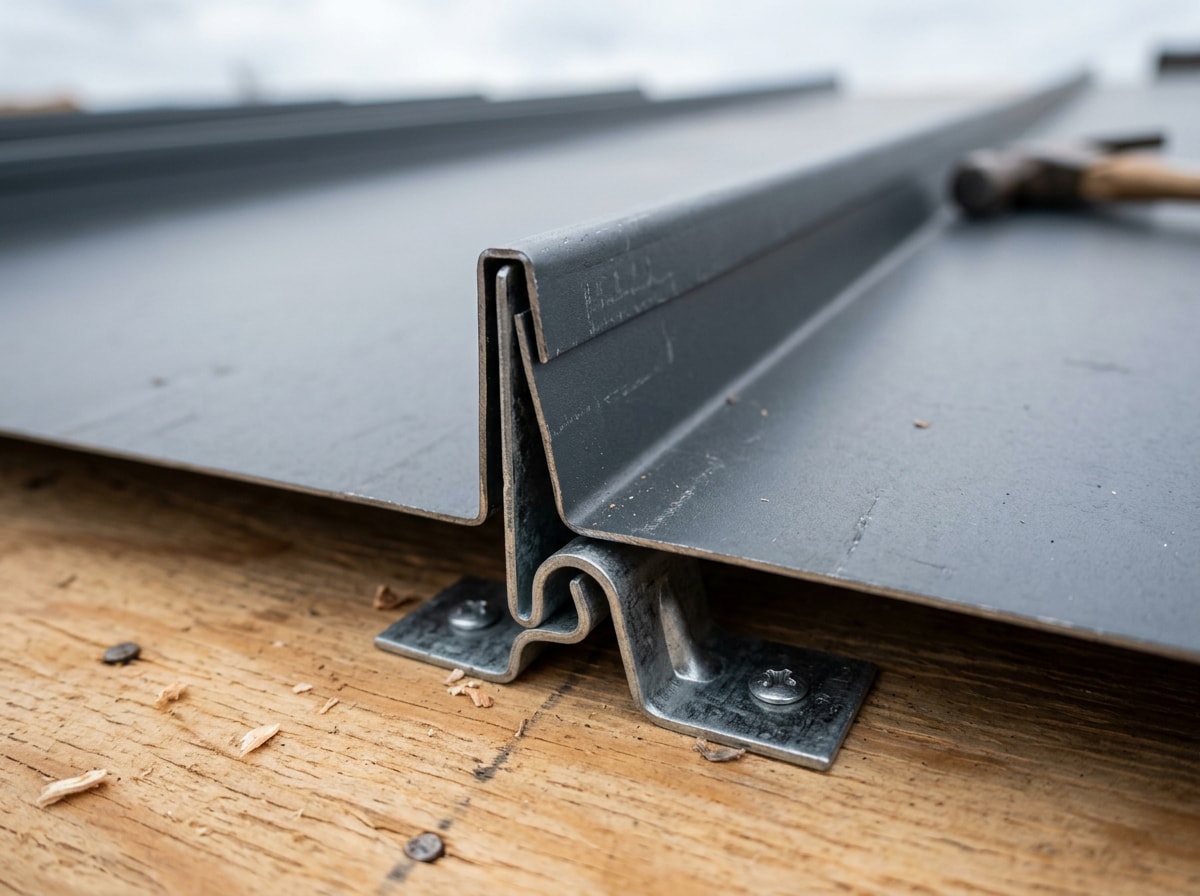
Snap-lock metal roofing is a type of standing seam roof in which the seam is held together by clips that have been screw fastened directly to the substrate.
Working in conjunction with factory-bent trim and accessories for different situations, each panel has one male and one female edge that lock together over a metal clip secured to the weatherized roof deck.
This sets snap lock apart from mechanically seamed standing seam panels, which require a motorized tool to crimp the edges closed. Snap-lock metal roofing can be installed faster as it requires less tooling. That's a big part of why it's become the most common standing seam profile on residential homes.
Homeowners comparing systems can see full specs on our metal roofing services page or browse metal roof installer options.
The Core Components and Design
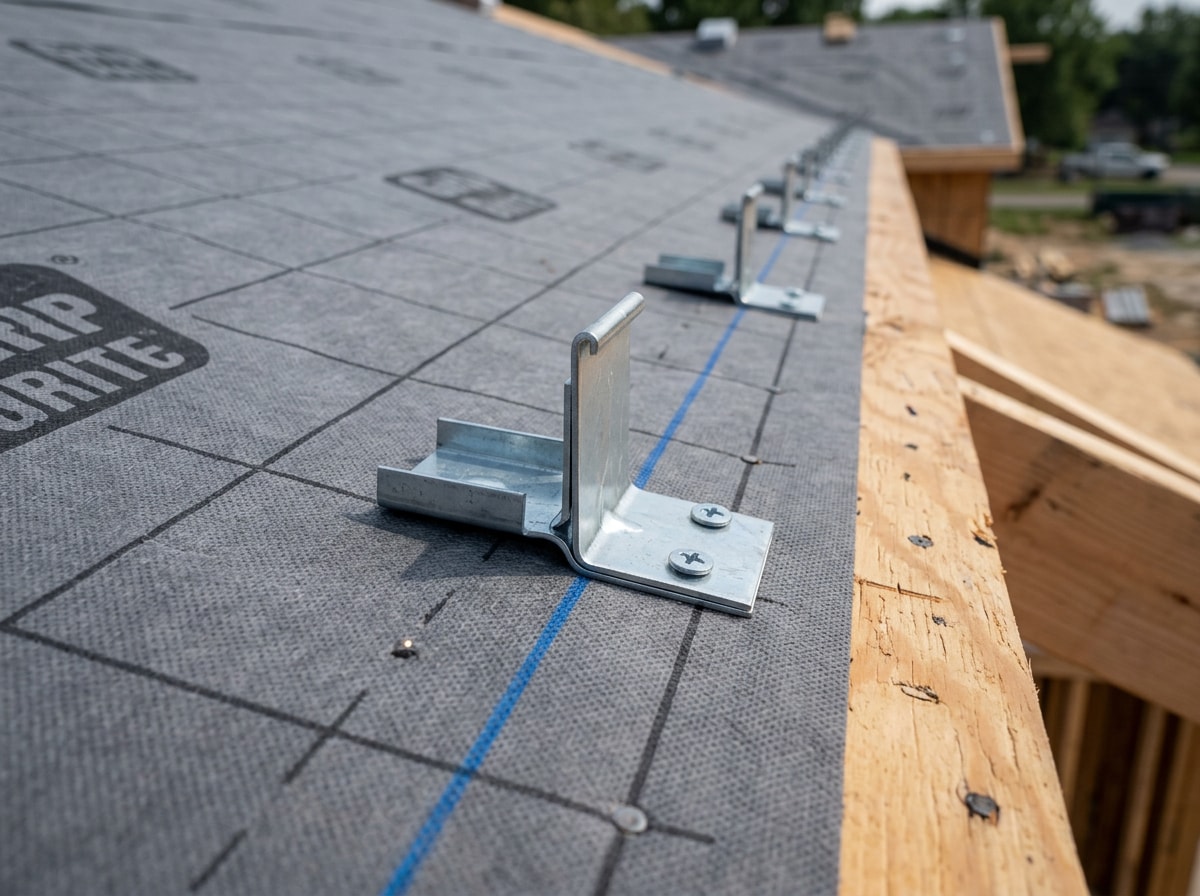
Each snap lock panel is roll-formed from a coil of steel or aluminum, creating interlocking edge profiles on both sides. Hidden clips are screwed into the deck, then the panel's female leg slides over the clip and the adjoining panel's male leg.
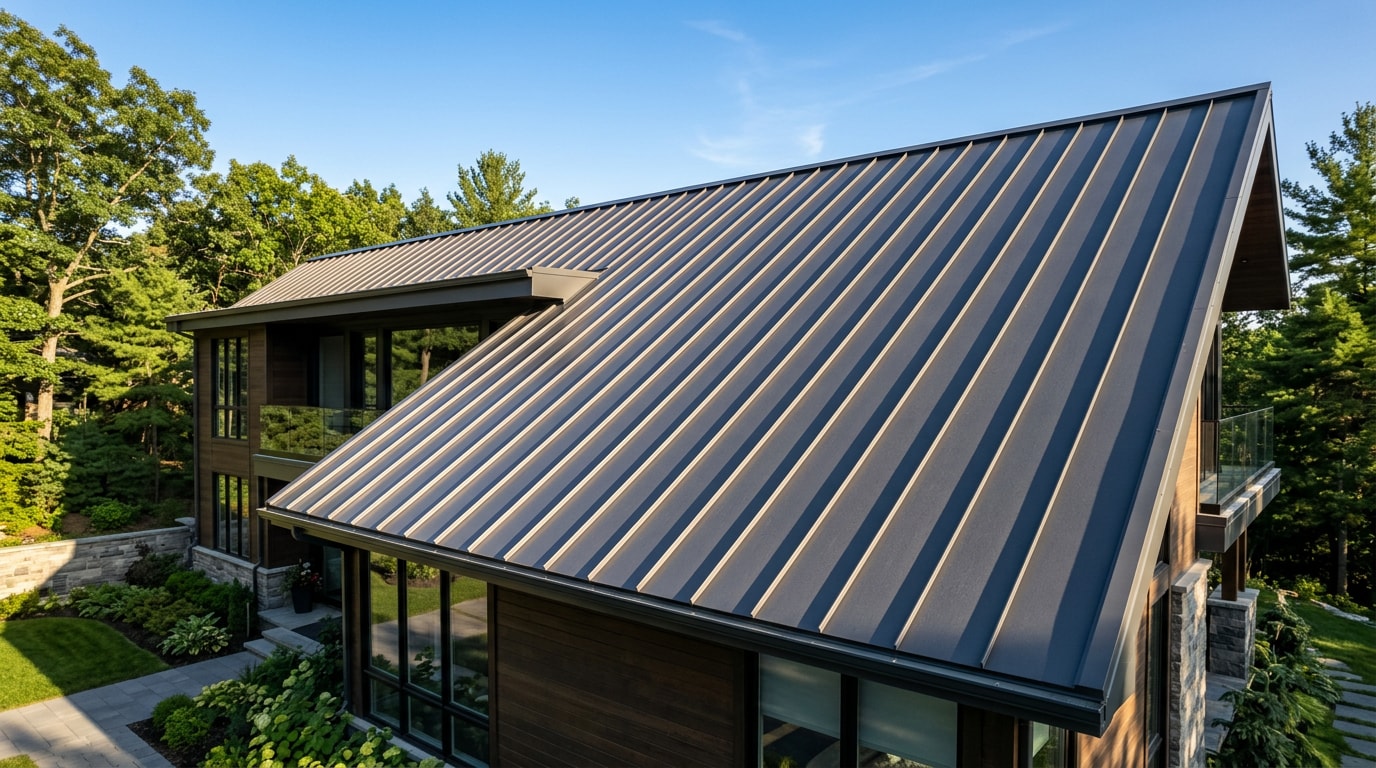
Because the clips sit under the seam, there are no exposed fastener heads anywhere on the field of the roof. That's what gives snap lock roofs their smooth, gap-free look and helps reduce long-term leak points tied to exposed fasteners.
How the Panels Lock Together
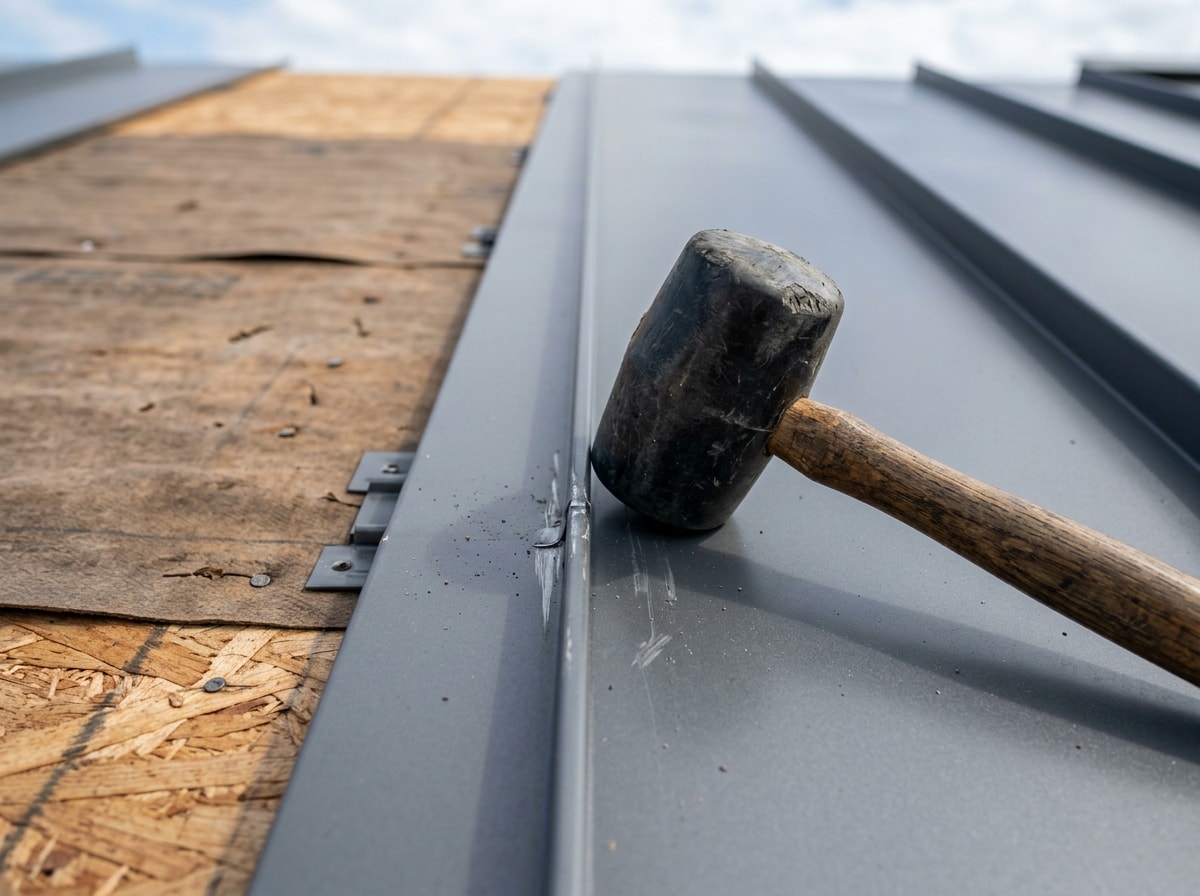
Snap-lock panels are manufactured to be put together without expensive mechanical seamers. Instead, they lock together with a few bumps of your fist or a rubber mallet. No seaming tool is required at any point in the process.
Installers align each panel against the previous one and apply pressure along the seam until it clicks fully into place. Both snap-lock and mechanically seamed systems are secured with floating clips, which lets the metal move with temperature changes instead of buckling.
There's More Than One Kind of Standing Seam
There are two basic styles of panel for standing-seam metal roofs: field seamed and snap lock.
Field-seaming requires the joints at the panel edges be crimped together as each piece is installed on the roof, while snap-lock relies on a factory-formed interlock alone.
Here's the detail most buying guides skip: building code doesn't actually require the steep pitch most installers quote. The International Residential Code sets the minimum slope for standing-seam roof systems at one-quarter unit vertical in 12 units horizontal (2-percent slope) . In practice, almost every manufacturer still sets their own warranty minimum at 3:12 for snap lock panels specifically, because that's the pitch where water sheds reliably across an unsealed, hand-snapped seam. Code compliance and manufacturer warranty coverage aren't the same bar, and it's worth asking any installer which one they're quoting against.
Snap Lock vs. Mechanically Seamed: Cost and Performance
Mechanically seamed metal roofing is the most weather-resistant metal roofing option on the market. Snap-lock metal roofing is less weather tight when compared to mechanically seamed options but is a better option than a through-fastened roof.
The tradeoff is cost. Recent 2026 pricing data puts snap lock standing seam at roughly $8 to $16 per square foot installed, versus $12 to $20 for mechanically seamed panels on the same job.
| Roofing Type | Approx. Installed Cost per Sq. Ft. |
|---|---|
| Asphalt shingles | $4.50 – $7.50 |
| Snap lock standing seam | $8.00 – $16.00 |
| Mechanically seamed standing seam | $12.00 – $20.00 |
Pricing swings with gauge, coating, panel length, and local labor rates, so treat this as a planning range rather than a quote. For a closer look at how seam type affects the final bid, our standing seam roofing guide breaks down pricing by profile and gauge in more detail.
Want a number specific to your roof? Request a free estimate and we'll measure your exact field, hips, and valleys before quoting.
Advantages of Snap Lock Metal Roofing
The advantages mostly come down to speed, cost, and upkeep.
- Faster installation. No seamer tool or specialized crew training is required, which typically lowers labor hours.
- Lower maintenance.
As long as the installation is done correctly, Snap Lock roofing systems require minimal maintenance to continue to function properly.
- Energy performance. Many panels use reflective pigment coatings that reduce attic heat gain, which can modestly lower cooling costs in warmer climates.
- Clean appearance. Concealed clips mean no visible fastener heads across the roof field.
Snap Lock Is the More Affordable Standing Seam Option
Snap Lock costs less to install than a mechanically seamed roofing panel, but it's still considered to be expensive compared to asphalt shingles or exposed-fastener panels. For homeowners comparing metal roofing prices, snap lock sits in a practical middle ground: a more affordable standing seam option without giving up the hidden-fastener look.
Disadvantages of Snap Lock Metal Roofing
Snap lock isn't the right call for every roof. It carries lower wind resistance, typically rated to 110 mph, compared to mechanical seam panels, and is not recommended for roof pitches below 3:12 per most manufacturer warranties.
It's also generally less weathertight than mechanically seamed panels, since a crimped seam creates a tighter mechanical bond. Metal roofing's impact and wind performance is commonly measured against UL 2218 (impact) and UL 580 (wind uplift); a Class 4 UL 2218 rating, for example, means it has met the highest impact-resistance classification under UL 2218 , but that rating still does not mean a roofing product is hail-proof or cannot be damaged during a severe storm . Ask any installer which rating their specific panel and clip system has actually achieved rather than assuming it applies across every product line.
A Guide to Selecting the Best Material
Most residential snap lock panels are made from painted galvanized steel or pre-painted aluminum. Steel is stiffer and often slightly less expensive; aluminum resists corrosion better in coastal environments and won't rust.
Panel gauge, the metal's thickness, also matters. 24-gauge steel is the industry standard for residential standing seam roofs, offering the best balance of durability, dent resistance, and cost, while 26-gauge is thinner and more budget-friendly but more prone to oil-canning.
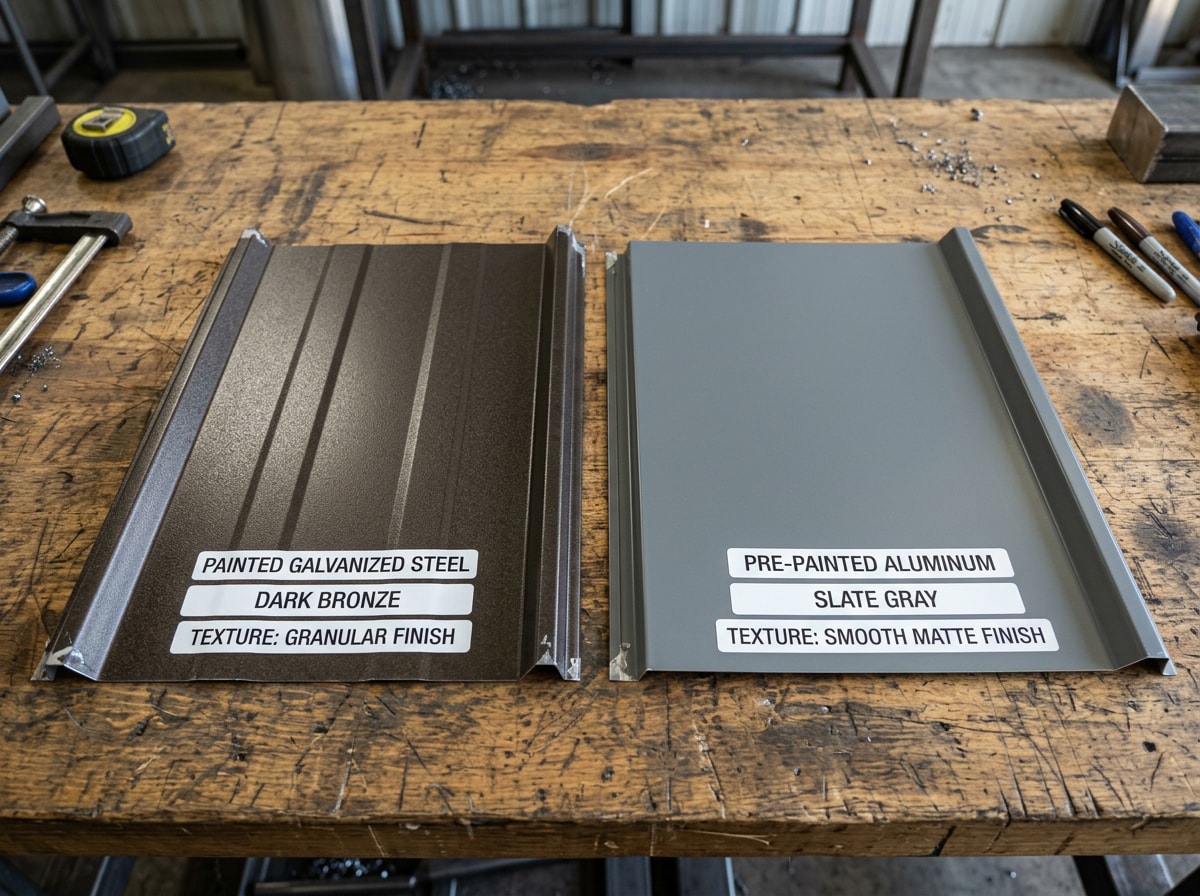
Reflective coatings used in cool-roof discussions are typically evaluated for solar reflectance and thermal emittance under EPA and DOE cool-roof efficiency guidance. Browse available finishes on our premium siding and metal roofing options or ask about color families during your estimate.
A Pro's Guide to Snap Lock Installation
Structural Assessment and Material Quantification
Before any panels go up, a qualified installer confirms the deck can support the roof system and measures the field carefully. Accurate measurements at hips and valleys reduce wasted material and panel miscuts. This step is also where our crews catch old decking, soft spots, or ventilation issues before they become change orders mid-project, something a rushed quote from a less experienced crew often misses.
Phase 1 — Deck and Underlayment
The substrate is cleaned and inspected, then covered with a compatible underlayment overlapped per manufacturer specs. Drip edge installation sequence matters here: at the eaves, the drip edge must be installed directly onto the roof deck before the underlayment is laid down, while at the rakes the underlayment goes down first so water sheds correctly off the roof .
Phase 2 — Clip Layout and Panel Positioning
Clips are spaced along a chalk line, commonly every 12 to 24 inches depending on local wind zone requirements. Panels longer than 20 feet use slotted clips so the metal can move with thermal expansion instead of buckling.
Phase 3 — Snap Engagement and Progression
On a typical gable roof, installation starts at one rake edge and works panel by panel toward the opposite side. Each panel's male leg is set against the clip line, then the next panel's female leg is pressed or malleted into place.
Crews check alignment against the chalk line every few panels to catch drift early, rather than waiting until the roof is mostly covered. This rhythm, seat, snap, check, repeat, is what separates a tight, long-lasting seam from one that's prone to leaks later. On projects we've run through this sequence, skipping the mid-run alignment check is the single most common cause of a crooked final seam at the ridge.
Planning a project? Review our roof installation services or new roof options for a closer look at how we scope a metal roof job from measurement to final inspection. Homeowners in the area can also check our Littleton, CO service page for local project examples.
FAQ
What's the Best Way to Prevent Oil Canning With Snap Lock Panels?
Oil canning, or the visible waviness in the flat area of a metal panel, is an inherent characteristic of light-gauge metal , not a structural defect. Choosing a thicker panel gauge, such as 24-gauge instead of 26-gauge, along with proper clip spacing, reduces how visible it appears.
Are There Special Underlayment Considerations for a Snap Lock System?
Standard asphalt-saturated felt underlayment is not the right choice for a metal roof. Most installers recommend a synthetic or high-temp underlayment rated specifically for metal roof assemblies instead, since standard felt can degrade from trapped heat and condensation.
What Slope Is Required for Snap Lock Panels?
Building code technically allows standing seam systems down to one-quarter unit vertical in 12 units horizontal (2-percent slope) , but most manufacturers set their own warranty minimum at 3:12 for snap lock profiles specifically, so water sheds reliably off the hand-formed seams. Roofs below that pitch typically need a different roofing assembly or added sealant measures per the manufacturer's spec.
How Much Does Snap Lock Metal Roofing Cost Per Square Foot?
Expect roughly $8 to $16 per square foot installed in 2026, depending on gauge, coating, and region. Mechanically seamed panels typically run $3 to $5 more per square foot for the same job.
What's the Difference Between Snap Lock and Mechanical Lock Roofing?
Snap lock panels interlock by hand or mallet with no special tool. Mechanical lock panels require a motorized seamer to crimp the edges, which costs more but produces a tighter, more weathertight seam.
How Long Does a Snap Lock Metal Roof Last?
A properly installed snap lock metal roof typically lasts 30 to 50 years, depending on material, gauge, and climate exposure. Staying on top of minimal maintenance, clearing debris and checking clips, helps homeowners reach the upper end of that range.
Ready to find out if snap lock fits your roof? Request a free estimate from our team at Crestline Exteriors today.
Reviewed by the Crestline Exteriors roofing team, licensed metal roof installers serving the Denver metro area. Questions about your specific roof? Contact us directly.