A roofing inspector is the person who tells you the truth about your roof before a small problem turns into a five-figure repair bill. They climb up, document what they find, and hand you a report instead of a sales pitch. Whether you're buying a home, filing a storm damage claim, or thinking about this as a career change, here's what the job actually involves.
What Does a Roofing Inspector Do?
A roofing inspector evaluates a roof's structure, materials, and overall condition. They check for cracks, blistering, granule loss, and missing shingles, then document everything in a written report. The goal is an accurate, unbiased picture of the roof's condition, not an upsell.
A typical visit follows a predictable sequence:
- Ground assessment — walking the property perimeter to spot sagging, debris, or obvious wear from below.
- Roof access — safely getting onto the roof surface with a ladder or, on steep or fragile roofs, a drone.
- Surface inspection — checking shingles, flashing, vents, and gutters for damage or wear.
- Attic and interior check — looking for moisture stains, mold, or insulation gaps that hint at hidden leaks.
- Report writing — compiling photos, measurements, and notes into a formal report for the homeowner, buyer, or insurer.
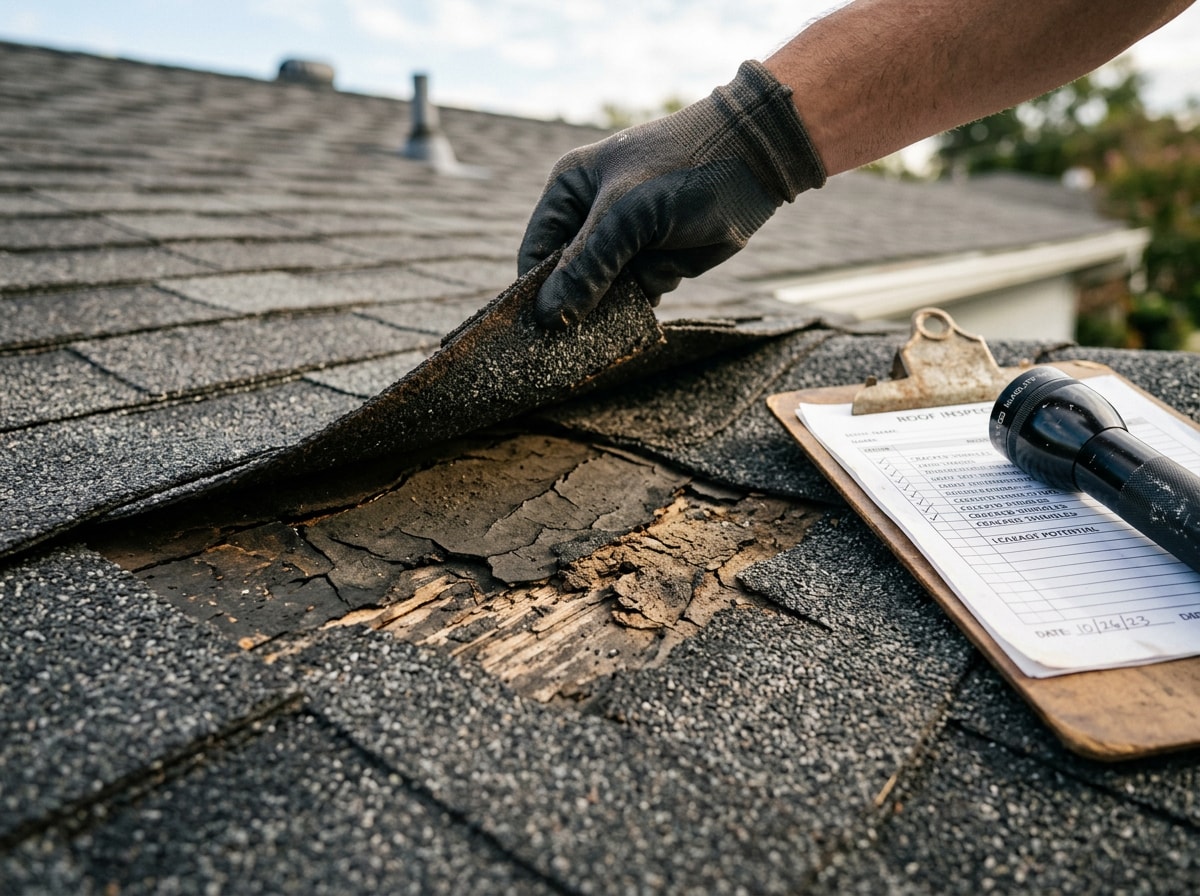
In Colorado's Front Range, that sequence gets a regional twist. After a hailstorm sweeps through Littleton or Denver, we're checking for bruised mat on asphalt shingles and cracked metal flashing just as much as we're looking for obvious punctures, since hail damage here often hides until a roof starts leaking months later. Inspectors also need to be comfortable with heights and detail-oriented enough to spot a hairline crack most people would walk right past.
Roofing Inspector vs. Roofing Contractor: Why It Matters
Homeowners often assume a contractor's quote doubles as an inspection. It doesn't, and that distinction affects whether you can trust what you're told.
An independent roofing inspector has no financial stake in whatever repairs get recommended. Their only job is to deliver an unbiased assessment, and that independence is exactly what makes their findings trustworthy to insurers, buyers, and sellers.
A roofing contractor's business is built on selling and performing repairs or replacements, which creates an inherent conflict of interest when that same person diagnoses the problem. That's not a knock on contractors. It's just why insurers, lenders, and real estate agents often want a separate set of eyes before work begins. If you want a dedicated, documented look at your roof's condition, a roof inspection is a different service than a repair estimate, even when the same company offers both.
Types of Roof Inspections
The type of inspection you need depends on the situation:
- Pre-purchase inspection — needed before buying or selling a home, often tied to closing timelines.
- Storm or insurance damage report — needed after hail, wind, or heavy snow, usually time-sensitive for claims.
- Routine annual maintenance check — recommended even with no visible problems, to catch wear early.
Industry guidance is consistent on frequency. NRCA recommends homeowners or building managers inspect their roof systems at least twice per year, preferably in the spring and fall. After major storms, add an extra check regardless of the calendar.
How Much Does a Roof Inspection Cost, and How Long Does It Take?
Cost depends on roof size, pitch, accessibility, and whether the inspection is tied to an insurance claim. A straightforward visual inspection on a typical single-family home usually takes somewhere between 45 minutes and two hours, longer if the inspector needs attic access, drone footage, or moisture-meter readings throughout. For a full breakdown of current pricing by inspection type, see our detailed guide on roofing inspection costs and frequency.
How to Choose the Right Roofing Inspector
Not every "inspector" is equally qualified, so a bit of vetting up front goes a long way.
Check Certifications and Qualifications
A certified roof inspector has completed formal training to accurately evaluate roof condition and produce documentation that holds up with insurers or buyers. Look for credentials from recognized organizations like NRCIA, HAAG, or InterNACHI, and don't be shy about asking to see the credential directly.
Verify Insurance and Liability Coverage
A professional inspector should carry both liability insurance and workers' compensation. Liability insurance protects your property from accidental damage during the visit; workers' compensation covers the inspector if they're hurt on yours. Rooftop work carries real fall risk. Falls are the leading cause of work-related deaths among residential construction workers , and workers engaged in residential construction six feet or more above lower levels must be protected by conventional fall protection under federal safety rules. That's exactly why a certificate of insurance is worth asking for before anyone climbs a ladder on your property.
Questions to Ask Before You Hire
- Are you affiliated with, or paid by, any roofing contractor?
- Can I see a sample report before I book?
- What's your typical turnaround time for the written report?
- Does the inspection cover structure, interior, attic, and surface, or just the surface?
- Are you a truly independent inspector, or do you also perform repairs?
If you're in the Denver metro area and want that independence paired with local storm experience, our team covers Littleton, CO and Denver, CO, and you can schedule an inspection with these questions answered upfront.
Do You Have What It Takes to Be a Roofing Inspector?
A great inspector is part detective, part communicator, with the patience to document details accurately. Most states don't require a college degree. A high school diploma or GED typically covers the baseline requirement. Beyond that, being genuinely comfortable with heights is non-negotiable since this isn't a career for anyone uneasy on a ladder or steep slope.
How to Get Certified as a Roofing Inspector
Certification is what separates a hobbyist from someone clients will actually trust with a report. Three paths dominate the industry, and each serves a different focus.
| Certification | Focus Area | Best For |
|---|---|---|
| InterNACHI | General residential roof inspection, part of a broader home inspector curriculum | Generalist home inspectors adding roofing to their skillset |
| HAAG | Forensic damage assessment, especially hail and wind for insurance claims | Insurance/claims specialists |
| NRCIA | Standardized leak prevention and commercial roofing systems | Roofing-focused inspectors building a dedicated business |
Program costs and course lengths change often, so confirm current pricing and requirements directly with each organization before enrolling. Most reputable programs also build in jobsite safety training, since rooftop access is inherent to the job and falls remain the top cause of fatal injury in residential construction, as noted above.
Licensing Requirements for Roofing Inspectors
Licensing rules vary significantly by location. Some states fold roof-only inspection work under a broader home inspector license, while others have no specific state requirement at all, leaving it to a general business license. The International Code Council issues code-based inspector credentials, including the Residential Building Inspector designation, which forms part of the combination inspector certifications that many municipal building departments recognize alongside residential electrical, mechanical, and plumbing inspector credentials . Check your local building department before assuming any one rule applies everywhere.
Get Insurance
Beyond what clients should check for, inspectors running their own business need their own coverage. General liability and errors & omissions (E&O) insurance are the two most common policies, protecting against property damage claims and mistakes in a delivered report, respectively.
Invest in Tools and Equipment
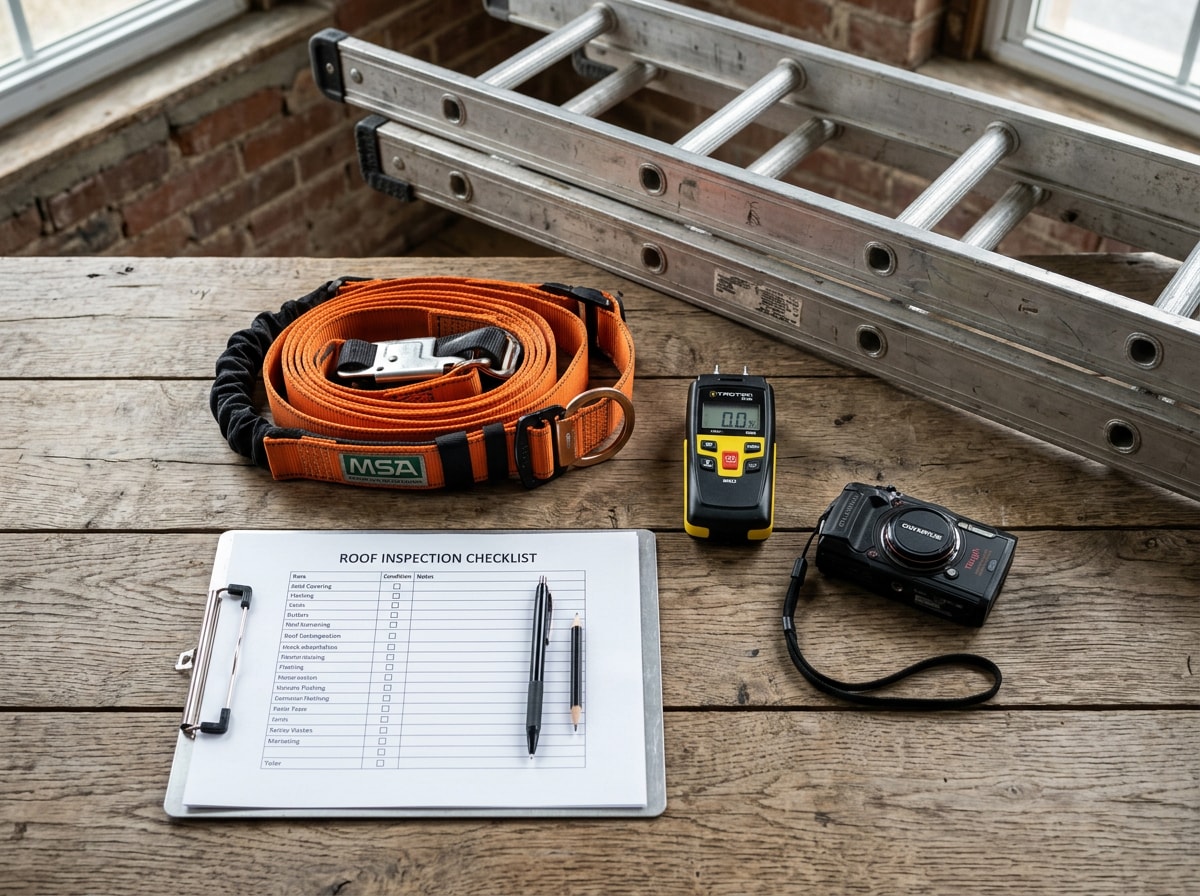
A functional inspector toolkit typically includes:
- A sturdy extension ladder
- A safety harness
- A moisture meter
- A camera or drone for hard-to-reach roof documentation
Career Path and Earnings for Roofing Inspectors
Once certified, inspectors typically specialize in one of a few directions: running an independent inspection business, doing insurance claims work for carriers, or partnering with real estate agents on pre-purchase inspections.
Earnings vary widely by specialty, region, and employment type. There's no dedicated federal wage category for "roofing inspector" specifically, but the closest official benchmark is the broader construction and building inspector occupation, where the median annual wage for construction and building inspectors was $74,690 in May 2025 , according to the U.S. Bureau of Labor Statistics. Independent inspectors who specialize in insurance-claims work often earn more per job, though income can be seasonal depending on storm activity in their region.
Launching Your Roofing Inspector Career
Starting a roof inspection business starts with the basics: registering the business, setting up a simple website, and featuring your certification prominently as a trust signal for prospective clients. Referral relationships do most of the heavy lifting early on. Real estate agents and insurance adjusters are natural partners, since both regularly need an independent set of eyes on a roof. Pair that network with online reviews and local search presence to build a steady client pipeline.
I'm Kyle Pyatt, owner of Crestline Exteriors. I've spent 13-plus years working Front Range roofs, and the pattern I see most often is homeowners skipping a pre-storm-season inspection, then paying for a full tear-off they could have avoided with a $300 checkup. If your roof hasn't been looked at this year, now is a good time to fix that. You can get a free estimate or browse our full roofing contractor services to see what a documented inspection includes before you commit to anything bigger. If a storm already hit and you need someone out fast, our emergency roof repair team handles that too. Learn more about our full range of exterior services at Crestline Exteriors.
FAQ
How much does a roof inspection cost?
Pricing depends on roof size, pitch, and whether the visit is tied to an insurance claim. See our detailed 2026 roofing inspection cost guide for current ranges by inspection type.
How long does a roof inspection take?
Most straightforward visual inspections take 45 minutes to two hours. Inspections that include attic access, drone footage, or detailed moisture-meter readings take longer.
How often should I get my roof inspected?
NRCA recommends inspecting roof systems at least twice per year, preferably in the spring and fall , plus an extra check after any major storm.
What's the difference between a roofing inspector and a home inspector?
A home inspector evaluates the entire property, including electrical, plumbing, and structural systems, with roofing as one small part of a broader report. A roofing inspector focuses exclusively on the roof system and typically goes into far more depth on materials, flashing, and roof-specific code issues.
What's the difference between a roofing inspector and a roofing contractor?
Roofing inspectors assess existing roofs for damage or code compliance. Roofing contractors perform installation and repairs. The inspector's value comes specifically from staying unbiased and having no stake in whatever work gets recommended afterward.
Is roofing inspector a good career?
It offers solid stability, especially for those who pursue specialized certifications in insurance claims work. The physical demands of ladder and rooftop work aren't a fit for everyone, and pay varies widely by specialty and region.
Will a roofing inspector specialize in one type of roof or all kinds?
Most roofing inspectors are trained across all common roof types. If your home has an unusual roof construction, ask upfront whether the inspector has specific experience assessing that particular system.