A licensed roofing contractor near me search turns up dozens of names in seconds, but most of those listings tell you nothing about who actually holds a valid license. This guide breaks down what "licensed" really means where you live, which credentials to verify before signing anything, and the specific red flags that separate a real local roofer from a crew that vanishes after taking your deposit.
What "Licensed" Actually Means Where You Live
Here's the part most guides skip: licensing isn't federal, and in many states it isn't even statewide. In the State of Colorado, plumbing and electrical contractors must carry state-issued licenses, while general contractors have no statewide licensing requirements. That includes roofing. Colorado leaves general contractor licensing up to individual municipalities, which means contractors have to contact each city they work in to figure out the requirements.
That matters for your search specifically. A contractor who's properly licensed in Denver may not hold the correct credential to legally work in Aurora, unincorporated Jefferson County, or Douglas County. Homeowners should ask roofing contractors for their local license number, then confirm that number directly with the local city or county building department to make sure it was actually issued by them and is still current.
Our crews handle permitting and local registration across the Denver metro, so we hear the confusion every week: homeowners assume "licensed and insured" means one uniform thing everywhere. It doesn't. Check our roofing contractor service area before assuming any given license transfers across a county line.
Credentials to Verify Before You Hire
"Licensed and insured" gets printed on every roofing truck in town, but it refers to two separate, checkable things: a government-issued license and specific insurance coverage you can request proof of directly.
Local License Verification by Jurisdiction
Because licensing in states like Colorado runs through the city or county rather than a single state board, where you live determines who to call. Here's a quick reference for the Denver metro:
| Area | Who Handles Licensing | Verify Through |
|---|---|---|
| Denver, CO | Community Planning & Development | City e-permits portal |
| Aurora, CO | Building Division | City contractor lookup |
| Jefferson County, CO | County building/permit office | County permit records |
| Douglas County, CO | County building division | County permit records |
| Arapahoe County, CO | Building safety division | County permit search |
| Littleton, CO | City building division | Business license search |
If you're in the Denver city limits specifically, the City and County of Denver's contractor licensing page lets you confirm a license number before a contractor sets foot on your roof.
General Liability and Workers' Compensation Insurance
General liability insurance protects your property if the contractor damages something during the job. A dropped tool through a window or a crushed gutter happens more often than homeowners expect.
Workers' compensation matters just as much, and the stakes are higher than most people assume. Among the detailed subsectors tracked, roofing contractors had the highest number of fatal falls, slips, and trips of any construction trade in 2022. That's exactly why this coverage exists: without it, you could be held financially responsible if a worker is injured on your property. Always ask the contractor's insurer to send the certificate of insurance directly rather than accepting a copy the contractor hands you, since copies are easy to alter or let lapse.
How to Find and Vet a Roofing Contractor Near You
Once you understand what licensing covers locally, narrow your search to three or five candidates before comparing them side by side. Our roofing contractor near me page breaks down exactly what we check before quoting a job, which is a useful baseline even if you end up calling someone else.
A contractor with genuine coverage in your zip code tends to respond faster and already knows your local permit office. If you're in Highlands Ranch or Castle Rock, for example, ask directly whether the crew has pulled permits in that specific jurisdiction before, not just "in Colorado."
Check Local Reputation
A trustworthy local roofer usually has a documented history in your community: a real street address, years of local project photos, and reviews that mention specific neighborhoods or streets. Look past the star average when reading reviews.
Check the dates. A cluster of five-star reviews posted in the same week, surrounded by months of silence, is worth a second look. Genuine local reputation builds gradually, with reviews spread across seasons and project types rather than bunched after a single storm.
Step-by-Step Checklist to Choose a Licensed Roofing Contractor
Use this sequence instead of relying on gut instinct:
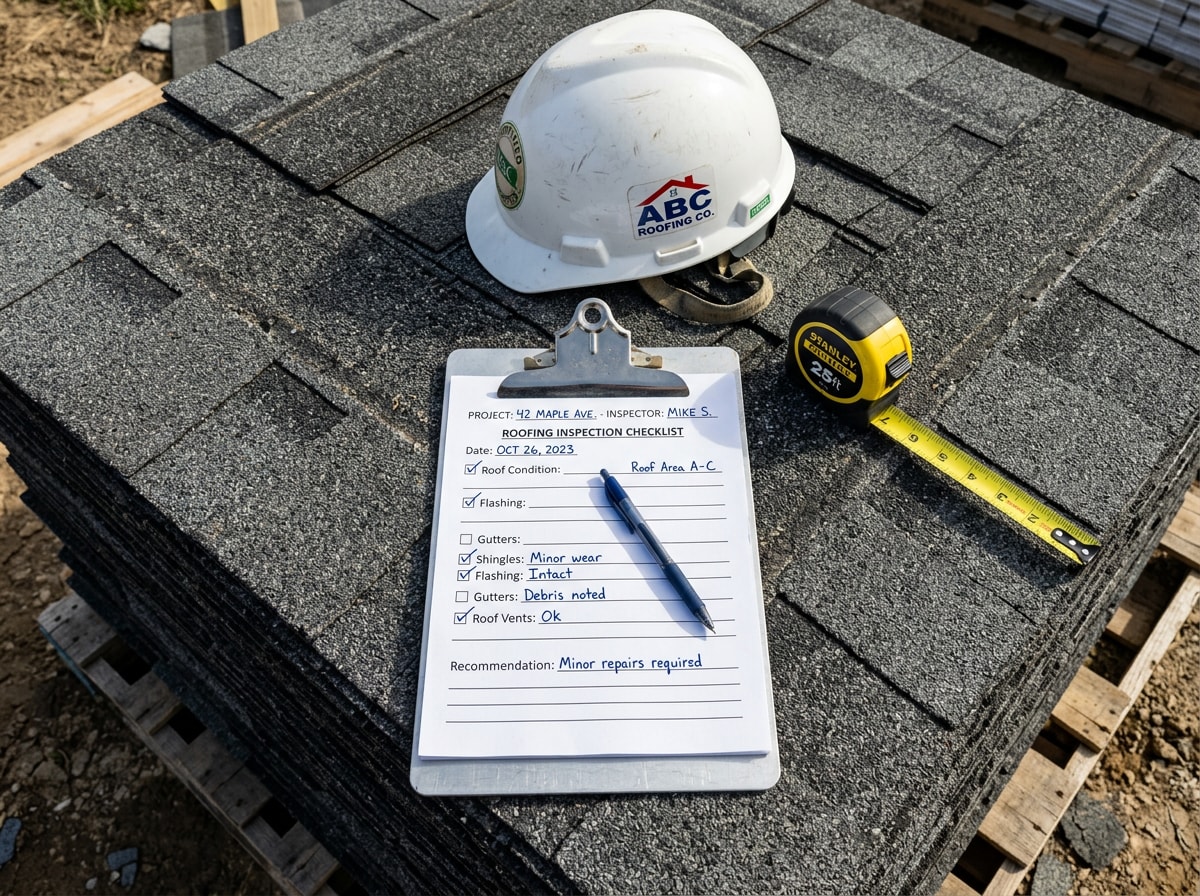
- Verify the license number directly with the issuing city or county office, not just the contractor's word.
- Document your roof's age, material, visible damage, and any recent repairs before calling anyone.
- Request a detailed written estimate from at least two or three contractors.
- Confirm permit handling. Licensed contractors pull permits and schedule inspections as part of the job; a contractor who asks you to pull your own permit is a warning sign.
- Check references and recent local project history before signing anything.
Questions to Ask Before Signing
Ask directly: "Do you hold a license in this specific city or county, and can I see the number?" The answer tells you exactly which office to call to confirm it.
Follow up by requesting proof of insurance in writing, not a verbal assurance. Other useful questions include how the crew handles unexpected decking damage found mid-tear-off, what the workmanship warranty actually covers, and whether the people on your roof are direct employees or subcontracted labor. If you need a repair handled same-week rather than scheduled out, ask how they prioritize emergency roof repair requests specifically.
Understanding Roofing Contractor Costs and Estimates
Pricing depends on three factors: your roof's square footage, its complexity (pitch and number of facets), and the material you choose. A steep, cut-up roof with architectural shingles will always cost more than a simple gable roof with three-tab shingles.
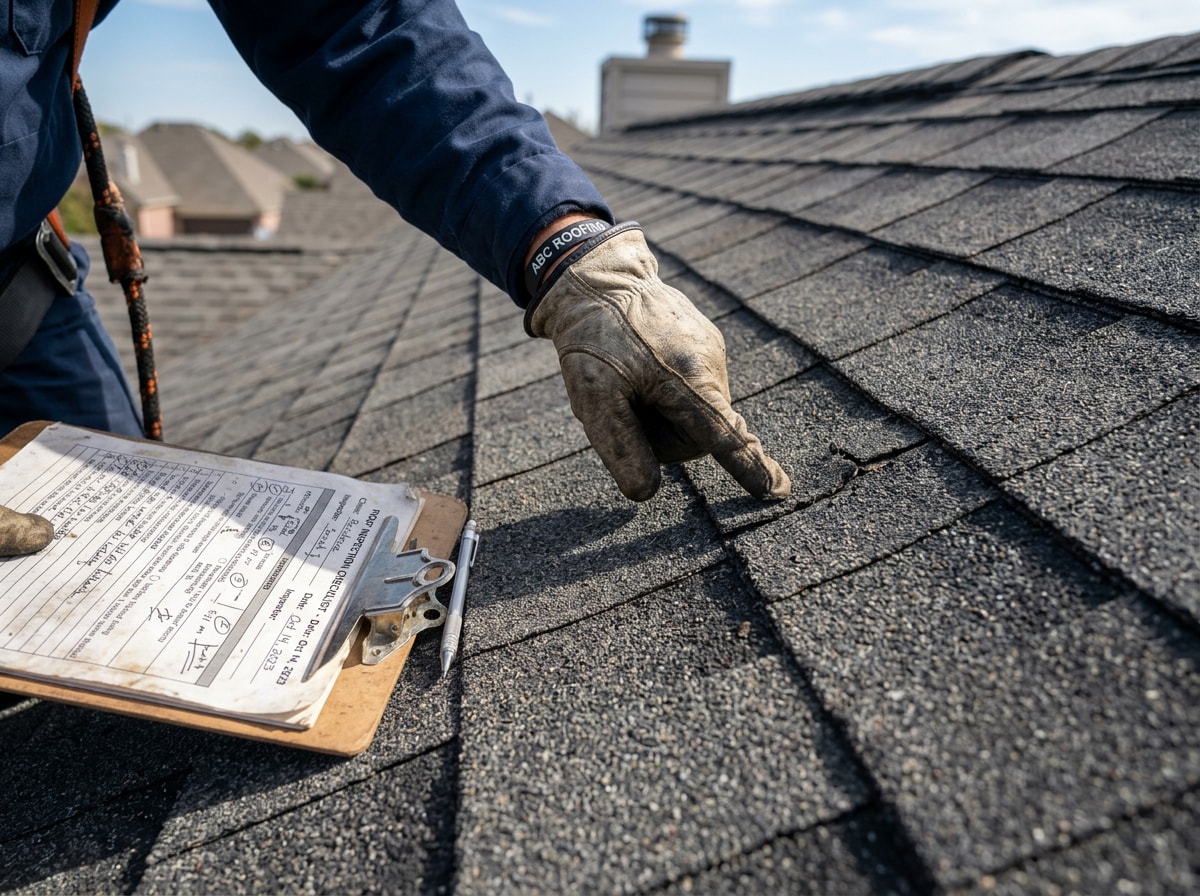
A detailed estimate should break out labor, materials, disposal, and permit fees separately rather than bundling everything into one number. That transparency is itself a good sign; contractors confident in their pricing rarely hide the math. A pre-estimate roof inspection also helps you avoid surprise change orders once tear-off starts. When you're ready to see how these factors apply to your own roof, you can request a free estimate.
Red Flags: How to Avoid Storm Chasers and Unlicensed Crews
Some warning signs show up before a contractor ever picks up a hammer, especially after a hailstorm rolls through, when crews that follow weather systems door-knock entire neighborhoods with rushed offers. Our guide to storm damage roofing covers how to document damage properly before any crew touches your roof.
| Legitimate Contractor | Red Flag |
|---|---|
| Written contract with a detailed scope of work | No contract, or a vague one-page scope |
| Standard pricing, time to compare quotes | Pressure to sign today for a "special" price |
| Verifiable local address and project history | No physical address or recent local work |
| Provides license number and insurance certificate on request | Can't or won't produce proof of either |
Consider only contractors who are licensed and insured, and check with your state or county government to confirm a contractor's license while asking the contractor for proof of insurance directly.
Common tactics to watch for include demands for full payment upfront or cash only, pressure for an immediate decision, and a request that you pull the required permits yourself. A missing written contract alone is reason enough to walk away, regardless of how good the price sounds. For general service questions or to talk through a scope of work before you commit to anyone, you can always contact our team directly.
Explore our full roofing contractor services or head back to our homepage to see our current service area and project photos.
FAQ
What does it mean to hire a licensed roofing contractor?
It means the contractor holds a valid license issued by the specific city or county where your home sits, carries general liability insurance, and maintains workers' compensation coverage. In states without a statewide roofing license, like Colorado, that local license is the credential that actually matters.
How do I verify a roofing contractor's license?
Call or search the licensing office of the city or county where the work will happen and match the license number exactly to the legal business name on your contract. Don't rely on a license number printed on a truck or business card alone.
Does Colorado require a statewide roofing license?
No. Colorado licenses roofing contractors at the city and county level, not through a single state board. A license valid in Denver does not automatically transfer to Aurora, Jefferson County, or any other jurisdiction.
What happens if I hire an unlicensed roofer?
You're typically left without recourse if something goes wrong, since there's no licensing board to file a complaint with. A contractor who can't produce a license number, an insurance certificate, and recent local references on request isn't one you should hire.
How much does a roofing contractor cost?
Cost depends on roof size, pitch and complexity, and material choice. A detailed written estimate should separate labor, materials, disposal, and permit fees so you can compare contractors on equal footing rather than a single lump sum.
Are manufacturer-certified roofing contractors worth it?
Often, yes. Manufacturer certification usually means factory-authorized training on a specific shingle or roofing system, which can unlock extended material warranties that uncertified installers typically can't offer. It's a useful tiebreaker once licensing and insurance are already confirmed.