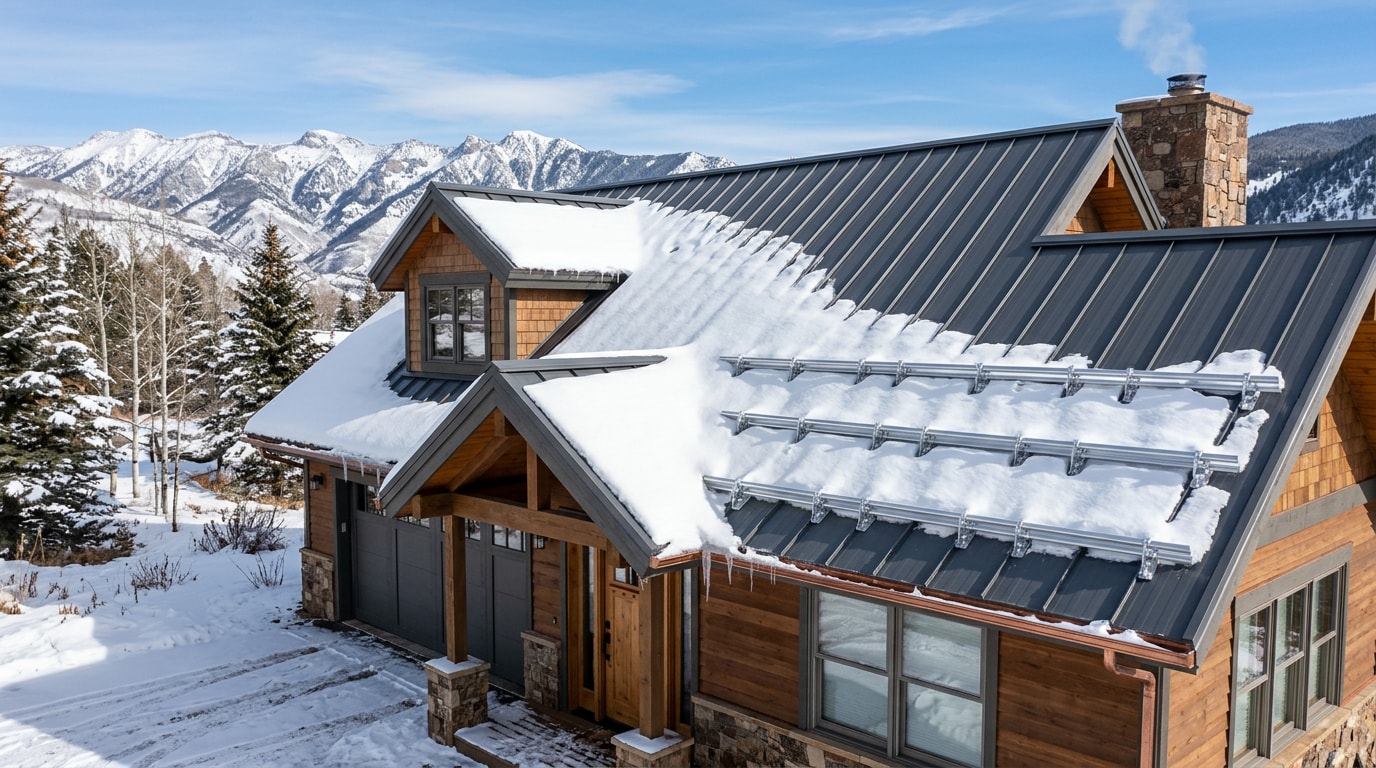
A snow guard for metal roof protection in Littleton, CO keeps heavy Front Range snowpack from letting go in one dangerous sheet onto a walkway, deck, or parked car. Metal panels shed snow fast, and without retention, that whole seasonal load can release at once instead of melting gradually. This guide breaks down placement, product choices, and the installation details that actually hold up through a Colorado winter.
What Snow Guards Do, and Why Littleton Roofs Need Them
A snow guard mounts to the roof surface and holds accumulated snow in place until it melts or sublimates, instead of releasing it in one slab. Metal panels are smooth and low-friction, so a sudden roof avalanche can crush gutters, flatten landscaping, dent vehicles, or injure someone standing below.
Snow guards are made from aluminum, copper, polycarbonate, or painted steel, chosen to match the roof's finish and withstand UV exposure and freeze-thaw cycling. In Littleton, where heavy snow often follows a sunny, warm afternoon, snow retention is a practical safety measure rather than an optional upgrade.
Where Snow Guards Belong on a Metal Roof
Snow guards go anywhere sliding snow could hit a person, vehicle, or structure. That means:
- Above entry doors and front walkways
- Over decks, patios, and outdoor living spaces
- Around skylights and roof penetrations
- Along the full gutter line, not just isolated hot spots
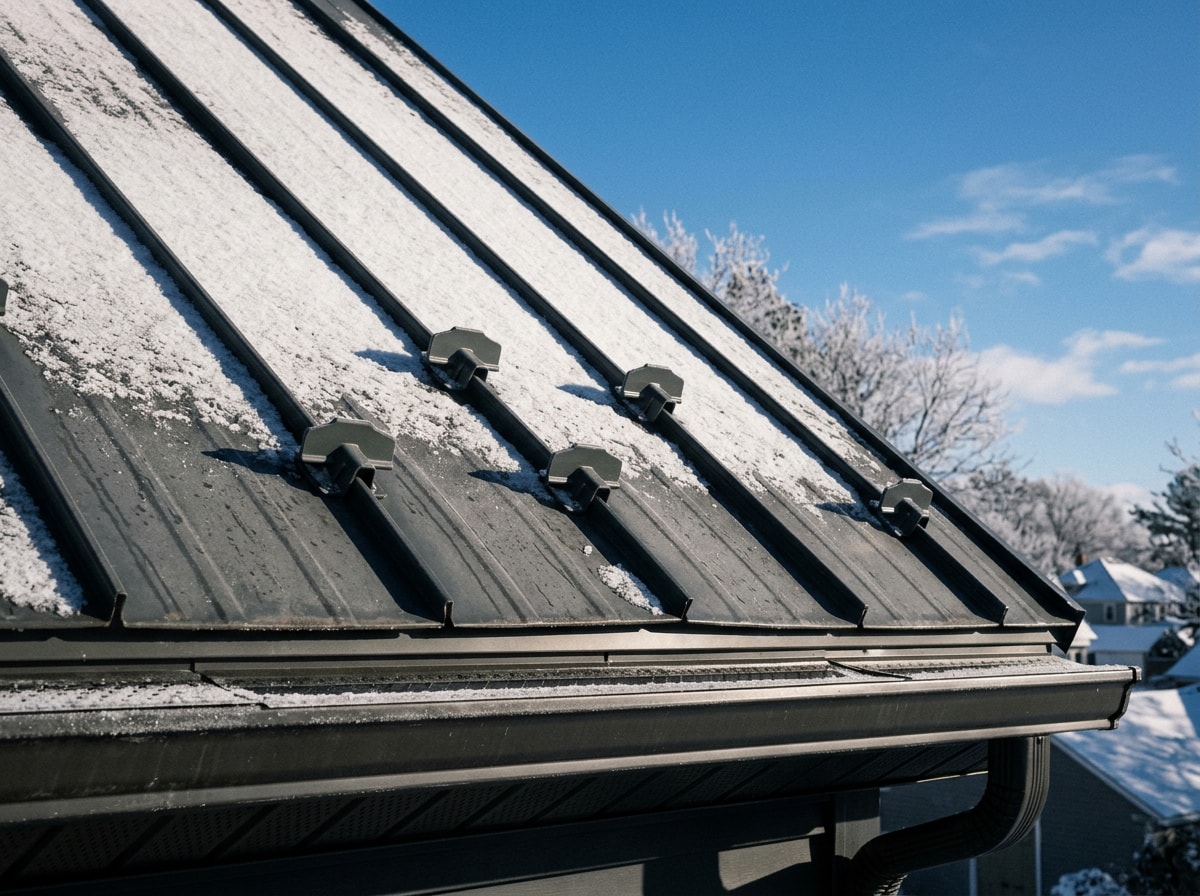
Work outward from the eave in staggered rows rather than placing a handful of units above the front door and calling it done. A single row rarely holds back a full season's snow on a long or steep slope.
How Local Snow Load Drives Spacing
Row count and spacing depend on roof pitch, panel length, and the ground snow load your jurisdiction requires for structural design. Littleton sits at roughly 5,400 feet along the edge of several Front Range counties, and the minimum roof and ground snow load listed for the area is 30/42.9 pounds per square foot . That ground snow load is the starting point an engineer or snow retention manufacturer uses before adjusting for your specific roof's exposure and slope, so a layout that works on a neighbor's house a half-mile away is not automatically correct for yours.
Front Range chinook winds add a wrinkle. A warm, dry gust can heat panels fast enough to trigger a release days after a storm instead of during it. In our field experience installing retention systems across the metro, steep standing-seam roofs that carry a full season's heavy, wet snow typically need two to three staggered rows, not the single row that works fine on a flatter garage roof.
Snow Guard Systems for Metal Roofs: Clamps vs. Custom Snow Stops
The right hardware depends entirely on what kind of metal panel is on the roof.
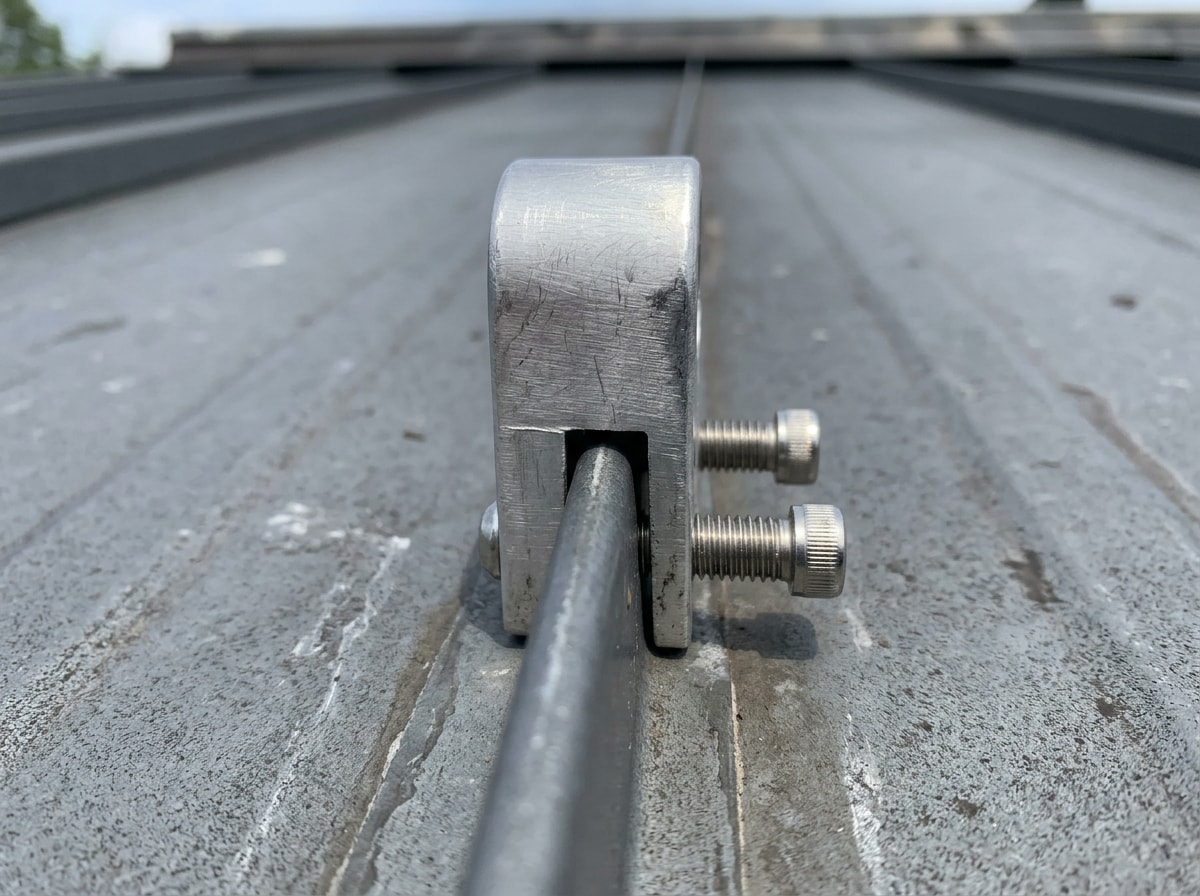
Non-penetrating clamp systems, like the S-5! ColorGard line, grip the raised seam of a standing seam panel mechanically instead of screwing through it. Round-point setscrews offer a secure mechanical interlock while protecting the standing seam and its sacrificial coating, leaving roof warranties intact . The clamps themselves are typically aircraft-grade aluminum paired with stainless steel hardware, built to handle repeated freeze-thaw cycles, and the system carries a Limited Lifetime System Performance Warranty .
Custom fabricated snow stops, usually 24 or 26 gauge metal, are the answer for Pro-panel or exposed-fastener roofs that have no standing seam to clamp onto. These are screwed and sealed to the panel ridges, then color-matched to the roof finish.
| Factor | Non-Penetrating Clamp (e.g., ColorGard) | Custom Metal Snow Stop |
|---|---|---|
| Best roof type | Standing seam | Pro-panel / exposed fastener |
| Attachment method | Mechanical clamp, no penetration | Screwed and sealed |
| Finish options | Manufacturer color line | Fully color-matched |
| Typical warranty impact | Panel warranty stays intact | Depends on sealant and fastener quality |
If your home has a standing seam roof, our standing seam roofing guide covers panel profiles and how they interact with clamp-style accessories in more detail.
Snow Retention for Solar Arrays
Solar panels are even slicker than bare metal, and sliding snow can travel farther and faster across a panel array before it reaches the edge. A snow fence-style retention system sits at the base of the panel rows, holding snow back without shading the cells or cutting output. Spacing and load calculations for solar-covered sections run separately from open roof area, so plan for both zones rather than assuming one layout covers the whole roof.
Snow Guards vs. Heated Gutters: Different Jobs, Same Winter
Snow guards and heated gutters solve different problems, and homeowners sometimes install one expecting it to fix the other.
Snow guards hold snow on the roof deck. Heated gutters melt ice and manage runoff at the edge, which reduces the ice dams caused by escaping attic heat. Heat loss from the home into the attic through openings and the insulation is a major cause of snowmelt on the roof forming ice dams, as heat from the house warms the roof, which leads to the melting snow . Snow guards do not address that heat-loss mechanism at all.
Many Littleton homes benefit from both systems working together. Snow guards stop the avalanche risk, while heated gutters and proper attic insulation keep meltwater moving instead of backing up under the panels. If attic heat loss is already causing ice buildup, a roof repair to address ventilation and flashing issues is usually a better long-term fix than relying on heat cable alone.
Why Professional, Certified Installation Matters
Snow retention is not a weekend DIY project. Incorrect fastening or spacing can cause leaks, voided warranties, or a system that fails the first time heavy snow actually tests it, which is exactly when it's needed most.
Ice Control
A properly installed snow retention system slows meltwater release at the eaves, reducing the freeze-thaw cycling behind ice dams and the water intrusion that follows into attics and walls. A roof inspection before installation also catches existing flashing or deck issues that a snow guard layout would otherwise cover up.
Roof Compatibility and Galvanic Corrosion
Attachment method must match the roof material. Composite and asphalt roofs shed snow differently than standing seam metal and need a different clamp approach entirely. Mismatching hardware metal to panel metal also creates a corrosion risk: fasteners should be made of the same material as the roof or wall systems whenever possible, and at the very least the fastener should display equivalent corrosion resistance to the material being fastened into, since the use of galvanized steel fasteners with aluminum cladding is not recommended . A licensed installer accounts for this before the first clamp goes on, not after a leak shows up two winters later.
About This Guide
This guide was prepared by the roofing team at Crestline Exteriors, a licensed roofing and exteriors contractor serving Littleton and the greater Denver metro. Our crews install and service snow retention systems on standing seam and exposed-fastener metal roofs throughout Jefferson, Douglas, and Arapahoe counties, and we size every layout to the specific roof pitch and snow load rather than using a one-size-fits-all spacing chart. For a layout specific to your roof, request a free estimate and we'll walk the roof before recommending a system.
Homeowners outside Littleton proper can find area-specific guidance on our Littleton, CO service page, and our metal roofing company guide explains what to look for when vetting any local contractor, not just for snow retention work.
FAQ
Do snow guards work on all roof types?
Yes, but each roof type needs its own attachment method and guard style. Metal, composite, asphalt shingle, slate, and tile roofs all accept snow retention, but a system built for standing seam clamps will not work on asphalt shingles, and vice versa.
How far apart should snow guards be spaced on a metal roof?
Spacing depends on roof pitch, panel width, and local ground snow load, and manufacturer spec sheets vary by product line. As a general rule, steeper pitches and heavier snow loads need tighter vertical spacing between rows and a staggered horizontal pattern rather than a single straight line. A qualified installer calculates exact spacing from your roof's measurements, not a generic chart.
Will snow guards damage my roof or void my warranty?
Properly installed systems, especially non-penetrating clamp styles, typically don't void manufacturer warranties. Improper installation, particularly fasteners that penetrate the panel incorrectly or mix incompatible metals, is what causes leaks and warranty disputes.
How many snow guards do I need on a metal roof?
Quantity depends on roof pitch, panel length, and regional snow load. A single row rarely holds back a full season's snow on long or steep slopes. Most Littleton-area installations use two or three staggered rows rather than one.
Do snow guards really work on metal roofs?
Yes, when spaced correctly and installed across the full eave rather than just above doorways. Coverage across the whole roof plane matters more than placement above any single entry point.
Can I add snow guards to a metal roof after it's already installed?
Yes. Non-penetrating clamp systems are designed for retrofit work and attach to the existing seam without disturbing the panel. Exposed-fastener roofs can also be retrofitted, though the installer needs to locate structural support below the deck before fastening.