Tile roofing contractors aren't interchangeable with general roofers, and hiring the wrong one on a tile project can cost you far more than a bad shingle job ever would. This guide breaks down exactly how to vet a contractor, what a tile roof actually costs in 2026, and which installation details separate a 50-year roof from a 10-year headache.
How to Vet Tile Roofing Contractors Before You Sign Anything
Tile installation has enough specialized requirements that general roofing credentials alone aren't a reliable indicator of skill. Start with licensing and insurance. Confirm the contractor holds a valid, current license, plus liability and workers' compensation coverage, and ask for proof in writing rather than a verbal assurance.
Trade association membership is a good secondary signal. The National Roofing Contractors Association recommends homeowners check for a permanent place of business and make sure the contractor has a phone number, tax identification number, and business license where required . The same guidance notes you should check whether the contractor is a member of any local, regional or national roofing industry association, such as NRCA , since that kind of affiliation points to ongoing training rather than a one-off job.
Next, compare quotes from at least three tile roofing contractors. Pricing spread alone tells you something. So does how each contractor explains their attachment method, underlayment choice, and warranty terms.
Use this checklist during interviews:
- Can you provide proof of current license and insurance?
- What manufacturer certifications do you hold for tile installation specifically?
- How many tile roof projects have you completed in the last two years?
- What attachment method will you use for my roof's wind or snow exposure?
- What warranty covers both materials and workmanship?
General asphalt-shingle experience doesn't automatically translate to tile competence. Ask specifically about tile project history, not just years in business overall.
In our own field experience across Littleton, Highlands Ranch, and the greater Denver metro, the most common tile failures we're called to fix aren't cracked field tiles. They're failed underlayment and loose ridge mortar on roofs installed 20-plus years ago by crews who treated tile like heavy shingles. That's the detail a rushed quote almost never covers.
If you want a second opinion before signing anything, our roofing contractor team can walk a tile roof with you and flag what a bid might be missing. Request a free estimate and we'll schedule a site visit.
What a Tile Roof Costs in 2026
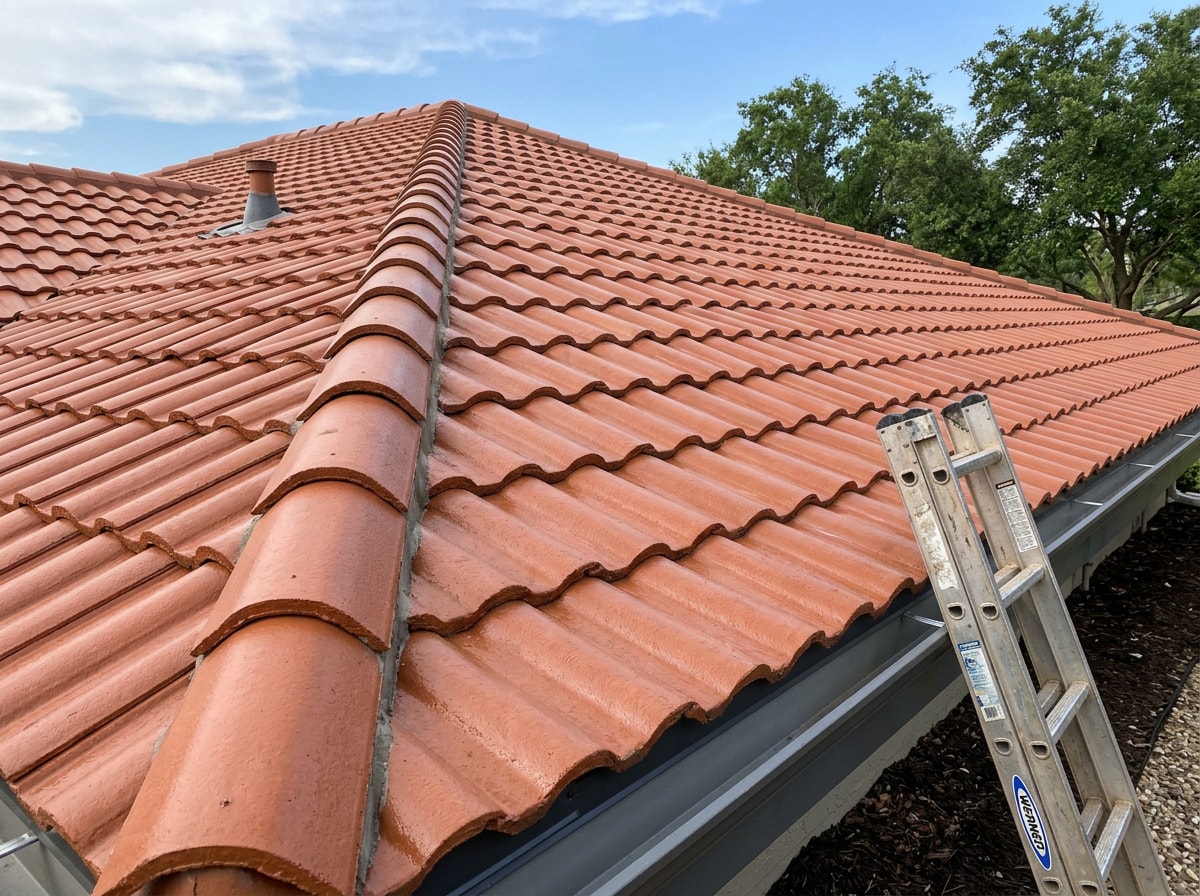
Tile roof cost varies by material, roof complexity, and region, but national pricing data gives you a reasonable starting point before you call contractors. Installed tile roofing runs $9 to $22 per square foot in 2026, all-in with tear-off, high-temperature underlayment, treated battens, ridge cap, and valley flashing .
Material choice drives most of that spread. Concrete tile is consistently 30 to 45 percent cheaper installed than clay tile in 2026 US pricing , which is why it's the more common choice outside historic or high-end builds.
| Tile Type | Cost per Sq. Ft. (Installed) | Est. Cost, 2,000 Sq. Ft. Roof |
|---|---|---|
| Concrete tile | $7–$14 | $14,000–$28,000 |
| Clay tile | $10–$18 | $20,000–$36,000 |
| Synthetic/composite tile | $7–$13 | $14,000–$26,000 |
For comparison, a full clay tile reroof on a 2,000-square-foot home usually costs $22,000 to $44,000 once labor and materials are both factored in. Getting an accurate number for your specific roof requires a site visit, not a generic online calculator, since pitch, tear-off difficulty, and structural work all swing the total. Request a free roofing estimate to get pricing based on your home's actual square footage, pitch, and tile selection.
Tile Roof Cost Factors
Several variables move the final price up or down:
- Material choice — standard concrete tile vs. premium clay or terracotta
- Roof design — a simple gable roof vs. multiple valleys and steep pitches
- Old roof condition — single-layer removal vs. multiple layers or difficult access
- Local labor rates — standard demand vs. high-demand or remote regions
- Permits — cost and requirements vary by municipality
Does a Tile Roof Lower Energy Bills?
Tile's thermal mass and airflow under the profile can reduce cooling loads in hot climates, which is a real, if modest, upside. One detail a lot of cost guides get wrong: the EPA's residential ENERGY STAR roofing label isn't current anymore. In 2019 the EPA announced it was sunsetting the ENERGY STAR reflective roof program effective June 1, 2022 . If a contractor pitches "ENERGY STAR tile" as a current certification, ask what they actually mean. Current federal guidance on cool-roof products now runs through the Department of Energy's Federal Energy Management Program, which provides acquisition guidance for cool roof products, a category still covered by ENERGY STAR efficiency requirements even though the consumer label has been phased out .
Tile Roofing Materials: Clay, Concrete, and Profile Options
Clay vs. Concrete Tile
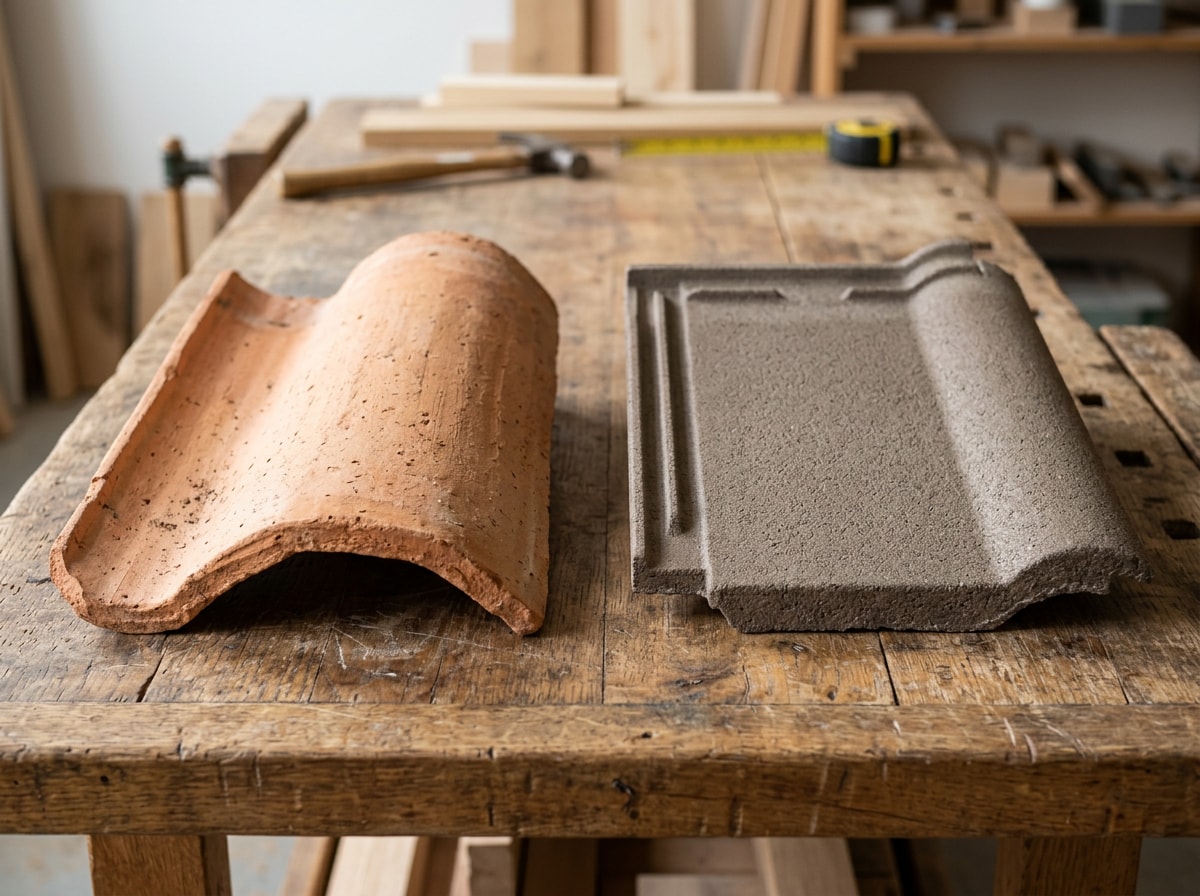
Clay tile and concrete tile are the two most common roof tile materials, and they differ in weight, cost, and appearance. Clay, often called terracotta, is fired at high heat and tends to hold its color longer. Concrete tile is molded from a sand-cement mix and generally costs less upfront, as the pricing above shows.
Both materials offer strong durability when installed correctly, with clay tile roofs often reaching 50 years or more of service life. Confirm current local pricing and warranty terms with a contractor before budgeting, since manufacturer specs and costs shift year to year.
Spanish and Mission (Barrel) Tile
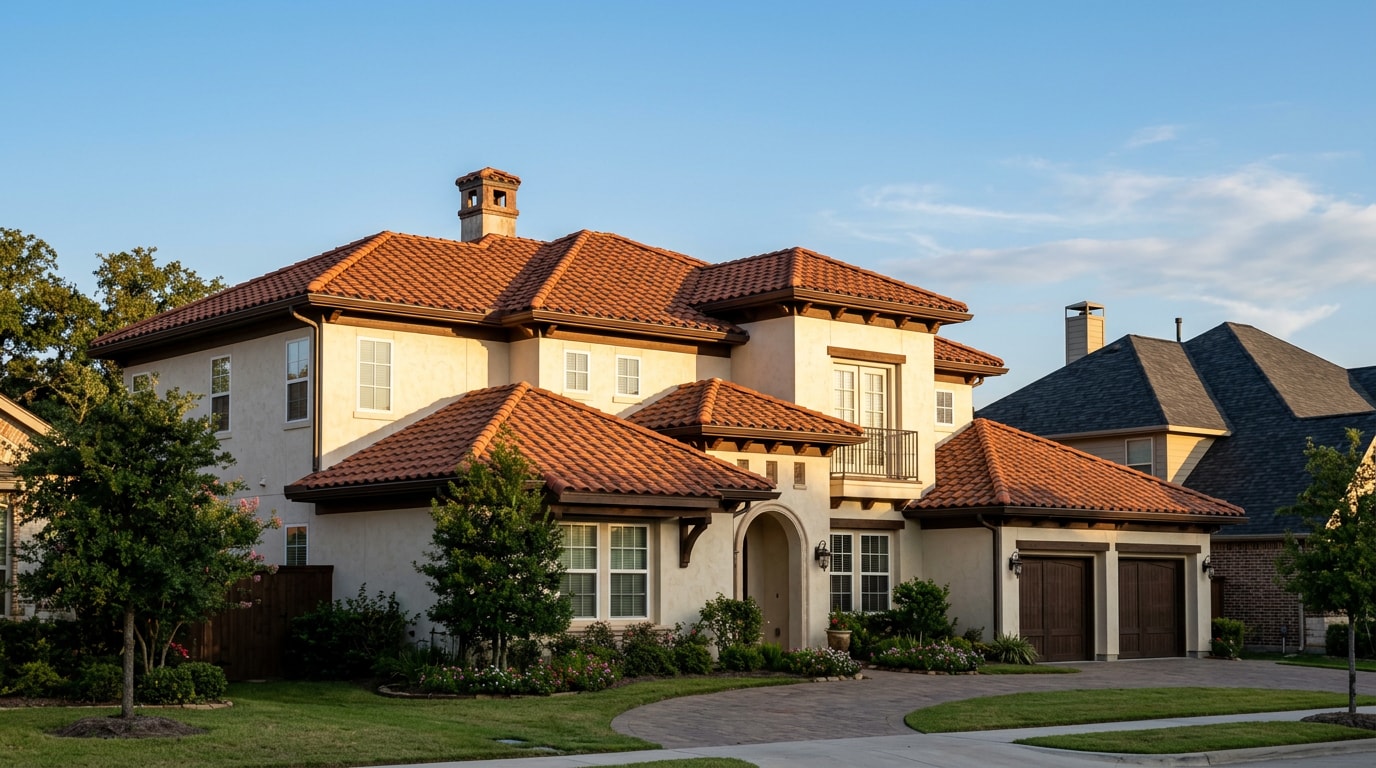
Beyond the clay-versus-concrete decision, homeowners also choose a profile. Spanish tile features an "S"-shaped curve that creates alternating high and low ridges, a hallmark of Mediterranean-style homes. Mission tile, also called barrel tile, uses a simpler rounded, half-cylinder shape laid in alternating rows for a more traditional look.
Both profiles are typically priced and quoted separately from flat concrete or clay tile, since curved shapes require more material and labor to install correctly. If you're drawn to a specific architectural look, mention it early so your contractor can quote the right profile and batten layout.
Installation Requirements and Climate Considerations
Before any tile goes on a deck, a qualified contractor evaluates a handful of structural factors. Roof pitch matters most. Under the International Residential Code, tile requires a minimum 4/12 pitch, except that a pitch as low as 2-1/2/12 is allowed when two layers of underlayment are applied . Confirm which standard your tile manufacturer and local building department actually require, since local amendments can differ.
Structural load is equally important. Tile is considerably heavier than asphalt shingles, so the roof framing needs to support it, and that can mean an engineering review before a switch from shingles to tile. Contractors also choose between mechanical fastening and foam adhesive. Mechanical fastening uses nails or screws to secure each tile. Foam adhesive bonds tiles directly to the underlayment. The right method depends on your region's wind exposure and the specific tile profile.
Climate changes how a tile roof should be installed, not just what it looks like. In high-wind regions, codes often require mechanical fastening of every tile, since uplift forces can dislodge improperly secured tiles during storms. Cold-climate tile roofing introduces different priorities. Ice damming, freeze-thaw cycling, and snow load matter more than wind uplift in those regions. The Tile Roofing Industry Alliance publishes installation guidance for tile roofing contractors covering the latest code requirements and recommendations for flashings, underlayments, and adhesives , and it's worth reviewing with your contractor before work starts.
Homeowners in Douglas County and Jefferson County dealing with heavy snow loads should ask specifically about ice-and-water shield coverage at eaves and valleys, not just the tile attachment method. Our roof installation and roof inspection teams evaluate these details on every tile project before recommending a scope of work.
If you're weighing tile against another premium material, many of the same vetting steps apply if you're choosing a slate roofing contractor, since both materials demand specialized, not general, roofing experience.
Ready to Get Quotes?
Check our service areas, including Littleton, Highlands Ranch, and the rest of the Denver metro, to confirm coverage. Then visit Crestline Exteriors or request a quote to get the process moving. We also handle roof replacement, new roof installs, and general residential roofing if tile isn't the final answer for your home.
FAQ
How Do I Choose the Best Tile Roofing Contractor?
Verify license and insurance in writing, confirm tile-specific project history (not just general roofing years), and get at least three written quotes that spell out attachment method, underlayment, and warranty terms. Trade association membership and manufacturer certification are good secondary signals, not substitutes for direct tile experience.
How Long Does a Tile Roof Last?
Lifespan depends on material. Concrete tile systems commonly reach 30 to 50 years, and clay tile often exceeds 50 years with proper maintenance. The underlayment beneath the tiles usually wears out before the tiles themselves, often needing replacement around the 20 to 30 year mark depending on warranty terms.
Can You Install Tile on a Flat Roof?
No. Tile roofing relies on slope to shed water, so installing it on a flat roof isn't recommended and may void manufacturer warranties. The IRC specifies a minimum 4/12 pitch for clay or concrete tile, with an exception down to 2-1/2:12 when two layers of underlayment are used .
How Much Does It Cost to Repair a Tile Roof?
Tile roof repair typically runs far less than full replacement and covers issues like cracked or slipped tiles and localized leaks. Repair usually makes sense when damage is limited to a small area. Replacement becomes more cost-effective once underlayment failure or widespread tile damage is involved.
What Are Roofing Tiles Made Of?
Roofing tiles are made from several materials depending on style and budget: fired clay, a sand-cement concrete mix, natural slate, composite polymers, or metal. Each material offers a different balance of weight, cost, and durability.
Is Tile Roofing More Expensive Than Shingles?
Yes, upfront. Tile typically installs at $9 to $22 per square foot versus $4 to $9 for asphalt shingles, but tile's longer service life often closes the cost gap over 30 to 50 years. Factor in the structural review tile may require before comparing totals directly.