Keep Your Building Sealed Year After Year
Commercial Roofing Services in Littleton for buildings requiring new installation or preventative maintenance
Crestline Exteriors delivers commercial roofing services in Littleton and Englewood that address both new roof installation and the ongoing care that prevents early failure. You choose a roofing contractor when your existing membrane has reached the end of its rated lifespan, when you are constructing a new facility, or when you need a maintenance program that catches small problems before they become costly emergencies.
Full-service commercial roofing includes TPO roofing systems that use white reflective membranes to reduce cooling loads, EPDM roofing for buildings that prioritize durability and low maintenance, modified bitumen on structures that experience heavy foot traffic, and metal roofing for warehouses and industrial facilities that need long spans without seams. Each system requires different fastening methods, different flashing details around penetrations, and different warranties tied to installation standards set by the manufacturer.
You can schedule a site visit to review your building's roof design, drainage requirements, and whether a tear-off or roof-over approach makes sense for your timeline and budget.
What a Commercial Roof Installation Includes
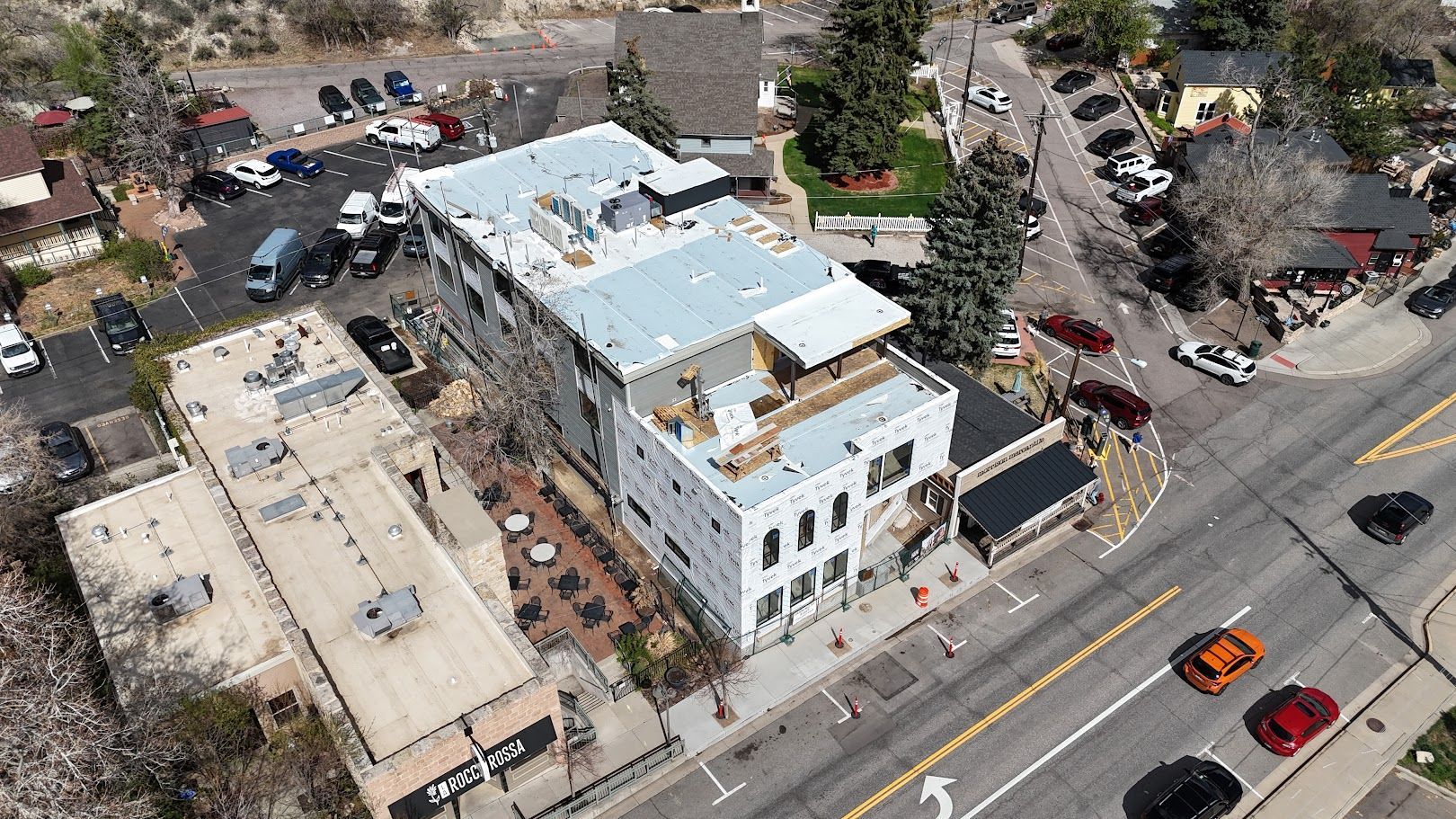
You will see crews remove the old membrane down to the decking if the substrate is damaged or saturated, then install new insulation boards, a cover board for puncture resistance, and the new roofing membrane secured with plates and fasteners or fully adhered depending on wind exposure and system specification. Seams are welded or sealed, flashing is fabricated and installed around HVAC units and vents, and edge metal is fastened to prevent wind uplift.
After Crestline Exteriors finishes the installation, your roof will shed water to drains without ponding, resist wind speeds defined by local building codes, and carry a manufacturer warranty that depends on proper installation and regular inspections. You will receive documentation that includes warranty registration, installation photos, and a recommended maintenance schedule.
Preventative maintenance programs include semiannual inspections, drain cleaning, seam checks, and minor repairs performed before leaks develop. Commercial roof replacement is a capital expense that often qualifies for financing, and many property owners coordinate the work with re-roofing of adjacent buildings to reduce mobilization costs and downtime.
What to Know About Commercial Roofing Systems
These questions clarify system options, timelines, and what changes after your commercial roofing company completes the project.
What is the difference between TPO and EPDM roofing?
TPO is a thermoplastic that heat-welds at seams and reflects sunlight to lower cooling costs, while EPDM is a rubber membrane that uses adhesive seams and absorbs more heat but costs less per square foot.
How long does a commercial roof installation take?
A typical low-slope roof on a ten-thousand-square-foot building takes one to two weeks depending on weather, the number of penetrations, and whether you are tearing off multiple old layers or installing over existing material.
When should you start a preventative maintenance program?
You start immediately after installation to protect your warranty, then continue with inspections every six months to catch fastener back-out, seam separation, and debris accumulation before they cause leaks.
Why do commercial roofs in Englewood need regular inspections?
Hail, wind, and rapid temperature swings common in the Denver metro area stress roofing membranes and fasteners, so catching small failures early prevents water infiltration that damages insulation and structure.
You can request a detailed proposal that compares roofing systems, outlines the installation process, and includes a timeline so you can plan around your business operations without unexpected closures.