Asphalt roof repair in Jefferson County, CO almost always starts with the same question: patch it or replace it? Hail off the foothills, 100-plus mph wind gusts, heavy snow load, and intense UV at elevation age asphalt shingles faster here than in most of the country. This guide walks through the warning signs, the 2026 permit rules, and real cost ranges so you can make that call with confidence instead of guessing.
Signs Your Jefferson County Roof Needs Repair Now
Most repair calls trace back to a handful of recognizable problems. Catching them early is almost always cheaper than waiting for a leak to show up on your ceiling.
- Missing, curling, or cracked shingles, especially after a windstorm
- Granule loss that leaves bald, shiny patches on the shingle surface
- Soft or spongy spots near vents, skylights, or roof valleys
- Active leaks or water stains on interior ceilings and walls
- Cracked or pulled-away pipe boots and chimney flashing
- A sudden jump in heating or cooling bills, which can point to failing attic ventilation
On post-storm inspections across Arvada, Golden, Lakewood, and Wheat Ridge, the pattern repeats: hail bruising and granule loss show up heaviest on the slopes that face the storm track, while the opposite side of the same roof looks nearly untouched. That's why a full walk of the roof, not just a glance from the driveway, matters before you decide anything.
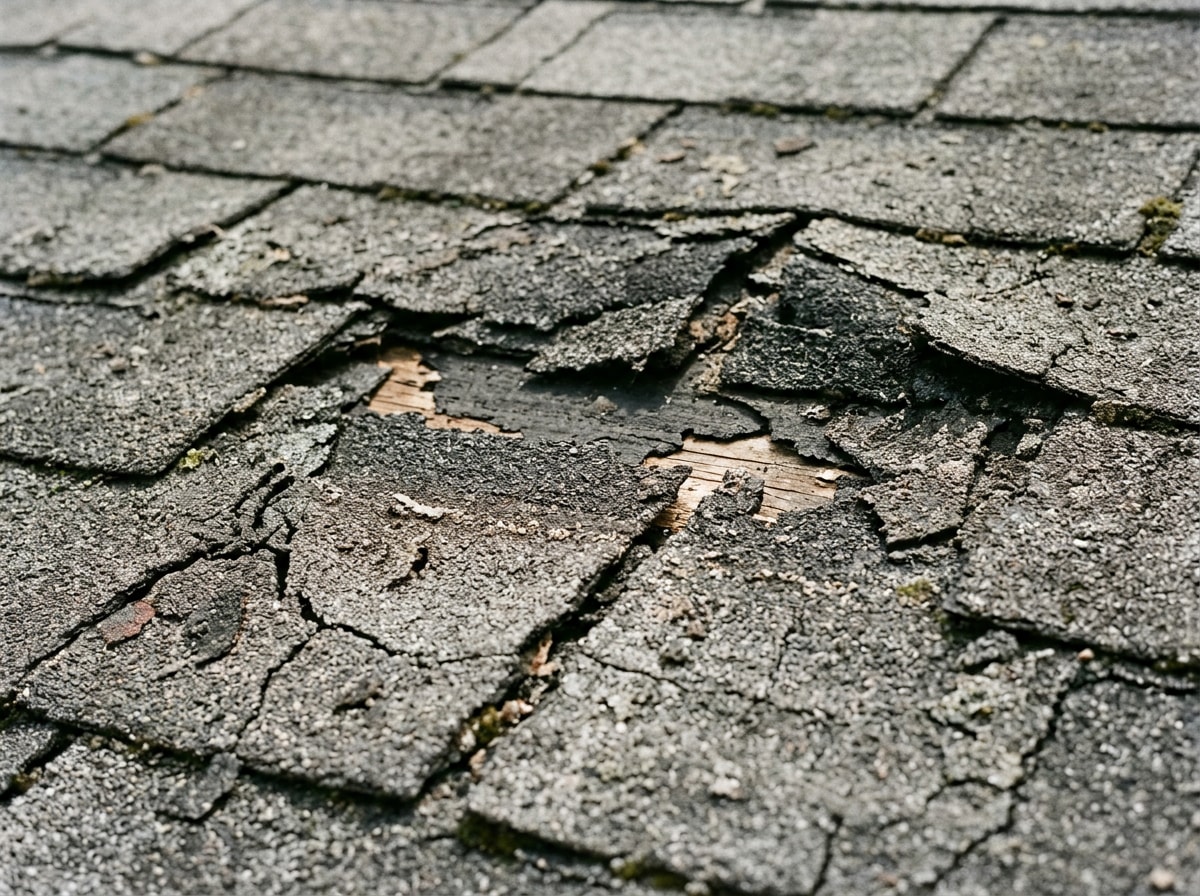
Hail damage in particular is deceptive. Bruised shingles and soft decking near vents often stay hidden until water finds its way inside. A trained eye can usually tell within 20 to 30 minutes of a roof inspection whether the damage needs repair now, can wait, or signals a bigger problem.
Repair or Replace? How Jefferson County's Climate Changes the Math
Replacement becomes the smarter move once a roof has absorbed 20-plus years of cumulative hail, wind, freeze-thaw, and UV exposure, the combination that defines Front Range weather. An aging roof with widespread granule loss or curling shingles across large sections is rarely worth patching piecemeal, since each new repair just buys a little more time on a system that's already failing broadly.
Treat repair and replacement as a spectrum, not a binary choice. A single repair call today might reveal that full roof replacement makes more financial sense within the next year or two, especially if the roof is already past its expected service life. A roof inspection is the fastest way to find out which side of that line your roof falls on.
Common Asphalt Shingle Repairs in Jefferson County
Repair types vary depending on what's actually causing the damage. Here's how the most frequent calls break down locally:
| Repair Type | Typical Jefferson County Cause | Relative Urgency |
|---|---|---|
| Hail-cracked or bruised shingles | Hail | High |
| Wind-lifted or missing shingles | Wind | High |
| Flashing repair (chimney/valley) | Wind + freeze-thaw | Medium-High |
| Vent pipe/boot repair | UV + freeze-thaw | Medium |
| Roof valley debris buildup | Debris + freeze-thaw | Medium |
| Skylight seal failure | UV + freeze-thaw | Medium |
Flashing repair comes up often. Chimney flashing especially tends to pull away or wear thin over time, letting water sneak in behind it. Skylights bring their own issues, from broken seals to cracked glass. Roof valleys deserve attention too: they collect leaves and debris, and when they aren't cleared, water backs up instead of draining, accelerating wear on the surrounding shingles.
See how we handle each of these through our roof repair services, or jump straight to emergency roof repair if you're dealing with an active leak.
What Asphalt Roof Repair Costs in Jefferson County, CO (2026)
Repair costs scale with severity. Minor jobs, like a handful of cracked shingles, a loose vent boot, or a small flashing fix, typically land in the low hundreds of dollars. Moderate repairs covering several squares of damage or multiple flashing points usually run into the low thousands. Extensive repairs that approach the scope of a partial re-roof can push toward $5,000 or more before replacement becomes the more cost-effective option.
Full replacement costs considerably more. Depending on roof size, pitch, shingle class, and decking condition, a complete asphalt shingle replacement in the Denver metro generally falls somewhere between $9,000 and $25,000. Material and labor costs have shifted enough in recent years that any older estimate you find online should be treated as a starting point, not a quote. The only way to get an accurate number for your roof is a free, on-roof inspection with a written estimate.
Hail, Wind & Insurance: Filing a Storm Damage Claim in Jefferson County
Colorado ranks near the top nationally for hail-related insurance claims, and Jefferson County sits squarely in that risk zone. That's why most homeowners start with a free inspection rather than guessing at the damage themselves.
If a storm caused the damage, insurance often comes into play. A few things are worth knowing before you file:
- Document everything first. Photograph the damage, including a hailstone next to a tape measure if you can, before you call your insurer.
- A contractor cannot waive your deductible. Colorado's Senate Bill 12-038 consumer protection law makes it illegal for a roofing contractor to pay, waive, or rebate any part of your insurance deductible, or to advertise that they will. Treat any contractor who offers this as a red flag.
- Meet the adjuster with your contractor present. A reputable roofer documents the damage, walks the roof alongside your adjuster, and confirms the scope of work matches what's actually needed.
- File promptly. The Colorado Division of Insurance recommends contacting your insurer as soon as possible after a storm to start the claims process, since most policies require timely notice.
For a deeper look at documenting damage and working with adjusters, our storm damage roofing guide walks through the full claims process step by step.
Jefferson County Roofing Codes & Permits (2026 Update)
Code compliance isn't just for full replacements. Even routine repairs can trigger permit requirements, and the rules changed recently.
What's new for 2026
Jefferson County's Board of Commissioners approved the 2024 Building Codes and Supplements, with the updated rules taking effect for any permit applied for on or after July 1, 2026. Under the new supplement, a roof repair is exempt from a permit only if it is both less than 25% of the total roof area and no more than 2 squares (200 square feet). Older guidance that cites only the 2-square threshold is outdated, since the 25% test is now applied alongside it.
One jurisdiction catch almost everyone misses
The Jefferson County Building Safety Department only handles permits for unincorporated parts of the county. If your home is inside Lakewood, Arvada, Golden, Wheat Ridge, Westminster, or another incorporated city, your roofing permit goes through that city's own building department, not the county. Confirm which jurisdiction covers your address before you assume "Jefferson County permit" applies.
Other key code items
- Only one layer of asphalt shingles is allowed; overlays aren't an option, even on partial re-roofs, so a full tear-off is required where a second layer would otherwise be added.
- An ice barrier is required under asphalt shingles, metal roof shingles, mineral roll roofing, slate, and wood shakes or shingles alike.
- Homes within the Wildland-Urban Interface overlay, common in the foothill communities around Evergreen and Conifer, must use Class A rated roof assemblies regardless of material.
- Two inspections are required on permitted re-roofs: a mid-roof inspection once 10–25% of the work is complete, and a final inspection when the job is finished.
Confirm current thresholds directly with the Jefferson County Building Safety Department before scheduling work, since code details can shift again as the county finalizes 2026 enforcement.
Shingle Brands That Hold Up to Jefferson County Hail
Premium asphalt shingle brands like Owens Corning, GAF, IKO, and CertainTeed show up often in local repairs and replacements, largely because their top-tier lines carry a Class 4 impact-resistance rating.
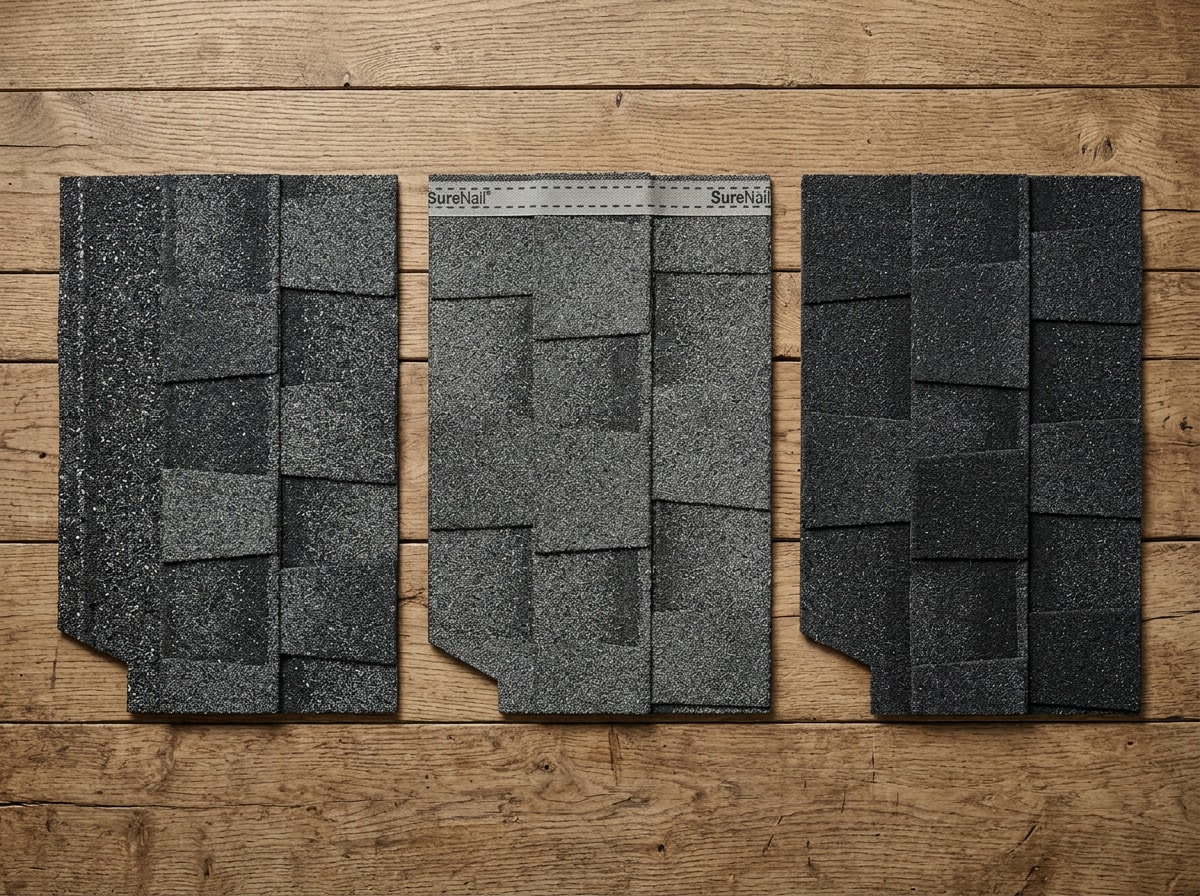
Class 4 is the highest rating under the UL 2218 impact-resistance test, which drops steel balls of increasing size onto a shingle sample to see whether it cracks. A Class 4 shingle has to withstand a 2-inch steel ball dropped from 20 feet without failing, which matters in a hail-prone market like this one. Matching repair shingles to your existing brand and rating keeps warranty coverage intact and avoids an obvious patchwork look on the roof.
Questions to Ask Your Roofing Company in Jefferson County, CO
Before hiring anyone, ask the core vetting question: what are your credentials? That means confirming active licensing, liability insurance, and real experience pulling permits in Jefferson County specifically, including knowing whether your address is unincorporated or falls under a city's building department.
A few more questions worth asking directly:
- How long is the workmanship warranty, separate from the manufacturer's material warranty?
- Will the estimate come without high-pressure, same-day-signature sales tactics?
- Does the contract guarantee no surprise change orders once work starts?
- Can you provide proof of your Jefferson County (or relevant city) contractor license?
Reputation signals matter too. A Better Business Bureau rating, local reviews, and membership in a state trade association like the Colorado Roofing Association can help you compare contractors before you commit. Browse our full roofing contractor services to see how we approach repairs, inspections, and replacements for homes across the county.
About This Guide
Reviewed by the Crestline Exteriors roofing team, which inspects and repairs asphalt shingle roofs throughout Jefferson County, Denver, and the surrounding Front Range. If you want a second opinion on hail damage, a leak, or a permit question before you sign anything, get a free estimate and we'll walk the roof with you. You can also start from our homepage to see the full range of exterior services we handle.
FAQ
How do I know if my roof needs repair or replacement?
Look at the signs covered above: missing shingles, active leaks, sagging decking, or heavy granule loss. Isolated damage usually means repair. Widespread wear across an aging roof usually points toward replacement.
Does homeowners insurance cover roof repair for hail damage in Colorado?
Most standard homeowners policies in Colorado cover hail damage to the roof under dwelling coverage, though your deductible and whether the policy pays actual cash value or replacement cost value affect your final payout. Check specifics with your carrier, and contact the Colorado Division of Insurance if you have questions about how your claim is being handled.
Do I need a permit for roof repair in Jefferson County?
Yes, if the repair covers more than 2 squares (200 square feet) or more than 25% of the total roof area, whichever threshold is hit first under the 2024 code supplement effective July 1, 2026. Smaller repairs are generally exempt, but confirm with the county, or your city's building department if you live in an incorporated area, before starting work.
How much does asphalt shingle roof repair cost?
Minor repairs typically run a few hundred dollars. Moderate repairs covering several squares or multiple flashing points usually run into the low thousands. Get a free on-roof inspection for an exact number, since price depends heavily on the extent and type of damage.
Can a roofing contractor waive my insurance deductible in Colorado?
No. Colorado's Senate Bill 12-038 makes it illegal for a roofing contractor to pay, waive, rebate, or even advertise that they'll cover part of your insurance deductible. Any contractor offering this should be treated as a warning sign.
Who do I contact if my roof permit question involves a city, not the county?
The Jefferson County Building Safety Department only issues permits for unincorporated areas. Homes inside Lakewood, Arvada, Golden, Wheat Ridge, or other incorporated cities need to go through that city's own building department for permitting questions.