Flat roofing solutions aren't one-size-fits-all. EPDM, TPO, PVC, modified bitumen, and built-up roofing each handle cost, lifespan, and climate stress differently, and picking the wrong one is an expensive mistake to walk back. This guide breaks down what each system actually costs, how long it lasts, and which one fits your building so you can decide with real numbers instead of a contractor's favorite pitch.
What Is a Flat Roof?
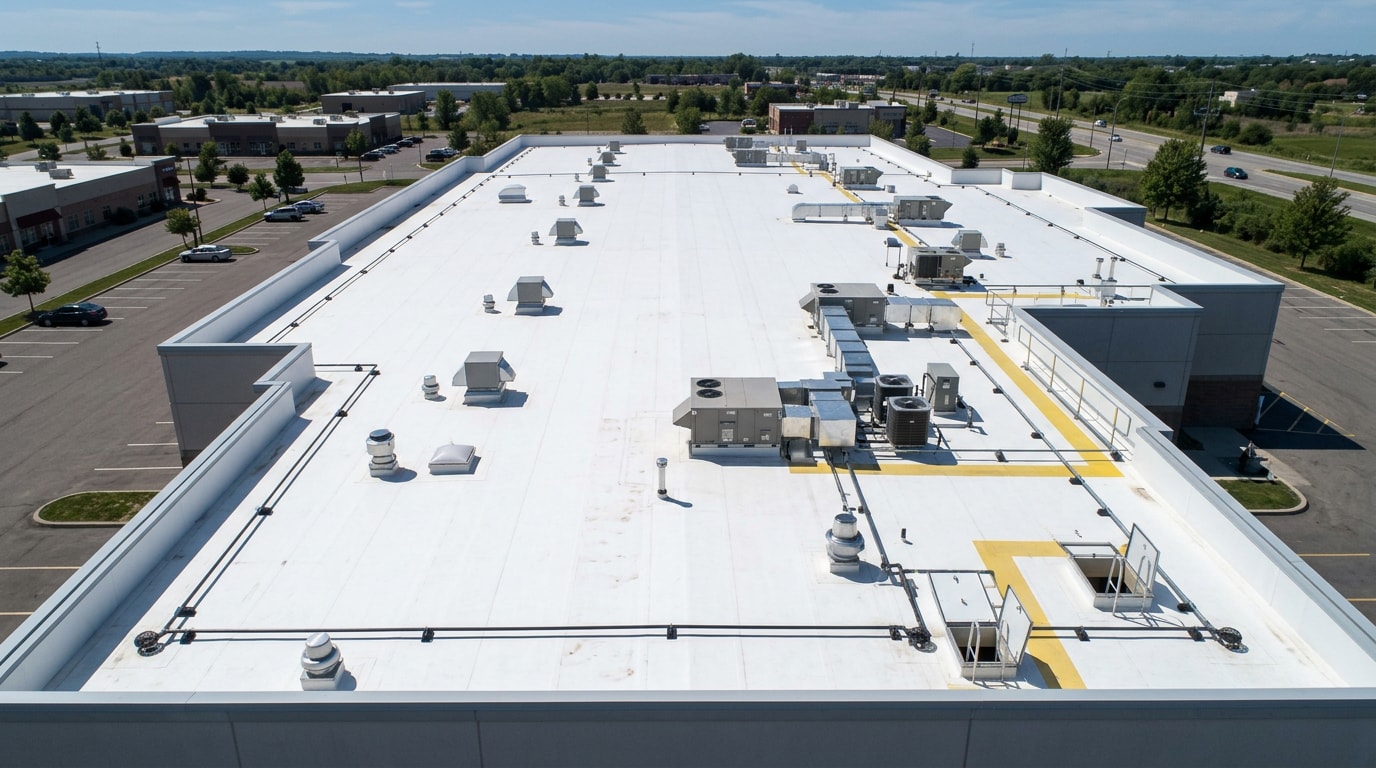
Flat roofing is a roofing system built with a minimal slope, typically under 10 degrees, as opposed to the steep pitches found on most residential sloped roofs. It's the standard choice for commercial and industrial buildings and has become increasingly common on modern homes, additions, and garages.
The term "flat roof" is a bit of a misnomer. No roof is truly flat, since water needs somewhere to go. Building codes make that explicit: under the International Residential Code, single-ply membrane roof coverings must have a design slope of not less than 1/4 unit vertical in 12 units horizontal, or 2 percent slope, for drainage , and local building departments enforce this to prevent ponding.
That slight slope is what separates a functional flat roof from one destined for leaks. Slope, drainage design, and material choice all work together, which is why the comparisons below matter as much as the pitch itself.
Flat Roofing Materials Compared
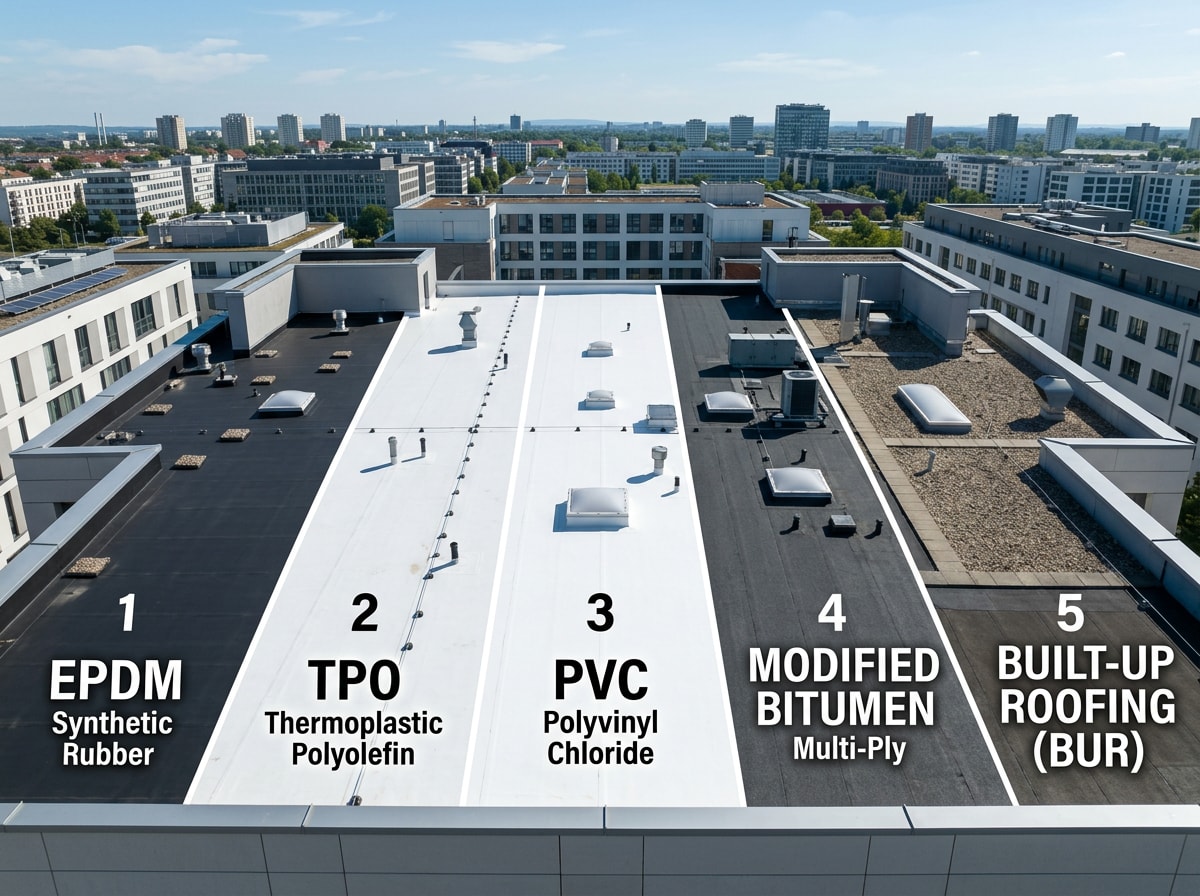
Four material families dominate the flat roofing market: single-ply membranes, rubber, modified bitumen, and built-up systems. Each has its own installation method, lifespan, and ideal climate, so the right pick depends on your budget, roof size, and how long you want the system to last before replacement.
EPDM Rubber
EPDM (ethylene propylene diene terpolymer) is a synthetic rubber membrane widely known as "rubber roofing." It's one of the most established flat roofing solutions on the market, valued for being conformable, impermeable, and relatively easy to install over large, low-slope surfaces.
Here's the information gain most buyer's guides miss: a 2026 industry survey changed the longevity conversation. EPDM single-ply rubber roofing membrane has been an appealing choice of the low-slope commercial roofing industry for over 40 years , and a fresh look at real-world performance backs that up. A 2026 survey of 569 roofing professionals combined with extensive laboratory research confirms that properly installed and maintained EPDM roofing membranes routinely deliver at least 38 years of service life, with many installations exceeding 40, 45, and even 50 years . Respondents reported firsthand experience with EPDM membrane roofs lasting 40, 45 and 50 years and expressed confidence that EPDM roof systems will routinely deliver three to four decades of service when properly installed and maintained . The catch, confirmed by the same survey: installation quality emerged as the dominant theme among the factors that drive longevity , which is a reminder that the installer matters almost as much as the membrane.
There are real trade-offs. EPDM can shrink as it ages, stressing seams and flashing points. It's also more vulnerable to punctures than some alternatives, and standard black EPDM absorbs more heat than reflective membranes, which can push up summer cooling costs on buildings without extra insulation.
TPO & PVC Single-Ply Membranes
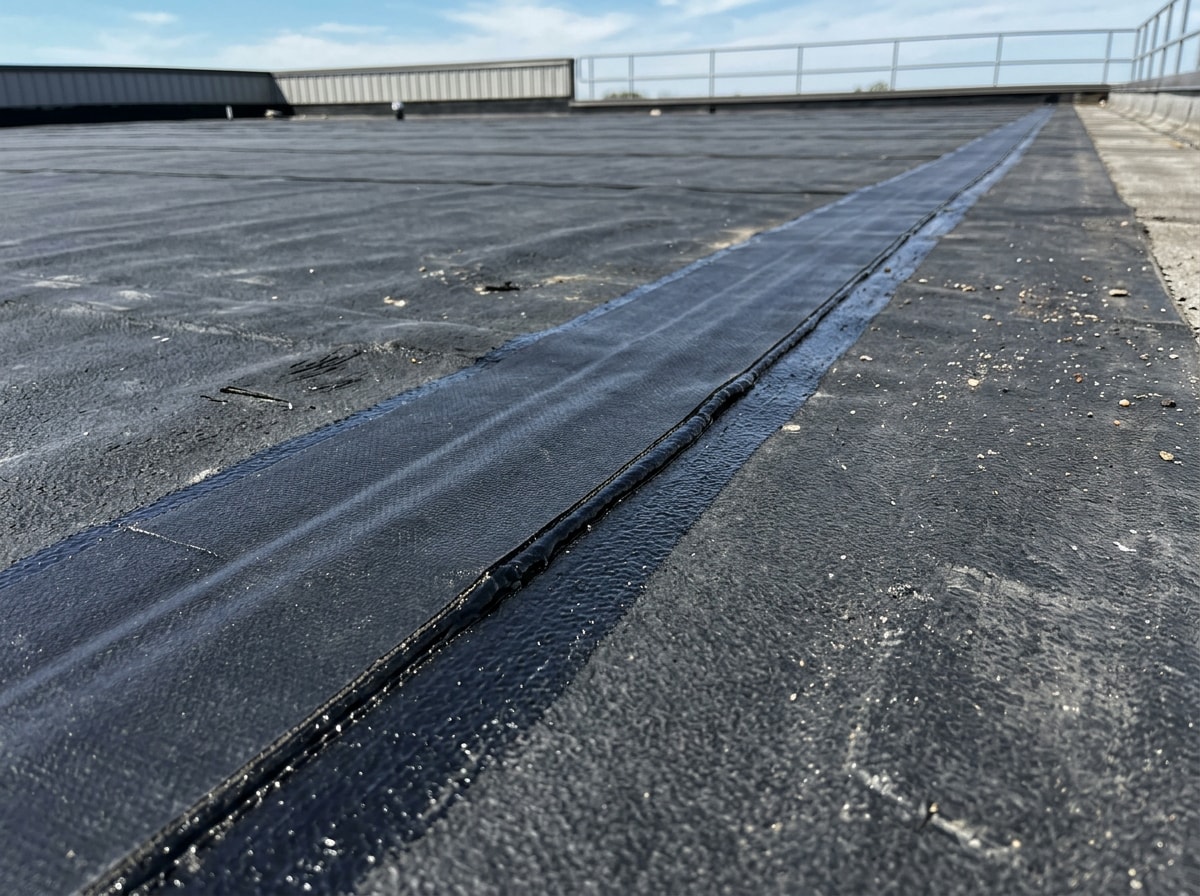
TPO and PVC roofing are often grouped together because both are heat-welded, reflective, single-ply thermoplastic membranes, but they diverge on cost and chemical resistance. PVC is prized for strong water and fire resistance and holds up well in high-wind regions, with a typical service life in the 20 to 30-plus year range. It costs more upfront, and its puncture resistance lags behind EPDM and TPO.
TPO, by contrast, is more budget-friendly and relatively straightforward to install and maintain. Because TPO only dates to the early 1990s, it has a shorter real-world track record than PVC or EPDM, so long-term performance data is still catching up.
Both materials rely on heat-welded seams rather than adhesives alone, which creates a tighter bond than many traditional roofing methods. Their reflective white or light-colored surfaces can meaningfully cut cooling costs. Reflectance isn't the whole story, though: high emittance lowers roof temperature by increasing the release of heat through thermal radiation, so a light-colored, high-emittance surface outperforms a merely reflective one , a distinction the U.S. Department of Energy's Federal Energy Management Program highlights for anyone comparing cool-roof products.
Modified Bitumen
Modified bitumen roofing, often shortened to "mod bit," is an asphalt-based system reinforced with polyester or fiberglass matting. It's manufactured into rolls with a smooth or granulated surfacing finish, can be hot-applied, cold-applied, or self-adhered, and is generally more expensive than other commercial flat roofing materials, lasting anywhere from 15 to 20 years while enduring extreme temperature variations well .
The reinforcement layer gives mod bit strong resistance to punctures and tears, which matters on roofs that see regular foot traffic or equipment installations. Installers apply it using torch-down (heat-fused), cold-applied adhesives, or self-adhered peel-and-stick sheets. The choice often comes down to building codes, fire safety concerns, and crew expertise.
Built-Up Roofing (BUR)
Built-up roofing, commonly called a tar and gravel roof, is one of the longest-standing flat roofing systems in the industry. It's constructed from alternating layers of bitumen and reinforcing fabric, finished with a top layer of aggregate like gravel, slag, or mineral granules.
BUR typically lasts 15 to 30 years and requires relatively low maintenance, with the aggregate layer providing solid UV protection, waterproofing, and fire resistance. The trade-offs are real: BUR tends to be more expensive and slower to install than membrane alternatives, and it can be more susceptible to water and wind damage if the aggregate layer shifts or wears thin over time.
If you're weighing BUR against a membrane system for a commercial property in the Denver metro, a licensed roofing contractor can assess which option fits your building's size, slope, and climate exposure. If you want a deeper dive into BUR specifically, our built-up roofing guide covers cost and lifespan in more detail.
Cost, Lifespan & Climate Suitability
Pricing varies by region, membrane thickness, and labor rates, and 2026 estimates across multiple contractor pricing guides cluster in similar ranges. Here's how the five main systems stack up:
| Material | Typical Installed Cost (per sq ft) | Expected Lifespan | Best Climate Fit |
|---|---|---|---|
| EPDM Rubber | $4 – $8 | 20–30 years (often 35+) | Cold climates, freeze-thaw cycles |
| TPO | $5 – $10 | 20–30 years | Hot, sun-heavy regions |
| PVC | $6 – $12 | 20–30+ years | High-wind, chemical exposure |
| Modified Bitumen | $4 – $8 | 15–20 years | Variable temperature swings |
| Built-Up (BUR) | $4 – $9 | 15–30 years | Heavy foot traffic, low-slope commercial |
Maintenance needs vary by material too, and skipping scheduled upkeep is one of the fastest ways to shorten any flat roof's lifespan.
- BUR and modified bitumen roofs generally need annual inspections plus a recoating every 5 to 7 years.
- EPDM holds up with twice-yearly check-ups and occasional seam maintenance.
- TPO and PVC follow a similar inspection schedule but focus mainly on seam integrity.
- Metal flat-roof systems need annual inspections too, but can often go 15 to 20 years between coating renewals.
Climate matters as much as price. Reflective TPO and PVC tend to perform better in hot, sun-heavy regions, while EPDM and mod bit often hold up well in colder climates with freeze-thaw cycles. For technical guidance on how these systems are designed and repaired, the National Roofing Contractors Association's Technical Services team develops research programs to keep contractors up to date on roofing industry standards and building code requirements .
On the Front Range specifically, we've found hail and intense UV exposure at elevation wear flat membranes faster than manufacturer spec sheets suggest, which is why we lean toward thicker EPDM or PVC on south-facing low-slope sections rather than the cheapest option on the shelf.
Because pricing shifts with building size and local labor markets, it's worth getting a firsthand number. Get a free estimate to see how these ranges apply to your specific roof.
Advantages and Disadvantages of Flat Roofing
Flat roofs come with real upside, but they also demand a different maintenance mindset than sloped roofing.
Advantages:
- Typically less expensive to install and maintain than sloped roofs, since they require fewer materials and less complex labor.
- Easier access for inspections and repairs, which saves time and money over the life of the roof.
- Usable rooftop space opens up options like gardens, terraces, or equipment housing that a sloped roof can't offer.
- Reflective TPO or PVC surfaces can noticeably reduce cooling costs during warmer months.
Disadvantages:
- Drainage problems are the most common complaint when a system isn't properly designed or maintained. Without adequate slope and drain placement, water pools on the surface, which eventually leads to leaks and structural damage.
- More exposed to heavy rain, snow accumulation, and high wind uplift than pitched designs.
- More prone to leaks, ice dams in colder climates, and debris buildup around drains, all of which call for a more consistent inspection routine than most homeowners expect.
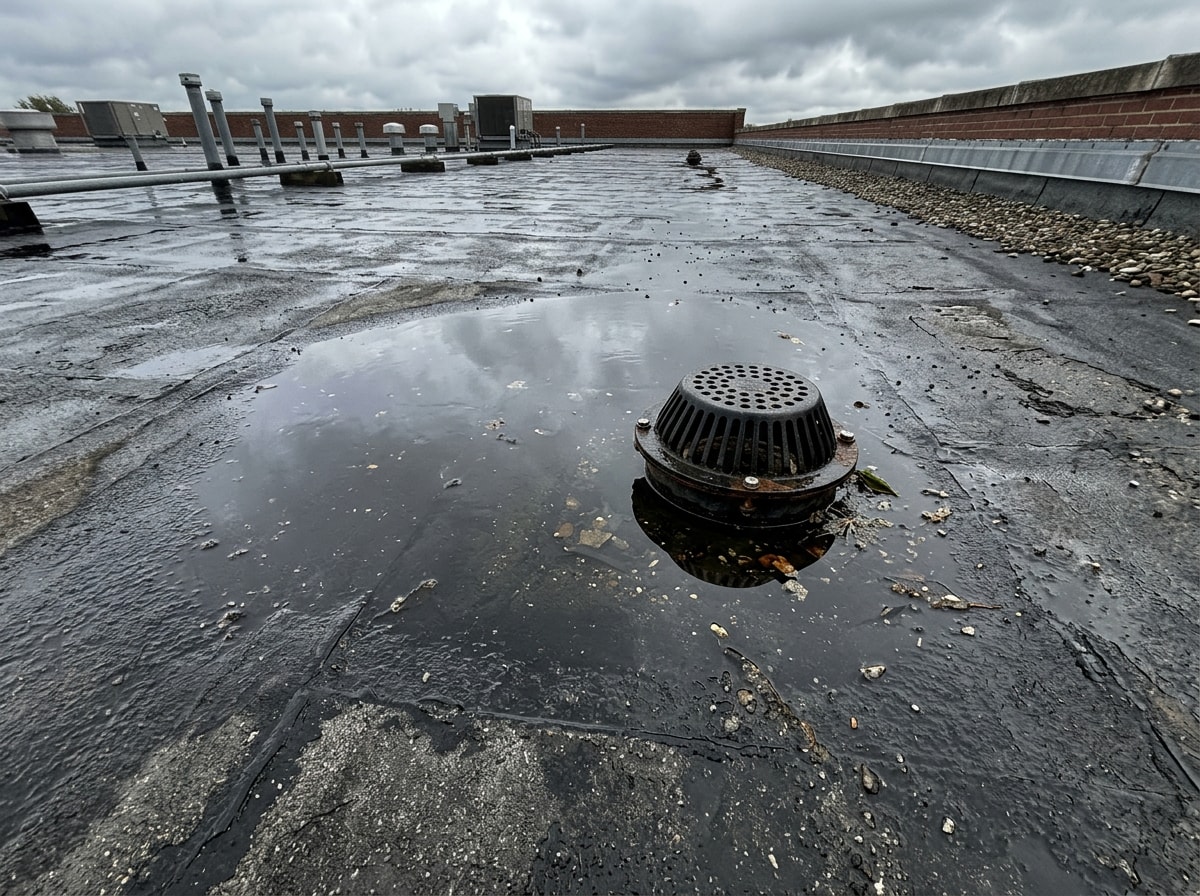
If you're unsure whether your building and local climate are a good match for flat roofing, a roof inspection is the cheapest way to find out before committing to a system.
How to Choose the Right System
There's no universal "best" flat roof. The right call depends on three things:
- Budget tolerance — EPDM and modified bitumen cost less upfront; PVC and premium metal cost more but often last longer per dollar spent.
- Climate exposure — reflective TPO/PVC in hot climates, EPDM and mod bit in freeze-thaw regions.
- Roof traffic and use — BUR and modified bitumen handle foot traffic and equipment better than thinner membranes.
A contractor who has actually installed all five systems in your climate, not just sold one of them, is worth more than any spec sheet. Our team at Crestline Exteriors handles roof installation and roof repair for flat and low-slope systems across the Front Range, and we'll walk you through which material actually fits your building before you sign anything. For homeowners researching the broader market, our guide to finding and vetting local roofers covers the questions worth asking before you hire anyone.
FAQ
Which Flat Roof Material Is Best for Homes?
EPDM rubber and modified bitumen are generally the most practical flat roofing solutions for residential use, mainly because of easier installation and strong durability on smaller roof sections. TPO and PVC also work well on homes, particularly in hotter climates where their reflective properties help control cooling costs.
Are Flat Roofs More Expensive?
Not necessarily. Flat roofs can actually be more cost-effective to install upfront than pitched roofs, since they use less material and simpler framing. Over time, maintenance and repair costs may run higher, mainly due to drainage upkeep and the shorter lifespan of some membrane materials. The total cost comparison depends on which material you choose and how consistently it's maintained.
Do Flat Roofs Last as Long as Pitched Roofs?
With proper maintenance, flat roofs can last 20 to 30 years depending on the material, and EPDM specifically is now documented lasting well beyond that in field surveys. They typically require more frequent upkeep than pitched roofs to hit the upper end of that range. Skipping inspections or drainage maintenance tends to shorten flat roof lifespan noticeably.
What Flat Roof Type Offers the Longest Service Life?
Among membrane-based materials, EPDM rubber generally takes the longevity crown. The EPDM Roofing Association has announced that properly designed, installed, and maintained EPDM roof membranes have an expected service life of 38 years , and some field samples have performed well beyond that. Built-up roofing and metal flat-roof systems can sometimes match or exceed EPDM's lifespan depending on installation quality and climate exposure.
Can You Walk on a Flat Roof?
Most flat roofs can handle occasional foot traffic for inspections and maintenance, but walking on them repeatedly without a designated traffic pad can wear down the membrane faster, especially on EPDM and TPO. If the roof regularly needs equipment access or foot traffic, modified bitumen or BUR handle that better than thinner single-ply membranes.
How Often Should a Flat Roof Be Inspected?
Twice a year at minimum, in spring and fall, plus after any major hail or wind event. Catching small seam separations or ponding issues early is far cheaper than a full replacement later.
Can You Put Solar Panels on a Flat Roof?
Yes. Flat roofs are often easier to fit with ballasted solar racking than pitched roofs, since the panels can be tilted to the optimal angle independent of the roof's own slope. The roof's remaining service life should be at least as long as the solar system's warranty before installation, otherwise you'll be removing panels for a re-roof.
About the Author
This guide was written by Kyle, owner of Crestline Exteriors, a Colorado-native, licensed roofing contractor with 13+ years in the exterior trades. Crestline Exteriors has served homeowners, HOAs, and property managers across Littleton, CO and the greater Front Range since 2018. Have questions about which flat roofing solution fits your building? Contact our team or visit the Crestline Exteriors homepage to see our full range of roofing services.