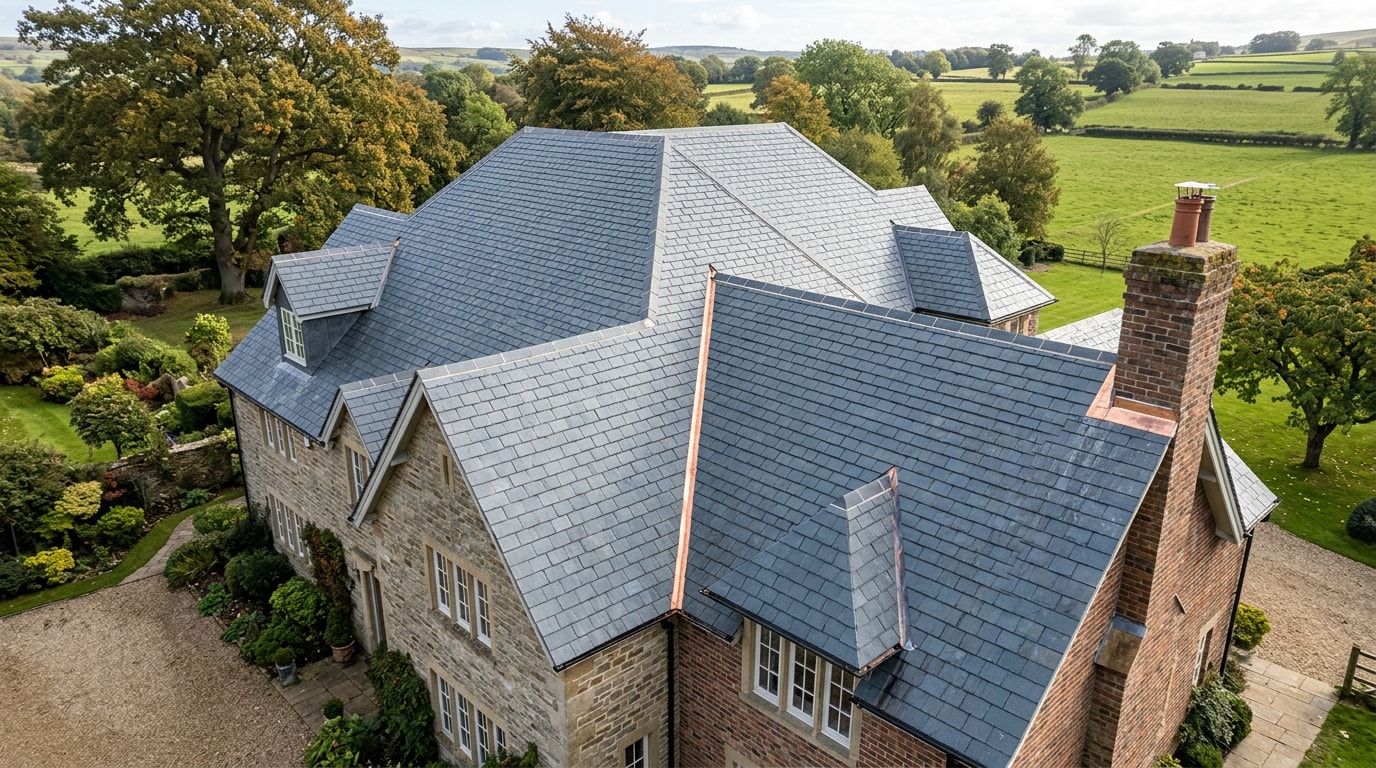
Slate roofing contractors handle a material that most general roofers rarely touch, and that experience gap shows up fast once tiles start cracking under careless footing. This guide breaks down the vetting checklist, estimate red flags, and real cost ranges you need before signing a contract. By the end, you'll know exactly what separates a true slate specialist from a roofer who's simply willing to take the job.
Why a Slate Roofing Specialist Is Non-Negotiable
Natural slate behaves nothing like the materials most roofers train on every day. A single slate tile can weigh many times more than an asphalt shingle covering the same square footage, and that weight has to be distributed across the roof deck correctly or structural problems follow.
Slate is also brittle in ways plywood and fiberglass shingles aren't. A general roofing contractor who tries to walk, cut, or fasten slate the way they would asphalt will crack tiles that were otherwise good for another century. True slate specialists know how to punch and cut slate without shattering it, how to copper-nail instead of using standard roofing nails that corrode and fail early, and how to hook-fasten slates on steep or exposed sections where standard nailing won't hold.
The National Park Service's own guidance on historic slate roofs backs this up directly: the installation and repair of slate roofs should be entrusted only to experienced slaters. Industry grading requirements, including the ASTM C406 standard for roofing slate, exist because slate performance depends on getting material selection and installation details right the first time. That standard classifies roofing slate as Grade S1, S2, or S3, wherein each grade meets specified breaking load, absorption, and depth of softening requirements.
Improper installation doesn't just look bad. It causes leaks, accelerated flashing failure, and damage that often costs more to correct than the original job would have cost to do right.
Criteria for Choosing a Slate Roofing Contractor
Use this checklist every time you compare bids:
- Confirm the contractor is licensed and insured, and ask to see the documentation rather than accepting a verbal promise.
- Verify a physical business address and tax ID.
- Check for membership in a recognized trade body focused on slate, such as the Slate Roofing Contractors Association (SRCA) or the National Roofing Contractors Association (NRCA).
- Require a full, on-roof inspection before any number appears on a written estimate.
Licensing and insurance are the baseline, not the finish line. A legitimate slate roofing contractor hands over bonding and insurance documentation without hesitation. Trade membership matters too, since organizations like the SRCA organize slate roofing professionals and make them available to the public via membership listings, contractor directories, and source lists , which signals a baseline level of vetting before a contractor is even listed.
Before any number appears on paper, a trustworthy contractor will walk the full roof, not just glance from the ground, and that inspection should shape the written estimate that follows. Our crews apply the same standard on every roof inspection we run, slate or otherwise: no estimate gets written until someone has actually been on the deck.
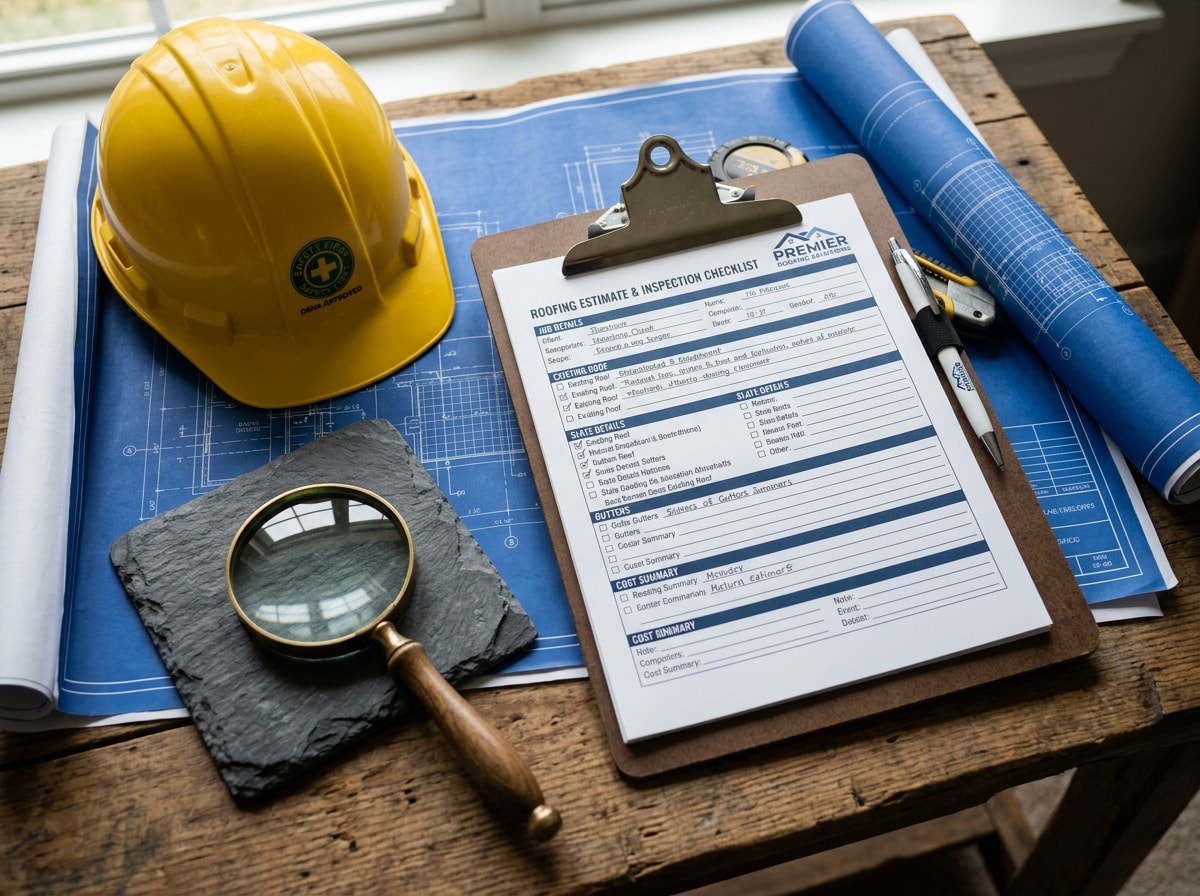
Ready to compare bids against a real inspection? Request a roofing estimate from our team before you commit to anyone.
Ask About Real Slate Experience
Years in roofing overall mean little if none of it was slate. Ask directly how many slate roofs the crew has completed, who supervises the installation on-site, and what tools they use for cutting and fastening.
A contractor confident in their slate-specific experience will show you a portfolio of completed slate work and offer references you can actually call. If they hesitate or redirect to general asphalt or metal jobs instead, treat that as a red flag.
What Should the Slate Roofing Estimate Include?
A complete slate roofing estimate breaks down materials, labor, structural evaluation, and flashing separately rather than bundling everything into one lump sum. It should also specify the fastening method and any permit or historic-approval requirements tied to the job.
A solid written quote covers:
- Slate grade and quarry source, since pricing and expected lifespan vary significantly by origin.
- Labor costs, separated from tear-off and disposal charges.
- Flashing material, called out specifically for chimneys, valleys, and skylights.
- Scope of work, stating plainly how much of the roof is being touched and whether the decking needs reinforcement.
If a quote skips any of these line items, ask why before moving forward.
Signs Your Slate Roof Needs Repair or Replacement
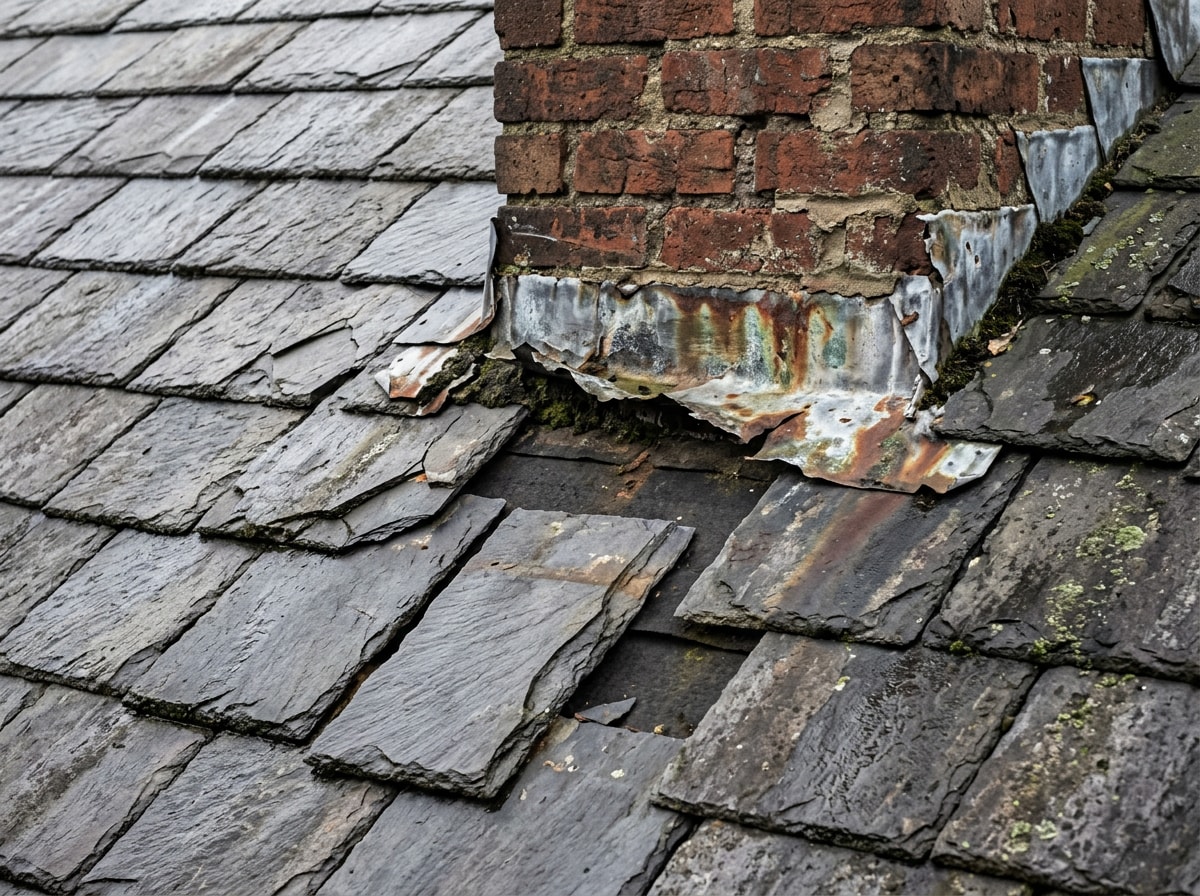
Once you understand how to vet a contractor, the next question is whether you actually need one yet. Most slate problems show themselves visually long before a leak reaches the interior ceiling. In our own roof evaluations, hairline cracking around the fastener hole is usually the first thing we flag, often months before a tile actually slips out of its course.
Watch for:
- Cracked or slipping slates, or visible gaps where tiles have shifted out of alignment.
- Failing flashing around chimneys, skylights, or valleys, flashing typically wears out well before the slate itself does.
- A sagging roofline or soft spots in the decking, which point to a structural issue rather than a simple patch.
A qualified contractor distinguishes partial, localized damage from a condition requiring full replacement by assessing how much of the roof is affected and whether the underlying structure is still sound. For a broader walkthrough of what a thorough evaluation covers, see our roofing inspection checklist. Don't let anyone skip that distinction between a modest repair bill and a full tear-off. If repair is the right call, our roof repair team can scope it; if the damage is widespread, roof replacement is the more honest recommendation.
Repair or Replacement Questions to Ask
Before agreeing to either option, ask your contractor:
- How much of the slate is actually failing?
- Is the damage isolated or spread across the roof?
- Can the existing good slate be retained and reused?
These questions separate a true partial failure, which can often be repaired, from a situation that genuinely calls for full replacement. A contractor who answers with specifics rather than a blanket recommendation is one worth trusting.
Where to Find Reliable Slate Roofing Contractors
Start with referrals rather than a generic search. Architects, preservation-minded builders, and local historic preservation groups often maintain informal lists of contractors who've done slate work they trust, since slate roofs are common on older and historic properties.
Trade-association directories are another solid channel. Searching SRCA or NRCA member listings narrows your options to contractors who've already met baseline slate credentialing standards. Word-of-mouth from neighbors with visible slate roofs counts too; ask who did the work and whether they'd hire them again.
Whatever channel you use, get at least three written quotes before deciding. Comparing quotes side by side exposes inconsistencies in scope, materials, or pricing that a single estimate would hide. We work throughout the Denver metro, including Highlands Ranch, Littleton, and Castle Rock, so local referrals are easy to check against. Get in touch for a free estimate once you've shortlisted a few candidates.
Understanding the Cost of Slate Roofing Services
Slate roof cost isn't one number. It's a function of material grade, labor rates, and how complex the roof's geometry is. A simple gable roof costs far less per square foot than a roof with multiple valleys, dormers, and steep pitches.
| Material | Typical Installed Cost | Expected Lifespan |
|---|---|---|
| Natural slate | $15–$30 per square foot | 75–150 years, grade-dependent |
| Synthetic/composite slate | $8–$14 per square foot | 40–50 years |
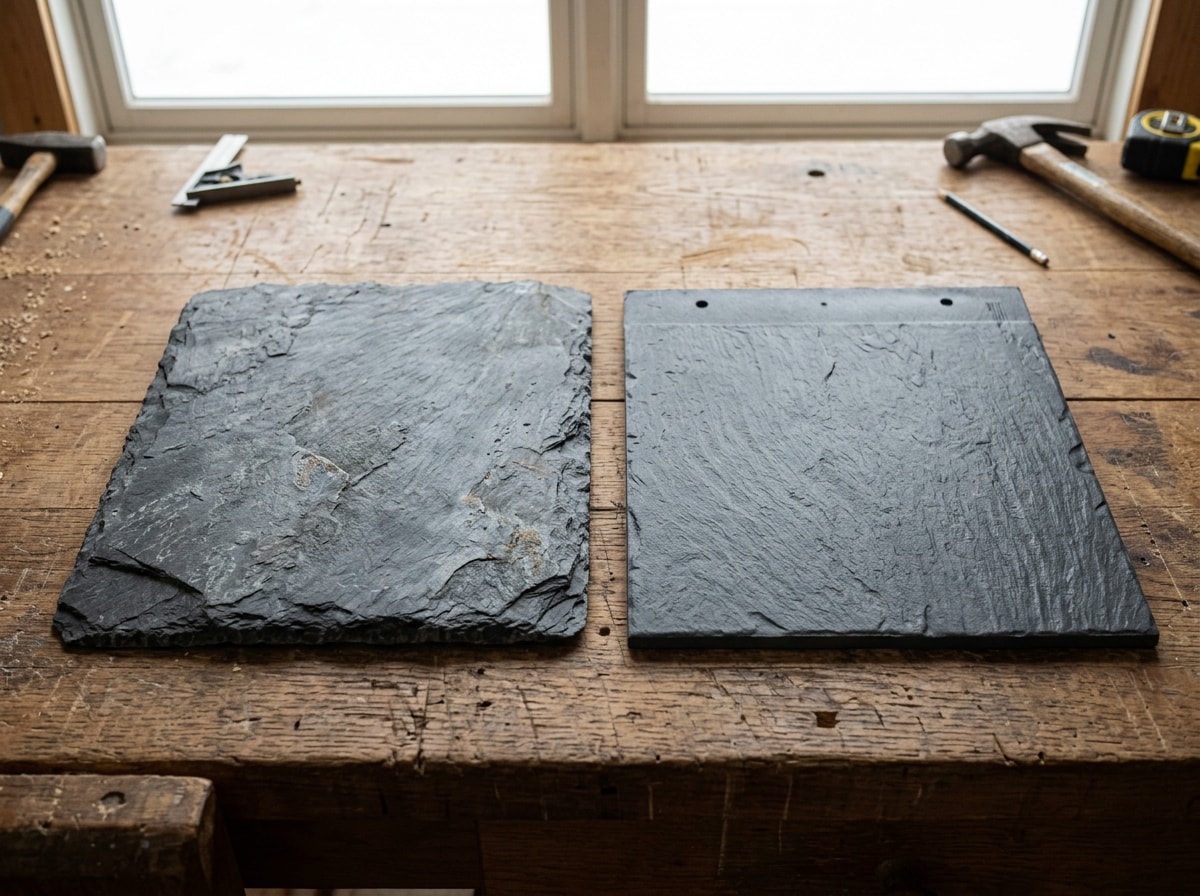
The grade stamped on natural slate drives much of that lifespan range. ASTM International's C406 Standard Specification for Roofing Slate establishes expected service life for grades of slate as S1 over 75 years, S2 40-75 years and S3 20-40 years. That grade should appear on your estimate, not just a generic "slate" line item; it's one of the few pieces of paperwork that tells you what you're actually buying before the crew ever shows up.
Curious what your specific roof might cost? Browse our roofing prices guide for region-specific ranges, or start with our roofing contractor services page to see what's included in a standard scope.
Key Pricing Factors for a Slate Roof
Four factors drive most of the variation in slate roofing estimates:
- Roof size and pitch. Steeper roofs require more safety staging and take longer to complete, which raises labor cost independent of material choice.
- Architectural complexity. Valleys, dormers, and chimneys all add labor and flashing work.
- Slate grade and quarry source. Premium, uniform-thickness slate costs more upfront but typically performs better and lasts longer.
- Local labor rates. Slate-qualified crews are scarcer than general roofing labor in most markets, which affects pricing.
Slate Roof Installation Cost Breakdown
A full slate installation cost breaks into four buckets:
| Cost Bucket | What Drives It |
|---|---|
| Materials | Slate grade, flashing metal, fasteners |
| Labor | Crew size, roof pitch, local wage rates |
| Tear-off and disposal | Number of existing roofing layers, access |
| Structural reinforcement | Whether the deck needs added rafters or sheathing for slate's weight |
Tear-off cost alone can run a meaningful portion of the total project, especially on older homes where multiple roofing layers have accumulated. Structural reinforcement varies widely; some roofs need none, while others require added framing before slate installation can even begin. Ask your contractor to quote each bucket separately so you can sanity-check the total.
How to Install Slate Roofing Safely and Correctly
Slate installation carries real fall-hazard and material-handling risk that asphalt work doesn't. Slate is slippery, heavy, and brittle underfoot, so a qualified crew uses roof jacks and staging platforms to distribute weight and avoid walking directly on finished tiles.
Federal fall-protection rules apply to slate work just as they do to any steep-slope roofing job. Under OSHA's construction fall protection standard, each employee on a steep roof with unprotected sides and edges 6 feet or more above lower levels must be protected from falling by guardrail systems with toeboards, safety net systems, or personal fall arrest systems. A reputable contractor will have harnesses, anchors, and staging in place before anyone sets foot on the roof. Staging a slate roof properly also protects the tiles themselves; improvised footing cracks slates that would otherwise last decades longer.
If a contractor can't describe their safety setup when asked, that's a sign to look elsewhere.
How to Clean and Maintain a Slate Roof
Slate roof maintenance is mostly about inspection cadence, not aggressive cleaning. A professional inspection every two to three years catches slipped tiles and failing flashing before they turn into leaks.
Moss on slate roofs is common in shaded, damp climates and should be removed with low-pressure methods rather than pressure washing, which drives water under tiles and accelerates cracking. Soft brushing and controlled chemical treatments are safer than any DIY scrubbing approach.
Homeowners attempting slate roof cleaning themselves risk cracking tiles simply by walking on them incorrectly. Leave both inspection and cleaning to a crew trained specifically on slate.
About This Guide
This guide was prepared by the roofing team at Crestline Exteriors, a licensed and insured roofing and exterior contractor serving the Denver metro area, including Jefferson, Douglas, and Arapahoe counties. Our crews inspect, repair, and install slate, tile, metal, and asphalt roofing across Colorado's Front Range. If you want a second opinion on a slate bid or an inspection before you sign anything, reach our team directly.
FAQ
How Do I Compare Slate Roof Replacement Contractors?
Compare scope, materials, warranty terms, and slate-specific references side by side rather than ranking bids by price alone. Two quotes with similar totals can differ enormously in what's actually included, so line up each one item by item before deciding.
How Much Do Typical Slate Repairs Cost?
Slate repair cost typically ranges from a few hundred dollars for isolated tile replacement to several thousand for flashing repairs or multi-tile sections. Exact price depends heavily on damage extent, slate type, and roof accessibility.
How Long Does a Natural Slate Roof Actually Last?
Lifespan depends on the slate grade. Under ASTM C406, S1-grade slate is rated for more than 75 years, S2 for 40 to 75 years, and S3 for 20 to 40 years. Copper flashing and proper hook-fastening extend lifespan; lower-grade materials and poor flashing shorten it.
Is Slate Roofing Worth the Extra Cost?
For homeowners planning to stay long-term or maintaining a historic property, yes. Natural slate's higher upfront cost is offset by a service life that can run two to three times longer than synthetic alternatives, with far less replacement activity over the life of the home.
Can a Few Broken Slate Tiles Be Fixed Without Replacing the Whole Roof?
Usually, yes. Isolated cracked or slipped tiles are a repair, not a replacement, as long as the surrounding slate and the deck underneath are still sound. A contractor who recommends full replacement for a handful of broken tiles without inspecting the rest of the roof first should be questioned.
Why Is It Important to Find Qualified Slate Roofers?
Hiring a qualified slate roofer protects both your investment and your safety. A specialist understands slate's weight, brittleness, and fastening requirements in ways a generalist simply doesn't, which prevents the premature damage and costly rework that come from inexperienced installation.