Roofing cost per square in 2026 typically runs $350 to $900 installed for asphalt shingles and climbs well past $3,000 for premium slate or copper, but the number on your actual invoice depends on pitch, tear-off, and where you live. We price and install roofs across the Denver metro every week, and we've seen how often "per square" quotes hide the details that actually move your total. Here's what a fair roofing cost per square looks like this year, broken down by material, labor, and roof size, so you can spot a bad bid before you sign it.
Roofing Cost Per Square: 2026 National Averages
A roofing square equals 100 square feet of roof surface. Contractors price by the square because shingle bundles, underlayment rolls, and metal panels are manufactured to cover that unit cleanly, which makes bids easier to compare across different roof shapes.
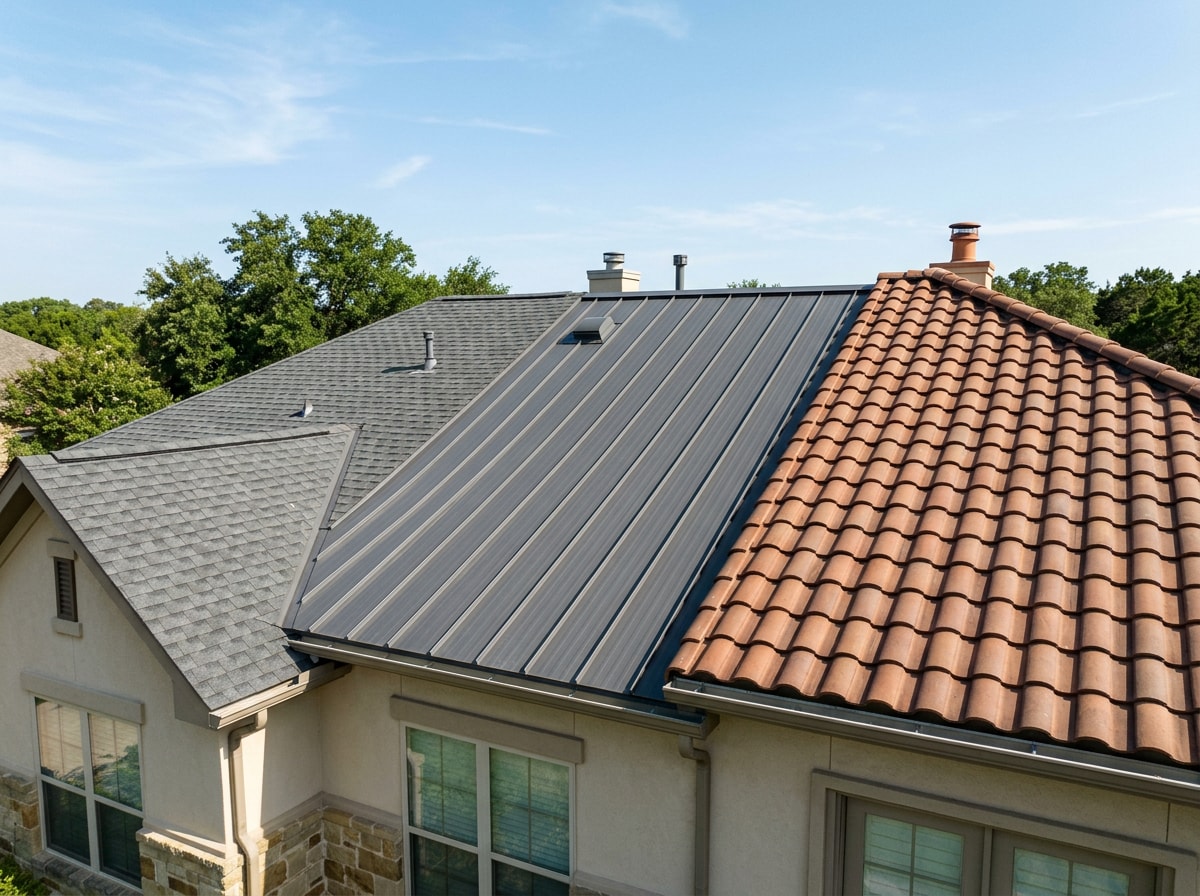
For most homes, expect to pay $350 to $900 per square installed for standard asphalt shingles in 2026. Premium materials change that math fast: metal typically runs $700 to $1,800 per square, tile runs $1,000 to $2,500, and slate or copper can exceed $3,000 per square.
To find your own number, divide your total roof area by 100. A 2,000-square-foot roof works out to 20 base squares, though the real material total is usually higher once pitch and waste are factored in, which we cover below.
Cost Per Square vs. Cost Per Square Foot
You'll see both terms used, and they're easy to confuse. A "square" is 100 square feet, so a quote of $500 per square is the same price as $5 per square foot.
Contractors default to squares because it matches how shingles and panels ship. Homeowners often find square footage more intuitive since it lines up with how home size gets listed. Either way, converting between the two just means multiplying or dividing by 100.
What a Roofing Square Actually Covers
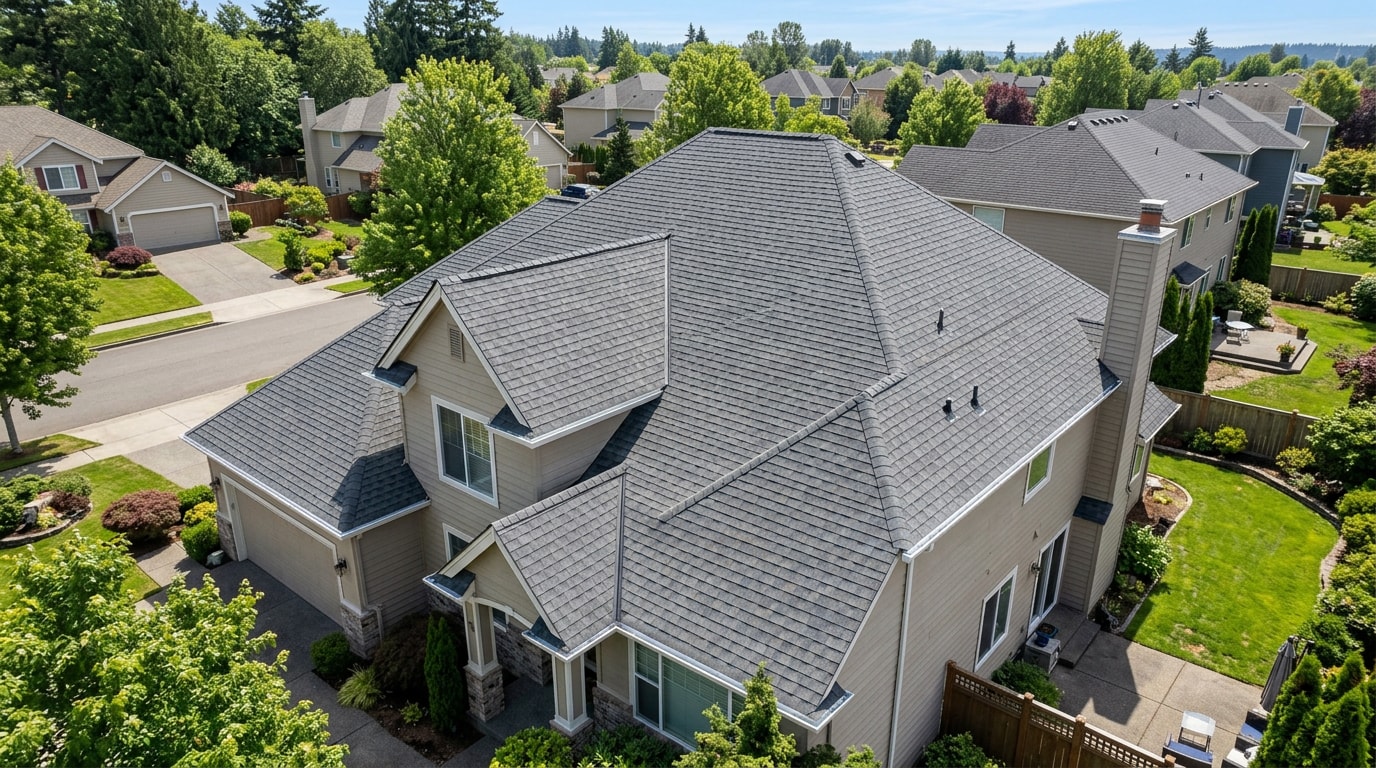
Most homes need more squares than their footprint suggests. Roof area is typically 20% to 30% larger than the home's floor plan once pitch, overhangs, and dormers are added in, so a 2,000-square-foot house often needs 24 to 26 squares of material, not 20.
Most residential roofs in the U.S. fall somewhere between 15 and 25 squares total. If a contractor's estimate is based purely on your home's listed square footage without a roof measurement, ask them to confirm the number with an on-site or satellite-based measurement before you compare it to another bid.
Commercial vs. Residential Roofing
Commercial roofs are usually priced differently than residential ones, even when a homeowner searches the same term. Flat and low-slope commercial systems use membrane materials like TPO or EPDM, which are typically quoted per square foot rather than per square and installed under different code requirements than a steep-slope shingle roof. If you're pricing a home, treat commercial numbers as a separate category rather than a baseline for comparison.
What Affects Roofing Cost Per Square
Every quote is built from the same handful of variables. Knowing them before you request bids makes it easier to spot an outlier estimate, high or low.
Roof size and total squares needed. Larger roofs cost more in total dollars, but the per-square rate itself is driven more by complexity than size.
Pitch and roof complexity. Steep roofs are slower and riskier to work on, which pushes labor rates up. A steep or highly cut-up roof can add 20% to 40% to the per-square price compared with a simple, low-slope roof.
Material choice. This is the single biggest swing factor in your total cost, often creating a bigger gap than labor, location, or pitch combined.
Tear-off and disposal. Removing the old roof adds a line item many homeowners underestimate, typically $50 to $150 per square depending on the number of existing layers and roof pitch.
Local codes and permits. Most U.S. jurisdictions follow the International Residential Code, which prohibits installing a new layer of shingles over a roof that already carries two or more layers of any roof covering. Permit fees are usually modest, often $100 to $500, but skipping one can create problems at resale.
Geographic location. Urban and high cost-of-living markets tend to run higher labor rates due to wages, licensing, and contractor demand, while rural areas sometimes offset lower labor costs with travel fees.
Roofing Labor Cost Per Square
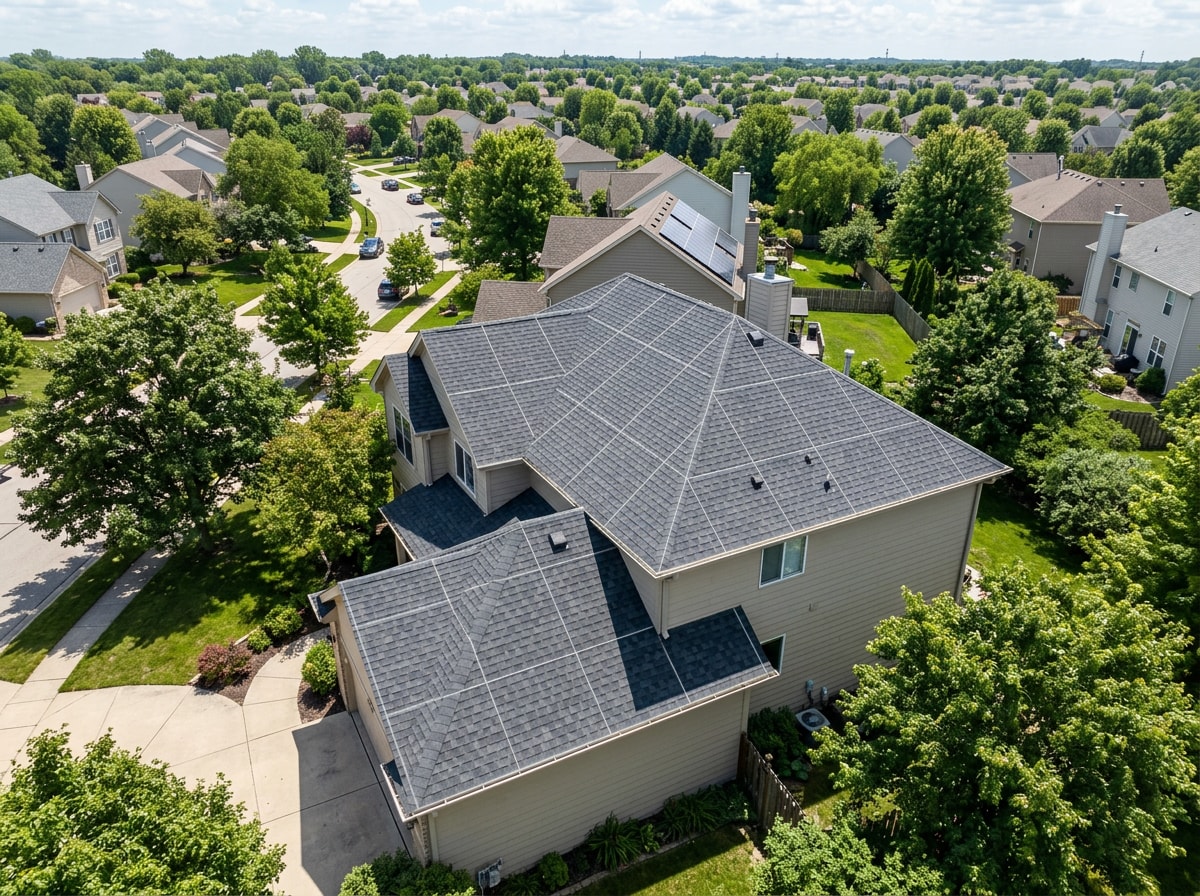
Labor makes up roughly 40% to 70% of total roofing cost per square, which makes it the biggest lever after material choice. In 2026, roofing labor cost typically falls between $150 and $450 per square depending on region, pitch, and crew availability.
That split shifts by material:
- Asphalt shingles: around 60% labor, 40% material. Fast installation keeps labor's share high relative to the low material cost.
- Metal roofing: around 45% labor, 55% material. Panels cost more, but standing-seam work still requires a skilled, specialized crew.
- Premium materials (tile, slate): around 35% labor, 65% material. The material itself carries most of the cost even though installation takes real expertise.
Here's a quick worked example. On a 20-square asphalt roof at $150 per square labor and $200 per square material, you land around $7,000 total. Swap in metal at $300 labor and $500 material per square, and that same 20-square roof jumps to roughly $16,000.
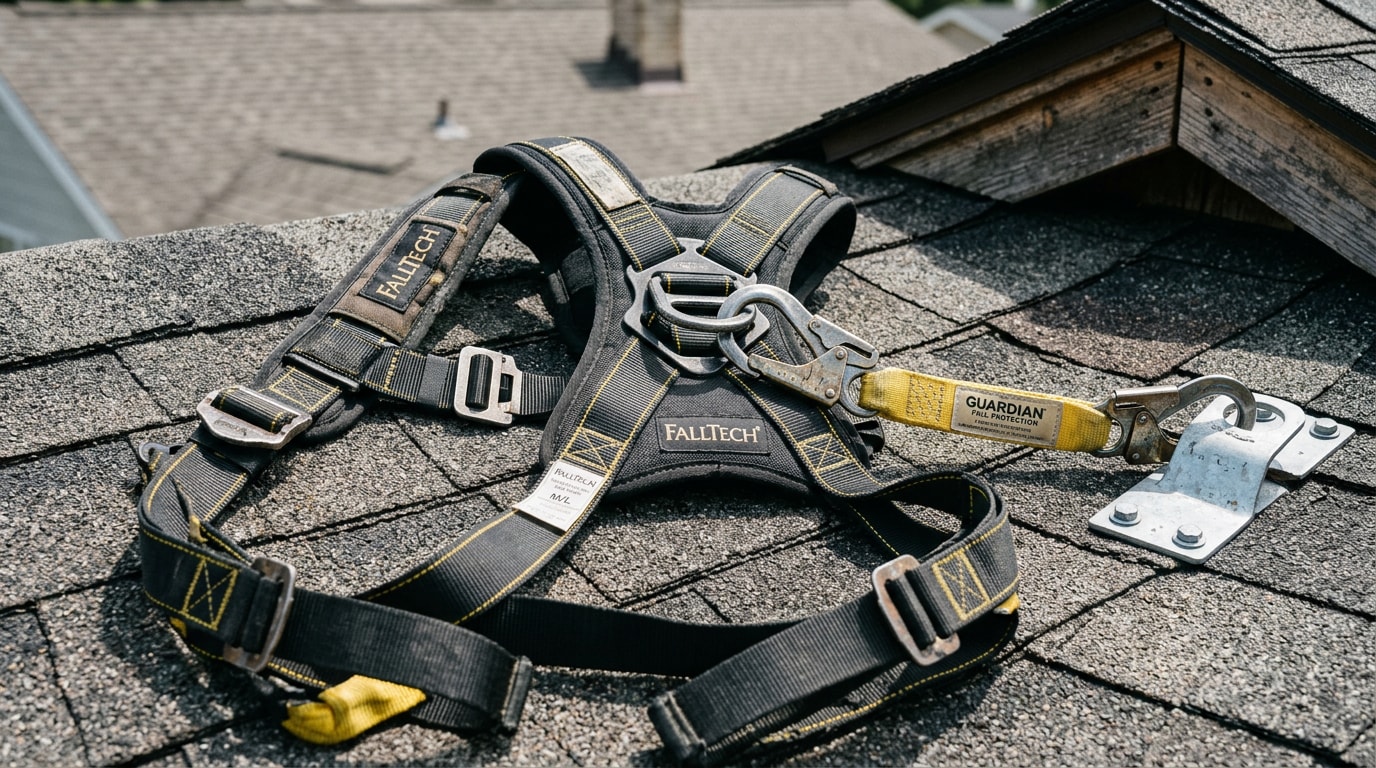
Steep-slope jobs carry an added labor cost tied directly to jobsite safety. OSHA's fall protection standard for construction requires guardrails, safety nets, or personal fall arrest systems for most work six feet or higher, and that equipment and setup time gets built into your labor rate on steeper homes.
Roofing Material Cost Per Square
Material is where per-square pricing spreads out the most, so it's worth looking at each tier separately rather than relying on one blended national average.
| Material | Installed Cost Per Square | Typical Lifespan |
|---|---|---|
| Asphalt shingles | $350 – $750 | 20 – 30 years |
| Metal (standing seam, panel) | $700 – $1,800 | 40 – 70 years |
| Clay or concrete tile | $1,000 – $2,500 | 50 – 100 years |
| Slate or copper | $1,500 – $3,000+ | 75 – 150+ years |
Asphalt Shingle Roofing Cost Per Square
Asphalt is still the most common residential roofing material by a wide margin, and it typically runs $350 to $750 per square installed. Three-tab shingles sit at the low end, while architectural shingles cost more upfront but offer better wind resistance and a longer service life.
Metal, Tile & Slate Roofing Cost Per Square
Premium materials cover a wide spread depending on the specific product. Corrugated and exposed-fastener metal panels sit near the bottom of the metal range, while standing-seam systems and copper push toward the top. Longevity is the trade-off that makes the higher upfront cost worth considering for some homeowners; industry lifespan data compiled by the National Roofing Contractors Association confirms that quality installation and local weather conditions are the biggest factors in how long any of these systems actually last.
If you're comparing metal panel profiles and pricing in more depth, our guide to steel roofing panel types and costs breaks down the options by gauge and finish.
Roofing Cost Per Square by Roof Size
Seeing total dollars, not just the per-square rate, makes budgeting easier. Remember that actual roof area typically runs 20% to 30% larger than a home's living-space footprint, so a 2,000-square-foot home rarely needs exactly 20 squares of material.
| Home Size (sq ft) | Squares Needed | Asphalt Shingle Cost | Metal Roof Cost | Premium (Tile/Slate) Cost |
|---|---|---|---|---|
| 1,500 | 18 – 20 | $6,300 – $15,000 | $12,600 – $36,000 | $18,000 – $60,000 |
| 2,000 | 24 – 26 | $8,400 – $19,500 | $16,800 – $46,800 | $24,000 – $78,000 |
| 2,500 | 30 – 33 | $10,500 – $24,750 | $21,000 – $59,400 | $30,000 – $99,000 |
A 2,000-square-foot home illustrates the pattern well: the exact same roof can cost roughly $8,400 or $78,000 depending purely on material choice, even though the squares needed stay nearly constant. If you're weighing a full roof replacement against a partial roof repair, getting an accurate square count first makes both options easier to compare.
What Roofing Costs Look Like Along Colorado's Front Range
National averages are a starting point, but hail changes the math here in a way most roofing guides never mention. The Front Range sees regular, sometimes severe hailstorms through the spring and summer, and Denver's elevation adds enough UV exposure to shorten the working life of standard shingles compared with lower-altitude regions.
That's part of why so many homeowners in our service area upgrade to Class 4 impact-resistant shingles, which typically add 10% to 20% to material cost. It's not just a durability choice. Under Colorado law, insurers writing homeowner policies in the state are required to factor impact-resistant roofing materials into their rate structures, and the Colorado Division of Insurance has published bulletin guidance explaining how that requirement applies to owner-occupied homes. In practice, that often means a discount on the dwelling or wind/hail portion of your premium once a qualifying Class 4 roof is installed and documented, though the exact percentage and paperwork requirements vary by carrier.
We install and inspect roofs throughout Littleton, CO, Denver, CO, Highlands Ranch, CO, Castle Rock, CO, Aurora, CO, and across Jefferson County, Douglas County, and Arapahoe County. If you're not sure whether your current roof still qualifies for a discount or needs a full roof inspection after a storm, that's a fast, low-cost way to find out before hail season hits again.
How to Get a Fair Roofing Estimate
Start by collecting at least three quotes from licensed contractors. Pricing for the same job can vary by hundreds of dollars per square between companies, and a wide spread is often a sign that at least one bid is missing something.
- Ask for a full breakdown that separates materials, labor, tear-off, disposal, and cleanup. A vague lump-sum quote makes it nearly impossible to compare bids or spot padding.
- Confirm warranty coverage for both materials and workmanship, since terms vary significantly between contractors.
- Budget a 10% to 15% contingency for hidden issues like rotted decking that often only show up once tear-off begins.
- Verify license, insurance, and local reviews before scheduling an on-site inspection.
A fair roofing price reflects real labor and material costs for your region, not just whoever quotes the lowest number. Unusually cheap bids sometimes signal corners being cut on underlayment, flashing, or code compliance. If your roof was recently damaged and can't wait for a full comparison process, an emergency roof repair can stabilize the situation while you gather proper estimates.
Whether you're planning a full roof installation or just need a second opinion on an estimate you already have, Crestline Exteriors can walk your roof, measure the actual squares involved, and give you a written breakdown instead of a guess. Get a free estimate before you sign anything.
FAQ
How many squares is a typical roof?
A typical U.S. home needs 15 to 25 roofing squares, depending on footprint, pitch, and design complexity. Most average-sized single-family homes fall in the 18 to 22 square range once pitch and overhangs are factored in.
How many squares is a 2,000 square foot roof?
A 2,000-square-foot home works out to 20 squares as a baseline calculation. In practice, pitch, waste, and overhangs typically push the real number to 24 to 26 squares, so it's worth confirming the exact count with a contractor's on-site measurement.
What's the difference between roofing cost per square and cost per square foot?
They describe the same price, just at different scales. One roofing square equals 100 square feet, so a quote of $500 per square is identical to $5 per square foot. Contractors usually quote by the square because materials ship in that unit.
Is it cheaper to install over old shingles?
A roof overlay is usually cheaper upfront since it skips tear-off and disposal costs. It also shortens the new roof's expected lifespan, and most codes cap roofs at two shingle layers, so a home already at that limit must do a full tear-off instead.
How much does a roofer charge per square?
Most roofers charge $350 to $900 per square for a fully installed asphalt roof, combining material and labor. Premium materials like metal, tile, or slate push that range significantly higher, sometimes past $3,000 per square.
Do Class 4 impact-resistant shingles cost more per square?
Yes, typically 10% to 20% more in material cost than standard architectural shingles. In hail-prone areas like Colorado's Front Range, that added cost is often partly offset by an insurance discount, since state law requires carriers to factor impact-resistant materials into their homeowner policy rates.