Steel roofing panels are one of the most durable roofing materials you can put on a home, with some profiles rated to last 50 years or longer. Picking the right one means understanding profile differences, fastener systems, and real installed costs before you sign a contract. This guide breaks down every major panel type, current pricing, and what a professional installation actually involves.
What Are Steel Roofing Panels?
Steel roofing panels are large sheets of metal, roll-formed into a specific profile of ridges, waves, or vertical seams, that overlap or interlock to form one continuous roof surface. A single panel can span several feet of roof deck, replacing dozens of individual shingles in one pass.
They show up on suburban homes and metal barns alike, but the coatings differ by use case. Residential panels usually get a finished, paint-grade coating, while commercial and farm buildings often use heavier-gauge, exposed-fastener panels to keep material costs down.
Types of Steel Roofing Panels
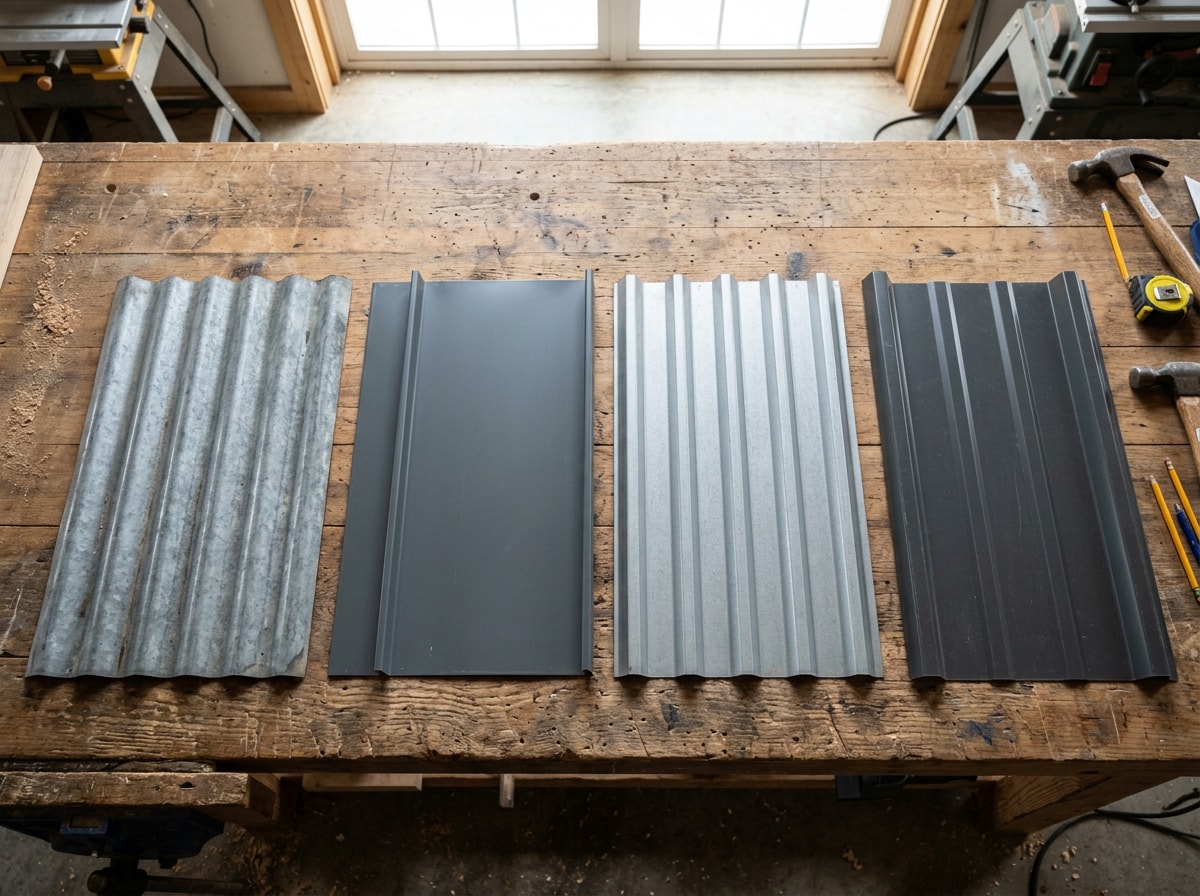
The profile stamped or rolled into the sheet determines how panels attach, what they cost, and where they perform best. Four profiles show up most often on homes and light-commercial buildings.
Corrugated Steel Roofing Panels
Corrugated panels use a repeating wave pattern that has been a roofing staple for decades. The wave adds strength without adding much weight, and installers typically use exposed-fastener screws driven straight through the panel face into the deck below.
This profile is common on agricultural buildings, sheds, and budget-conscious residential projects. It looks less refined than other profiles, but it is inexpensive and fast to install.
Standing Seam Steel Roofing Panels
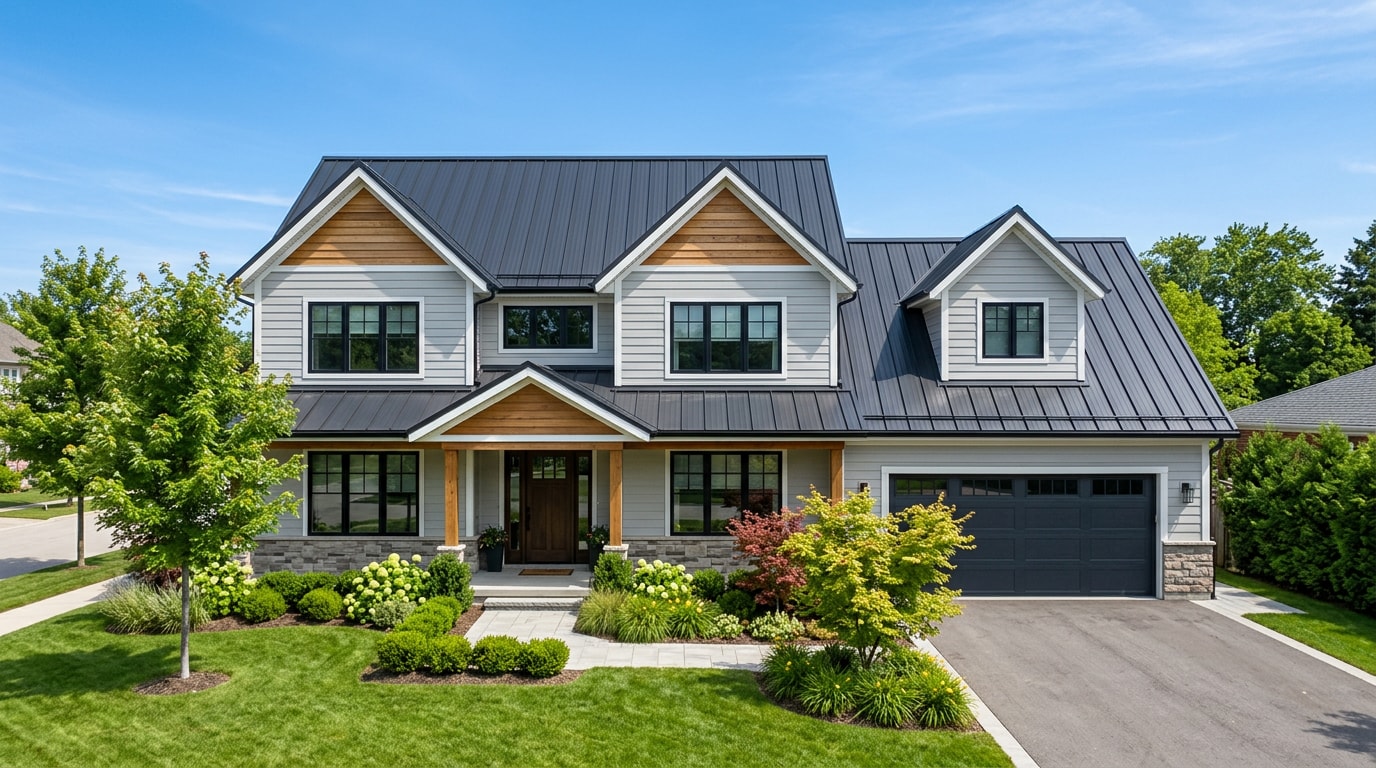
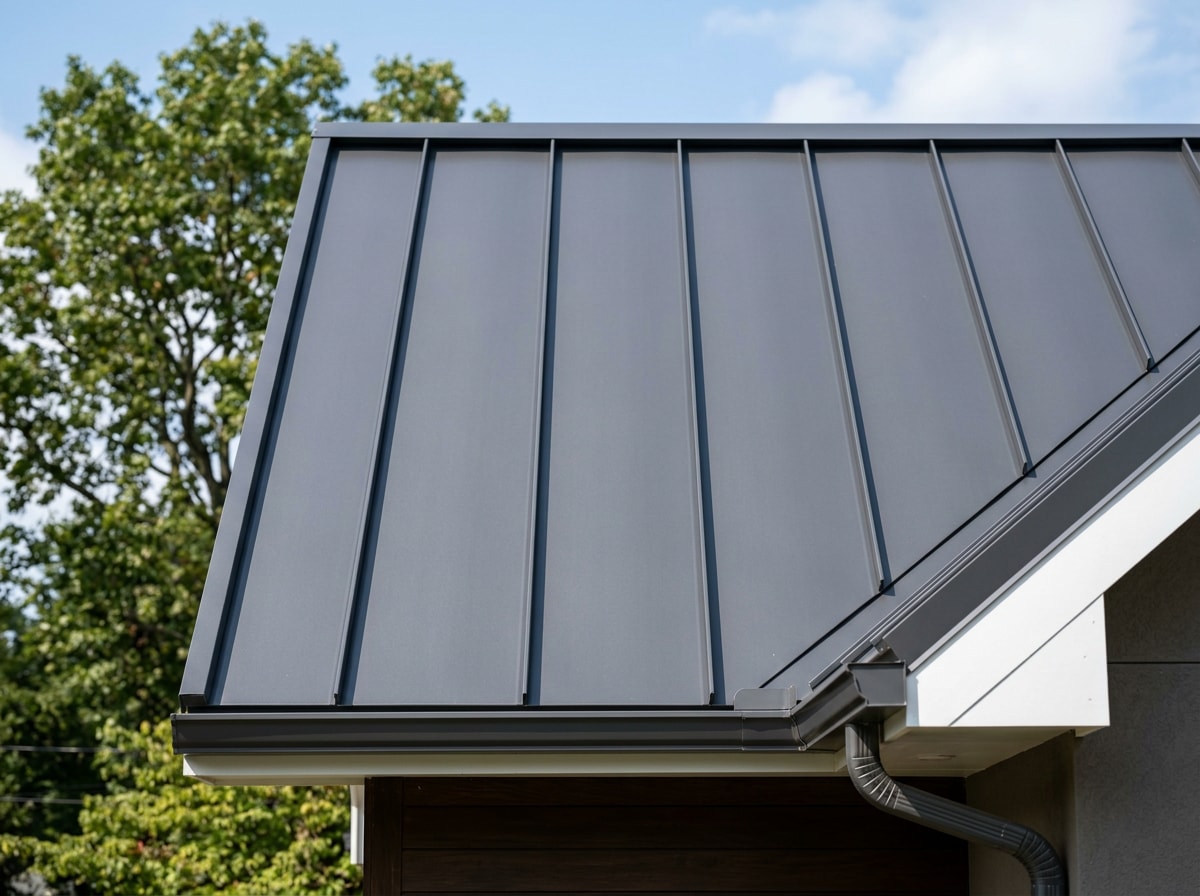
Standing seam panels connect through raised vertical seams that lock together, with fasteners hidden underneath rather than punched through the surface. That concealed-fastener design is a big part of why this profile dominates the premium end of the steel roofing panels market.
Standing seam roofs handle thermal expansion better than exposed-fastener systems and tend to leak less over time. A growing number of homeowners are pairing this profile with a matte black finish; our black metal roofing guide covers the pros, cons, and cost specifics of that look in detail.
Galvanized vs. Galvalume Steel Panels
"Galvanized" and "Galvalume" get used interchangeably, but the coatings are different. Galvanized steel is dipped in a zinc coating that corrodes slowly to protect the base metal underneath. Galvalume uses a coating that blends aluminum and zinc, which generally holds up longer against rust in humid or coastal conditions.
Both are usually sold as a mid-tier option: more corrosion-resistant than bare steel, less expensive than specialty-coated finishes. If you're comparing quotes, ask which coating a supplier means, since the two perform differently over 20 to 30 years.
Classic Rib / R-Panel Steel Roofing
Classic rib (also sold as R-panel) features evenly spaced raised ribs across a flat panel field, giving a clean, traditional look that reads well on residential rooflines. It is one of the most recognizable exposed-fastener profiles in the Midwest and rural South, and it is also a common choice for pole barns and post-frame buildings.
| Panel Type | Fastener System | Typical Gauge | Est. Installed Cost/Sq Ft | Best Use Case |
|---|---|---|---|---|
| Corrugated | Exposed | 26-29 gauge | $4-$8 | Barns, sheds, budget builds |
| Classic Rib / R-Panel | Exposed | 26-29 gauge | $4-$7 | Traditional residential, post-frame |
| Galvanized / Galvalume | Exposed or concealed | 24-26 gauge | $5-$10 | Coastal or humid climates |
| Standing Seam | Concealed | 22-24 gauge | $8-$16 | Residential, premium builds |
Cost ranges vary by region, coating, and installer. Treat these as planning estimates, not quotes.
Concealed vs. Exposed Fastener Panels
The fastener method underneath any profile shapes cost, leak risk, and long-term maintenance more than almost any other spec. Concealed-fastener systems hide screws beneath interlocking clips, while exposed-fastener systems drive screws directly through the panel face into the deck.
Exposed fasteners are cheaper and faster to install, which is why they're common on agricultural and budget projects. The trade-off is that every screw penetration is a potential leak point, and the rubber washers under those screws degrade over time and eventually need replacing.
Concealed-fastener systems, like standing seam, cost more but avoid face penetrations almost entirely. That generally means fewer leaks and less routine maintenance, though the panels demand more precise installation. Manufacturers test both fastener types against wind-uplift and flashing performance standards developed by the Metal Construction Association before rating panels for use in a given wind zone, a detail worth confirming with your installer.
Steel Roofing Panels vs. Other Metal Roof Materials
Steel isn't the only metal on the market, and it helps to know where it fits before you commit. Aluminum costs more than steel but resists corrosion better in coastal, salt-air environments, and it's lighter, which matters on older framing. Copper sits at the premium end, developing a natural patina over decades and often outlasting steel by a wide margin, but at a materials cost that puts it out of reach for most residential budgets.
For the average inland home, steel remains the default choice because it balances upfront cost, strength, and finish options better than the alternatives. Homeowners in coastal counties or with unusually light roof framing are the ones most likely to have a real reason to look past steel.
Benefits of Steel Roofing Panels
Homeowners choosing steel over asphalt usually point to longevity first. These panels can last 40 to 70 years depending on the profile and coating, which is significantly longer than asphalt shingles and helps owners avoid repeated roof replacements over a property's lifetime.
Energy efficiency is another draw. Reflective coatings on many steel panels cut heat absorption, and cool roof strategies generally perform best in hot, sunny climates on buildings with lower attic insulation, so actual savings depend heavily on your climate and existing insulation. Treat the effect as real but variable rather than guaranteed.
Impact resistance is a related benefit that matters most in hail-prone regions. Some steel panel systems carry a UL 2218 Class 4 rating, the highest tier in the industry-standard hail impact test developed by Underwriters Laboratories, and many insurers offer premium credits for roofs that carry it. Ask your carrier directly, since the discount isn't automatic and varies by state.
Steel is also highly recyclable, and many panels already contain recycled content, which appeals to owners weighing environmental impact alongside performance. None of this makes steel flawless: upfront cost runs higher than asphalt, and large hailstones can still dent lighter-gauge panels even when they don't crack them. Heavier gauges and impact-rated coatings reduce that risk but add to the price.
Cost of Steel Roofing Panels in 2026
Steel roofing costs vary by profile, gauge, and fastener system. Exposed-fastener panels like corrugated and classic rib typically run $4.50 to $8 per square foot installed, while concealed-fastener standing seam systems run $8 to $16 per square foot installed. Heavier 24-gauge steel generally costs 25% to 40% more than lighter 26-gauge steel of the same profile.
For a typical single-family roof, that translates to roughly $12,000 to $40,000 installed, with exposed-fastener systems at the low end and standing seam at the high end. Steep pitches, complex flashing details, and premium coatings all push totals toward the higher end of that range.
Labor is a bigger share of the bill on metal roofs than on asphalt, since panels require precise cutting and seaming. If your current roof is a full roof replacement candidate rather than a repair, it's worth getting written quotes that break out material, labor, and trim costs separately so you can compare bids apples to apples.
Installation Process for Steel Roofing Panels
A professional steel roof installation generally follows a consistent sequence:
- Remove old roofing materials to expose a clean deck.
- Inspect and repair any damaged sheathing.
- Install a moisture barrier or underlayment before panels go down.
- Measure and cut panels to fit the roof plane.
- Secure panels with fasteners matched to the panel type, overlapping correctly to shed water.
- Flash all edges, valleys, and roof penetrations like vents or chimneys.
In some cases, panels can go directly over an existing asphalt or wood shingle roof, skipping the tear-off step. That saves labor cost, though you'll pay extra if the old roofing needs removal for structural or code reasons. Minimum slope and underlayment requirements are set by local building codes, which generally reference the International Code Council's roof assemblies chapter as the model standard, so confirm specifics with your local building department before work begins.
Steep pitches, multiple penetrations, and skylights all add labor time and typically raise the final quote. A licensed roofing contractor can walk your roof and flag those cost drivers before you commit to a bid.
Maintenance of Steel Roofing Panels
Steel roofs need less upkeep than shingles, but they aren't maintenance-free. Owners should inspect the roof periodically for signs of rust or corrosion and treat any affected spots promptly before they spread.
How much maintenance you'll do depends partly on the fastener system covered earlier. Exposed-fastener panels need periodic checks on screws and rubber washers, since those components loosen and degrade faster than the panel itself. Concealed-fastener systems, like standing seam, need less frequent attention because there's no exposed hardware to fail.
A quick annual check of seams, flashing, and visible wear catches most problems early. If it's been a while since anyone has been on your roof, a professional roof inspection is a low-cost way to catch small issues before they turn into a roof repair job.
Why Denver-Metro Homeowners Choose Steel Roofing
Colorado's Front Range sees enough hail and heavy snow load that panel choice matters more here than in milder climates. Our crews at Crestline Exteriors install and repair steel panel roofs across the region regularly, and the pattern we see is consistent: homes with concealed-fastener standing seam or a heavier-gauge exposed panel come through hailstorms with far less cosmetic damage than lighter-gauge budget panels.
We work with homeowners throughout Littleton, CO, Denver, CO, Douglas County, CO, and Highlands Ranch, CO on both new installs and storm-damage repairs, so we can usually tell you within a few minutes on-site whether a panel is a repair candidate or a full replacement. If you're comparing steel roofing panels for an upcoming project, get a free estimate before you finalize a profile or gauge.
FAQ
How much do steel roofing panels cost per square foot?
Exposed-fastener panels like corrugated and classic rib typically run $4.50 to $8 per square foot installed. Concealed-fastener standing seam panels run $8 to $16 per square foot installed, with heavier gauges and specialty coatings pushing costs toward the top of that range.
How long do steel roofing panels last?
Most steel roofing panels last 40 to 70 years, depending on the panel type, coating quality, and how well they're maintained. Skipping inspections or ignoring rust spots can shorten that lifespan noticeably.
What gauge is best for steel roofing panels?
Residential projects typically use 24 to 26 gauge steel, balancing durability with reasonable weight and cost. Thinner gauges, 28 to 29, work for budget or agricultural builds but dent more easily under hail.
Can you install steel roofing panels over existing shingles?
In many cases, yes. Steel panels can go over existing asphalt or wood shingles, which saves on tear-off labor. Local building codes and the condition of the existing roof deck ultimately determine whether this is allowed on your home.
Is steel roofing loud when it rains?
Not with a proper installation. Solid roof decking, underlayment, and attic insulation absorb most of the sound, so a steel roof over a fully sheathed deck sounds close to a shingle roof from inside a finished living space. The "loud metal roof" reputation mostly comes from open-framed structures like barns and porches that skip solid decking.
Does steel roofing rust?
Bare steel will rust, which is why virtually all roofing-grade steel ships with a zinc (galvanized) or aluminum-zinc (Galvalume) coating, plus a paint system on residential panels. Rust becomes a real risk only when the coating is scratched down to bare metal or when a panel sits in standing water for long periods.
What's the difference between corrugated and standing seam panels?
Corrugated panels use exposed fasteners driven through the panel face and cost less upfront. Standing seam panels use concealed fasteners hidden under raised vertical seams, cost more, but generally leak less and last longer because there are no exposed screw penetrations to maintain.
Are steel roofing panels environmentally friendly?
Steel roofing panels are highly recyclable and often contain recycled content already, reducing landfill waste compared to asphalt shingles. Reflective coatings can also cut cooling energy use, though the size of that benefit depends on your climate and existing insulation.