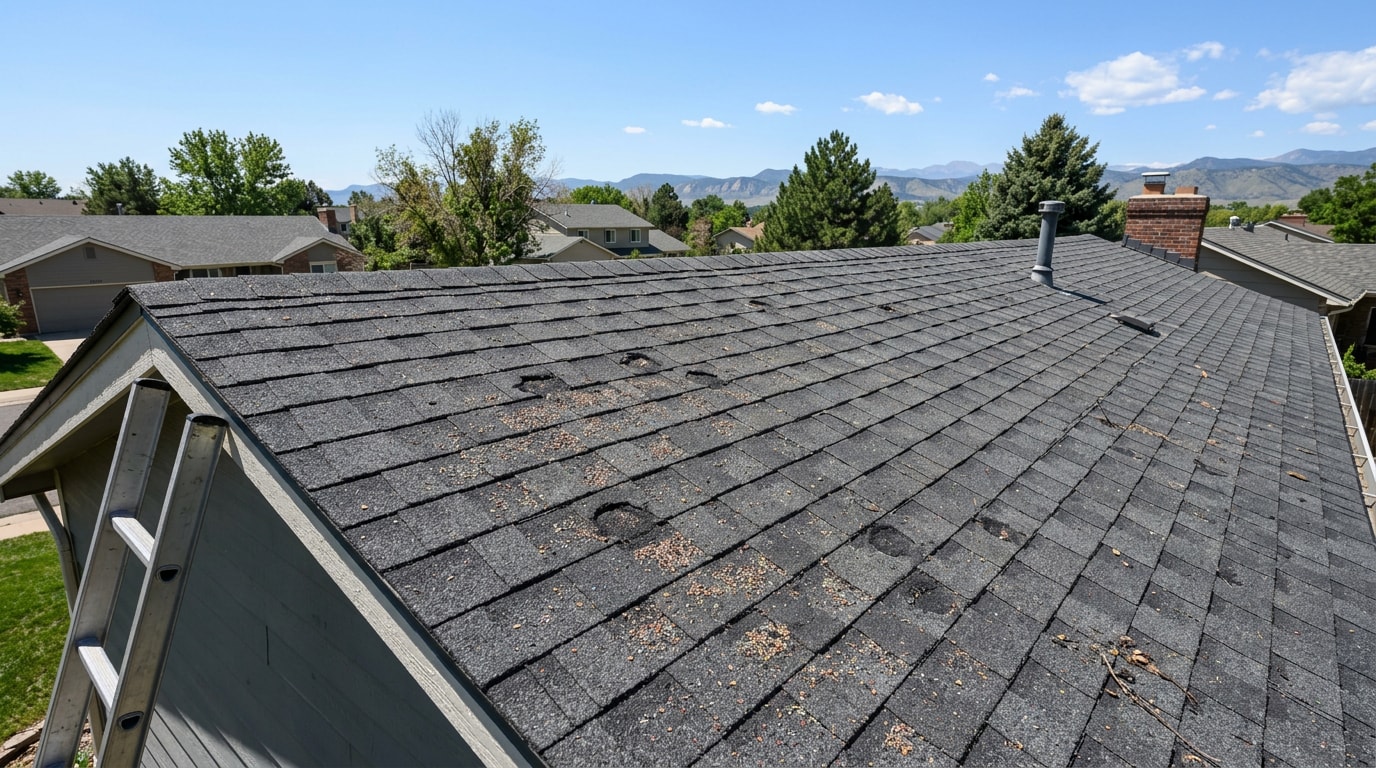
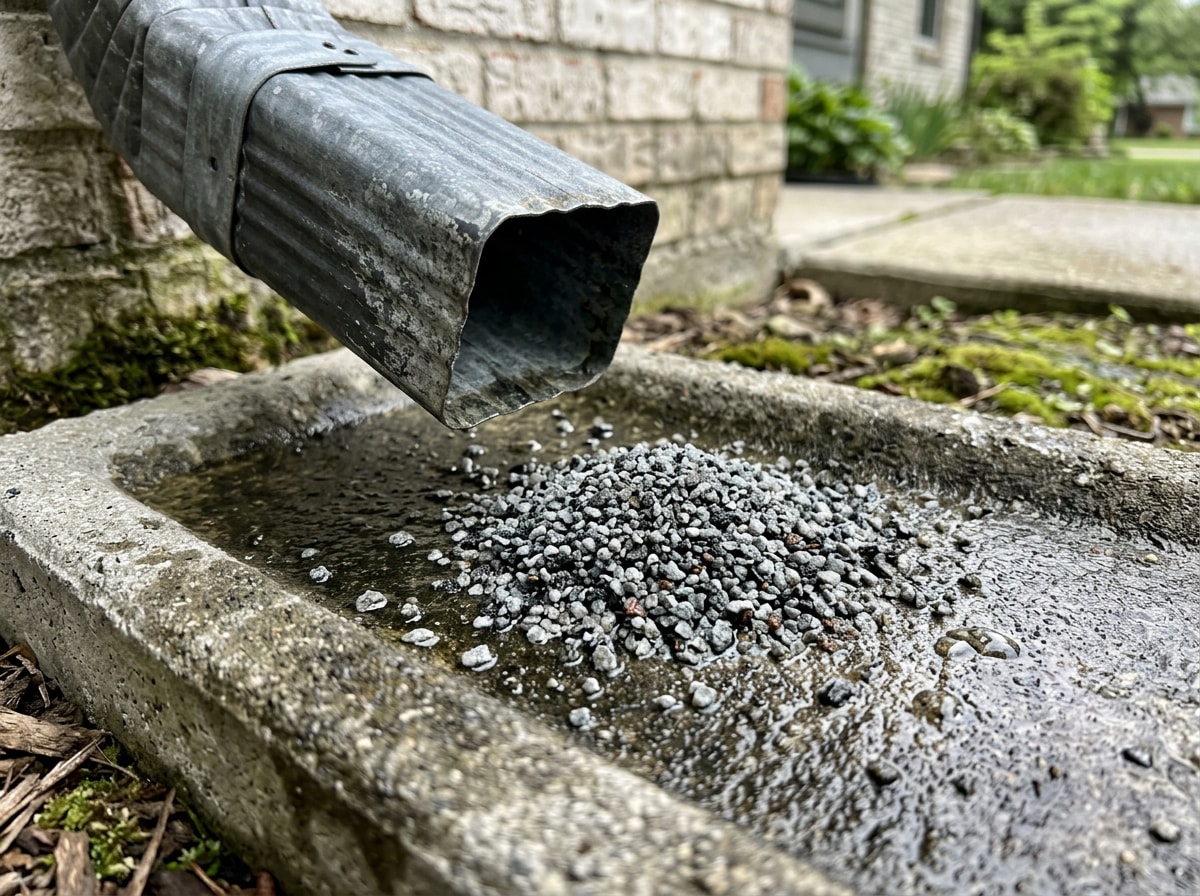
Roofing granules in Arapahoe County, CO gutters are usually the first clue homeowners get that something on the roof has changed. Sometimes it's nothing. Sometimes it's hail damage working its way toward a leak. Here's how to tell the difference before you call a roofer.
Why Arapahoe County Roofs Lose Granules
Arapahoe County sits in Front Range hail territory, where storms build fast over the plains east of Denver and drop ice on neighborhoods from Aurora to Centennial with little warning. Hail is the top driver of granule loss in this area. When a hailstone hits an asphalt shingle, it bruises the mat and knocks loose the mineral coating that protects the asphalt underneath, and those granules wash straight into the gutters and downspouts.
UV exposure and normal aging play a role too. Colorado's intensity of sunlight and wide temperature swings dry out asphalt over the years, loosening the bond that holds granules in place even without a storm involved.
If you want to check your own address, NOAA's National Centers for Environmental Information runs a free Storm Events Database that homeowners and adjusters both use to pull local hail history. The Storm Events Database contains records on various types of severe weather, as collected by NOAA's National Weather Service, with data available from 01/1950 to 05/2026. It won't tell you the condition of your specific roof, but it will tell you whether your block has taken hits worth investigating.
Normal Shedding vs. a Real Problem
Not every granule in the gutter means trouble. New shingles ship with extra loose granules on the surface, and those wash off during the first few rains. GAF's own technical guidance on this exact issue explains that manufacturers intentionally add surplus "rider" granules during production to help the coating set properly, and this loss usually is most severe right after shingles are installed and gradually reduces over time, which is normal and not a manufacturing defect .
The pattern that matters is what happens after that first season.
| Situation | What You'll See | What It Means |
|---|---|---|
| New roof (0 to 6 months) | Light, steady granule buildup after rain | Normal "rider granule" shedding, should taper off |
| Aging roof (10+ years) | Slow, gradual thinning, no bare spots | Typical wear, keep monitoring |
| Post-hailstorm | Sudden spike in granules, dented vents or gutters | Possible impact damage, inspect soon |
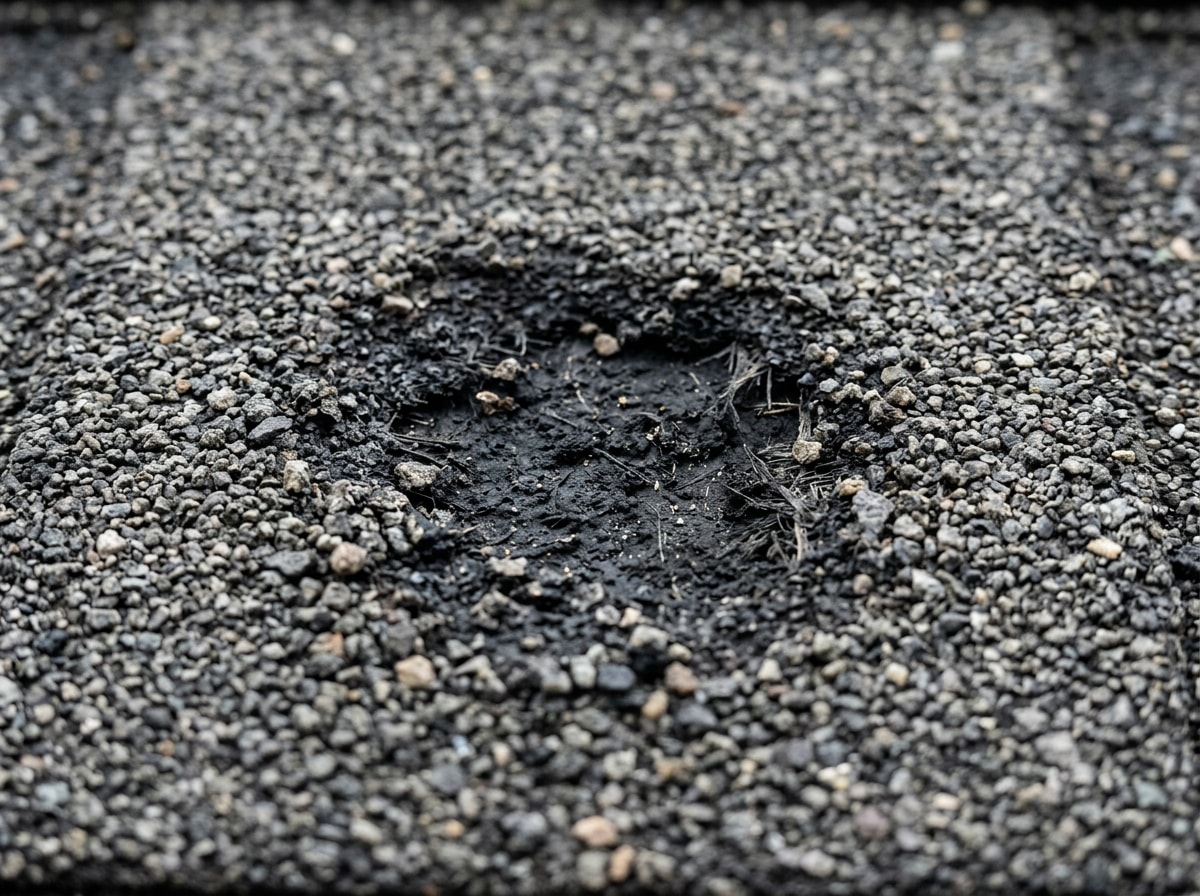
| Any roof age | Bare, dark patches visible from the ground | Advanced granule loss, schedule an inspection |
If granule loss continues well past the break-in period or you start seeing color change on the roof surface, that's outside normal wear and worth a professional look.
5 Signs Your Roof Needs More Than a Gutter Cleaning
Granule buildup rarely shows up alone. Here's what else to check before deciding whether you need a repair or a full roof inspection:
- Granules collecting at the downspout base — especially a noticeable spike after a storm, not just a light dusting.
- Dented gutters, vents, or flashing — soft metal shows hail impact even when shingles look fine from the ground.
- Bare or dark patches on the shingle surface — a sign the protective coating is gone in that spot.
- Cracked, curling, or lifted shingle edges — often paired with granule loss on older roofs.
- Water stains on interior ceilings or in the attic — the latest-stage sign that granule loss has already let moisture in.
One or two of these on their own might not mean much. Three or more together, particularly after a hailstorm, usually means it's time for a roofer to get on the roof instead of guessing from the ground.
Permits, HOAs, and Insurance in Arapahoe County
Most roof replacements tied to storm damage in unincorporated Arapahoe County need a building permit. The Arapahoe Board of County Commissioners adopted the current building codes by Resolution No. 21-394 on April 1, 2022 , which put the county on the 2021 International Residential Code. That matters for homeowners because the code version in effect at the time of your permit affects nailing patterns, ventilation, and underlayment requirements, especially on a full tear-off.
HOA design reviews are a separate hurdle in many Arapahoe County communities, and most boards want to pre-approve shingle color and type before work starts. A local contractor who already knows the permit office and the HOA paperwork saves weeks compared to figuring it out mid-project.
Insurance claims add a third layer. Adjusters look for the same things covered above: granule loss patterns, bruised mats, and dented metal. Documentation matters, which is why a roof inspection with dated photos before you file a claim puts you in a stronger position than a verbal description after the fact.
If you've already found granules and a dented gutter, don't wait for a leak to confirm it. Get a free estimate and have someone look at the roof while the damage is still fresh enough to document clearly.
Repair, Replace, or Just Monitor?
Granule loss by itself doesn't always mean a full roof replacement. A lot depends on how much of the roof is affected and how old the shingles already were going into the storm.
- Isolated granule loss on a roof under 10 years old usually points to a targeted roof repair rather than a full tear-off.
- Widespread granule loss on a roof over 15 to 20 years old is a stronger signal that replacement makes more financial sense than patching.
- Active leaking, sagging, or exposed fiberglass mat needs attention now, not after the next storm. If water is already getting in, our emergency roof repair team can stabilize the roof while the full scope gets worked out.
For a deeper look at how adjusters evaluate hail claims and what documentation actually holds up, our storm damage roofing guide walks through the claims process step by step.
After walking hundreds of Front Range roofs following spring and summer hail cycles, our crews at Crestline Exteriors see the same pattern almost every season: homeowners notice the granules first, then the dented gutter, and by the time they call, the damage has usually been sitting for weeks. A faster inspection after the first sign changes the outcome more often than people expect.
Communities We Serve in Arapahoe County
We work throughout Arapahoe County, including Aurora, Centennial, Littleton, Englewood, Cherry Hills Village, and Greenwood Village. Hail intensity varies block to block in this county, so granule loss in one neighborhood doesn't always match what's happening a few streets over. Our roofing contractor team handles inspections, repairs, and full replacements across all of it, and you can see more of what we do on our homepage.
FAQ
How can I tell if my roof has hail damage?
Check gutters, vents, and metal flashing for dents, and look at the downspout base for a buildup of granules after a storm. These are reliable warning signs, but a full roof inspection is the only way to confirm damage and document it for a claim.
Is it normal to find granules in your gutters?
Yes, in small amounts. A new roof sheds extra manufacturing granules for the first few months, and that's expected. Recurring piles, bare shingle patches, or a sudden spike after a hailstorm are not normal and point to real granule loss.
How do I know if I need a roof replacement instead of a repair?
Granule loss is one factor among several. Leaks, sagging, missing shingles, exposed fiberglass mat, and a roof age over 15 to 20 years all push the decision toward replacement rather than a patch repair.
Does granule loss affect my shingle warranty?
It can, depending on the cause. Manufacturer warranties typically cover granule loss tied to a manufacturing defect but not loss caused by storms, foot traffic, or normal aging. Review your shingle manufacturer's warranty terms or have a contractor pull the documentation for you.
What areas of Arapahoe County do you serve?
We cover the full county, including Aurora, Centennial, Littleton, Englewood, Cherry Hills Village, and Greenwood Village, so homeowners anywhere in Arapahoe County can reach a local roofer for an inspection.