A roofing inspection checklist turns a quick glance from the driveway into a repeatable system that catches curled shingles, cracked flashing, and hidden leaks while they're still cheap to fix. Skip the system and you're betting that the one spot you didn't check isn't the spot that fails first. Below is the same sequence our crews use in the field: exterior, interior, attic, and the warning signs that mean it's time to stop DIY-ing and call a professional.
Visit Crestline Exteriors to see our services and request a free estimate.
How Often to Inspect Your Roof
Most homeowners should walk this checklist twice a year, once in spring and once in fall, plus one extra pass after any major storm. Spring inspections catch freeze-thaw cracking and ice-dam damage from winter. Fall inspections confirm the roof is sealed up tight before snow load and cold temperatures arrive.
Roof age changes that schedule. A roof past the 15-year mark, regardless of material, needs closer and more frequent attention than a roof installed five years ago, since sealants, fasteners, and flashing all degrade with age.
If you're in the Front Range, timing matters even more. Nebraska, Colorado, and Wyoming usually have the most hailstorms in the country, and the area where these three states meet, known as "hail alley," averages seven to nine hail days per year. Homeowners in Denver, Aurora, and the rest of the Front Range should treat a post-storm inspection as mandatory, not optional. Our storm damage roofing guide covers how to document hail bruising for an insurance claim before the filing window closes.
Exterior Roofing Inspection Checklist
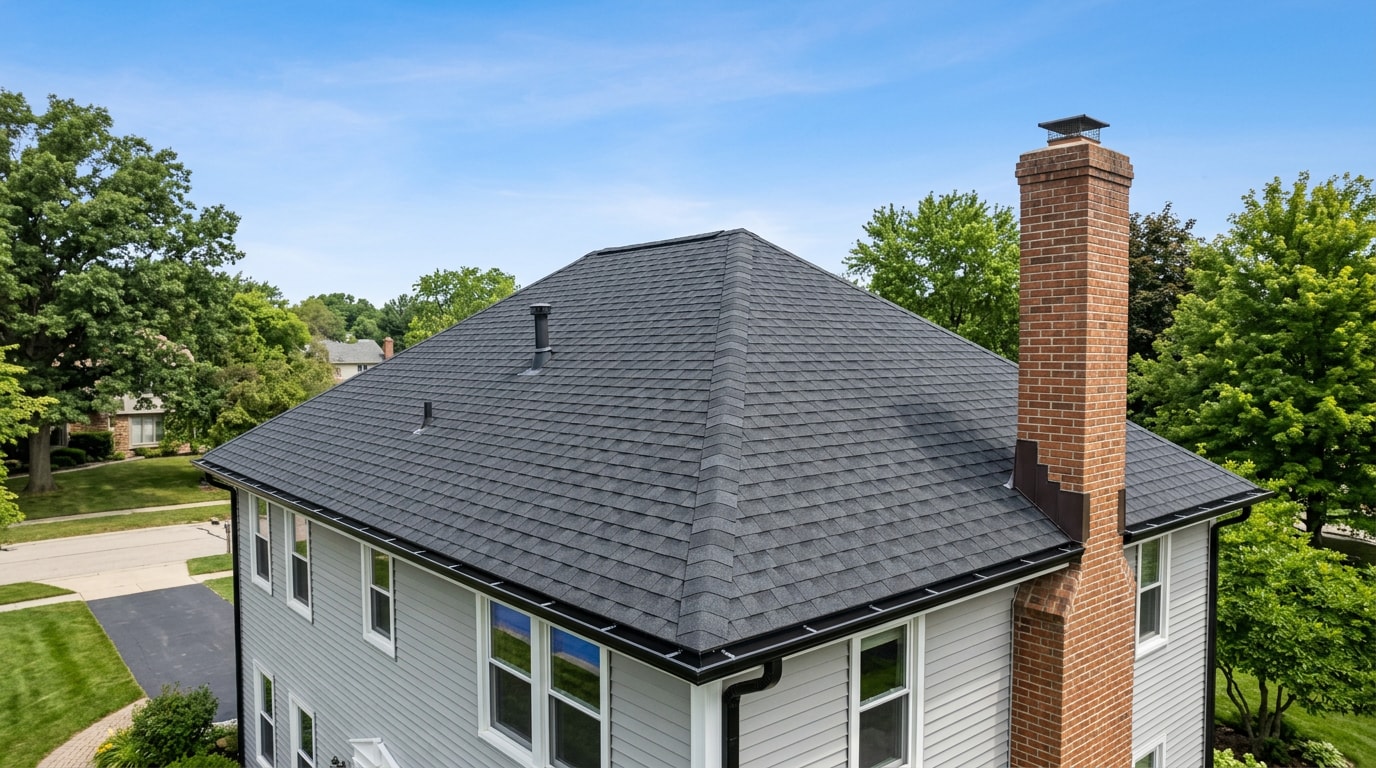
Walk the perimeter of the house and look up at four things: shingles, flashing, gutters, and the roofline itself.
- Shingles – Look for missing, cracked, curling, or blistered shingles, and check for bald spots where granules have worn away.
- Granule loss – Check the bottom of downspouts and the ground below gutters for gritty, sand-like buildup. Heavy granule loss means the shingles are nearing the end of their service life even if they still look fine from the ground.
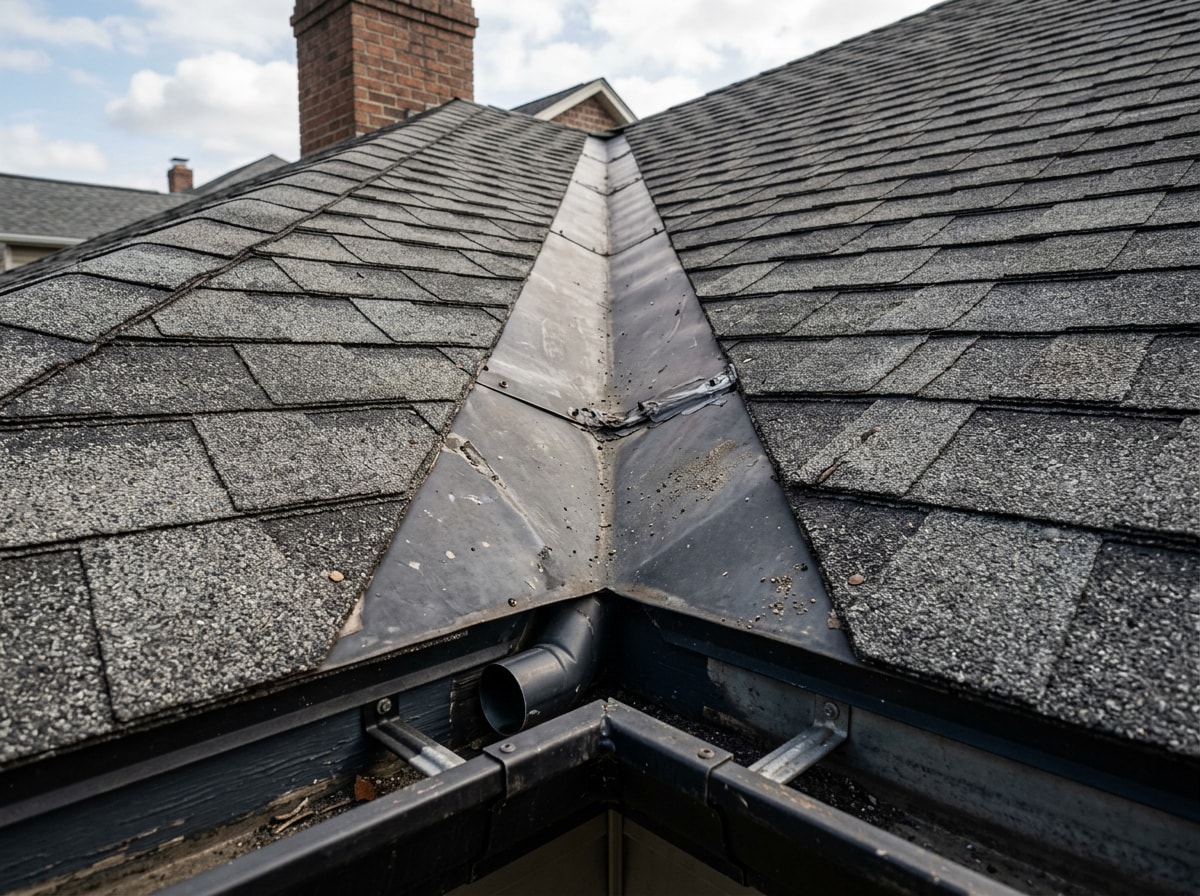
- Flashing – Scan the metal around chimneys, vents, valleys, and skylights for rust, gaps, or missing sealant.
Flashing is required at wall and roof intersections, wherever there's a change in roof slope or direction, and around every roof opening , which is exactly why these joints fail first when sealant breaks down.
- Gutters and downspouts – Check for sagging, pulling away from the fascia, or standing debris that traps moisture against the roof edge.
- Roofline – Step back and look for sagging, waviness, or uneven sections along the ridge, which can point to structural problems underneath.
| Roof Type | Common Warning Signs | Highest-Risk Areas |
|---|---|---|
| Asphalt shingle | Curling, cracking, granule loss in gutters | Valleys, ridge caps |
| Metal | Loose fasteners, rust streaks, seam separation | Panel overlaps, flashing joints |
| Tile | Cracked or slipped tiles, moss buildup | Ridge tiles, hip areas |
| Flat/membrane | Blistering, ponding water, seam lifting | Drains, parapet edges |
Never walk on a roof that's steep, wet, or already showing damage. Binoculars from the ground or a look from an upstairs window are safer ways to check shingles and flashing without the fall risk. If your exterior check turns up cracked flashing or missing shingles, our roof repair page outlines what a targeted fix typically involves.
Interior and Attic Roofing Inspection Checklist
Interior clues often show up before any exterior damage is visible, which is why the attic belongs in every routine checklist. Grab a flashlight and check:
- Ceilings and rafters – Look for water stains, dark streaking, or sagging, which are early signs of a leak that hasn't reached the living space yet.
- Roof deck – Check for daylight coming through the boards, a sign of a hole or badly deteriorated sheathing.
- Insulation – Damp, compressed, or matted insulation usually means water is already getting in somewhere above it.
- Odor and airflow – A musty smell or noticeably warm, stagnant air points to trapped moisture and poor ventilation.
Ventilation problems compound over time. In the summer, natural airflow in a well-vented attic moves super-heated air out of the attic, protecting roof shingles and removing moisture , so a blocked or undersized vent system accelerates deck rot and shortens shingle life even on a roof that's otherwise in good shape.
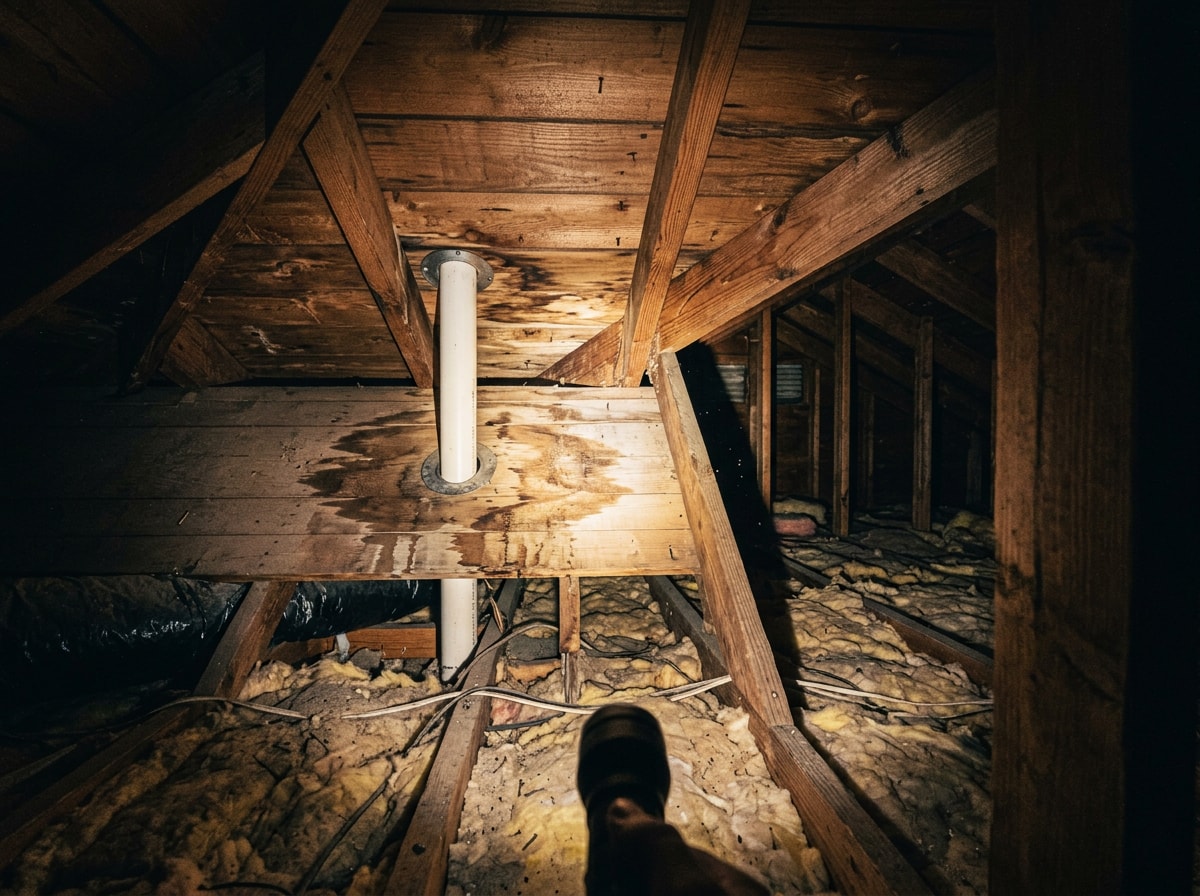
If you spot active staining, our roof inspection service can confirm whether it's an active leak or old damage before you spend money chasing the wrong fix.
Warning Signs That Need Immediate Attention
Some findings shouldn't wait for your next scheduled inspection:
- Active leaks or dripping during rain
- A visibly sagging roof deck or ridge
- Large sections of missing shingles
- Daylight visible through the roof boards
- Structural deformation around chimneys or valleys
These point to problems that worsen fast, sometimes within days of a heavy rain. An active leak left alone for even a few weeks can spread into insulation, drywall, and framing, turning a contained repair into a much larger project. If you notice any of these, treat it as emergency roof repair territory and call the same day rather than waiting for the next scheduled walkthrough.
DIY vs. Professional Roof Inspection: Safety and When to Call a Pro
Homeowners can safely handle most routine monitoring from the ground: binoculars, an upstairs window view, and a flashlight check in the attic cover the bulk of what this checklist asks for. What you shouldn't attempt is walking the roof surface itself, especially on a steep pitch or older decking.
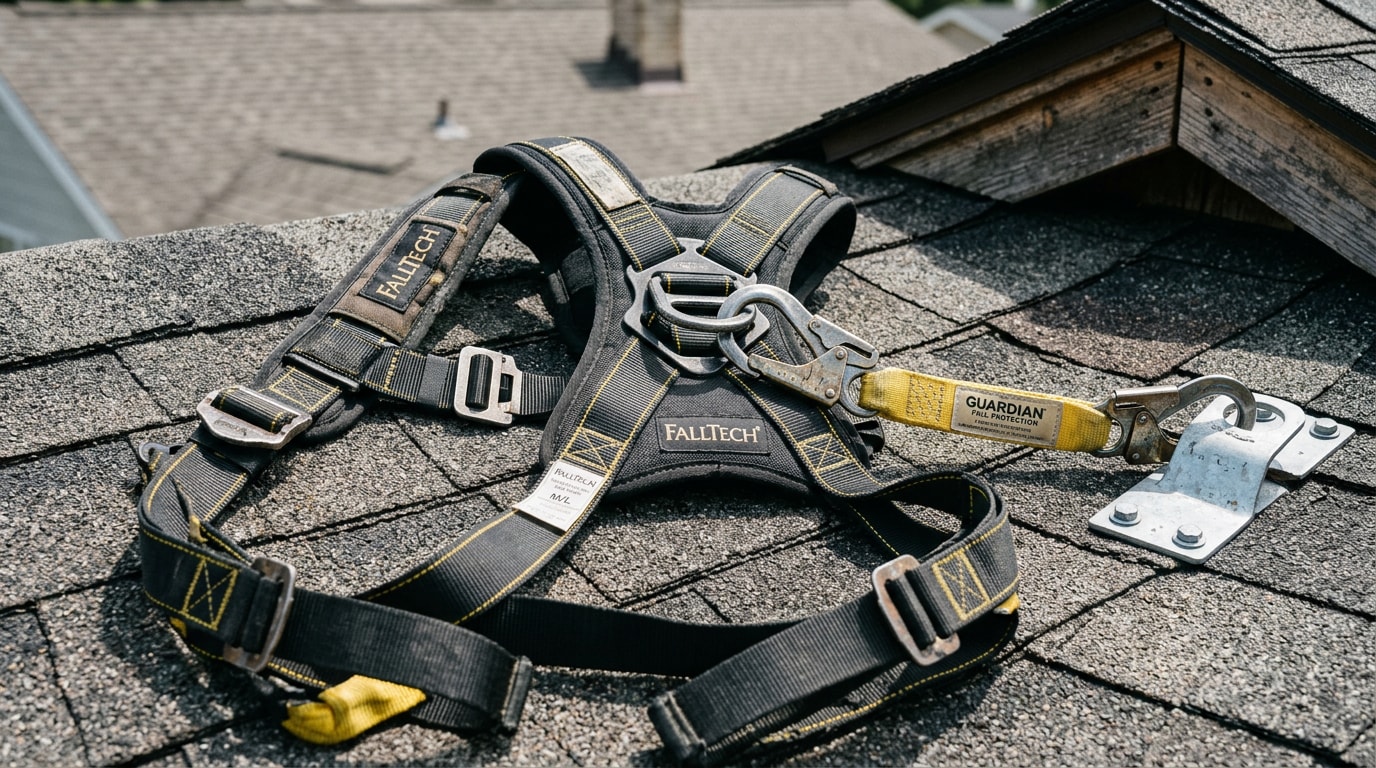
There's a real safety reason behind that line. Federal rules require that any employee on a steep roof with unprotected sides and edges six feet or more above a lower level be protected from falling by guardrail systems, safety net systems, or personal fall arrest systems , and that standard exists because falls from roofs are common and often serious. A trained inspector carries that equipment as a matter of course. A homeowner with a ladder usually doesn't.
Call a professional when you suspect structural issues, need documentation for an insurance claim, or are evaluating a home before purchase. A written inspection report carries more weight with insurers, buyers, and lenders than a homeowner's own notes. If you're unsure which category your situation falls into, request an inspection and describe what you found. It's a faster way to get a straight answer than guessing from the ground.
What a Professional Roof Inspection Costs and Includes
A standard visual roof inspection typically runs a few hundred dollars, though the price shifts with roof size, pitch, and accessibility. Many roofing companies, including Crestline Exteriors, waive the fee when the inspection is paired with a repair or replacement estimate.
A typical visit covers the roof covering, flashing, drainage, ventilation, and structural framing, along with an attic walkthrough for moisture and leak signs. Expect a written report with photos, which becomes useful documentation if you're filing an insurance claim or negotiating a home sale. For a rough sense of what repair or replacement work might cost once problems are found, our roofing cost per square guide breaks down current regional pricing.
Ready to get a professional set of eyes on your roof instead of guessing from the ground? Get a free estimate and we'll walk you through exactly what we find, in plain language, with photos.
FAQ
What does a roof inspector look for?
A roof inspector checks the roof covering, flashing, drainage system, ventilation, and structural framing, along with the attic interior for moisture or leak signs. This mirrors the exterior and interior checklist above, but it's documented in a formal written report rather than a homeowner's mental notes.
How much does a roof inspection cost?
Most standalone inspections run a few hundred dollars, depending on roof size, pitch, and material. Many contractors offer a free inspection when it's paired with an estimate for repair or replacement work, so it's worth asking before you pay out of pocket.
How long does a roof inspection take?
Most inspections take 45 minutes to two hours. Larger homes, steep or complex rooflines, and roofs with existing damage push the process toward the longer end of that range.
Can I inspect my own roof safely?
Yes, as long as you stay on the ground, use binoculars or an upstairs window, and check the attic with a flashlight. Climbing onto the roof itself carries real fall risk and is better left to someone with the right harness and anchor equipment.
How often should I inspect my roof?
Twice a year, once in spring and once in fall, plus an extra check after any hailstorm or high-wind event. Roofs older than 15 years or in hail-prone regions like the Front Range benefit from more frequent monitoring.
Do I need a roof inspection before selling my home?
It's strongly recommended. A written inspection report gives buyers and their lenders confidence in the roof's condition and can prevent surprises during closing that stall or kill a sale.