26 gauge metal roofing is the thickness most contractors reach for on standard residential jobs, but the number on a quote doesn't tell you much by itself. If you've seen "26 gauge" on a spec sheet and wondered what it means for durability, weight, or price, you're not alone. This guide breaks down the thickness, the trade-offs, and how 26 gauge compares to 24 and 29 gauge so you know what you're paying for before an installer shows up.
What Does 26 Gauge Mean on a Metal Roof?
Gauge describes the thickness of the metal sheet in a roofing panel, not a strength or quality grade on its own. The system works backward from what most people expect: steel gauge numbers work counterintuitively, and lower gauge numbers mean thicker, heavier steel .
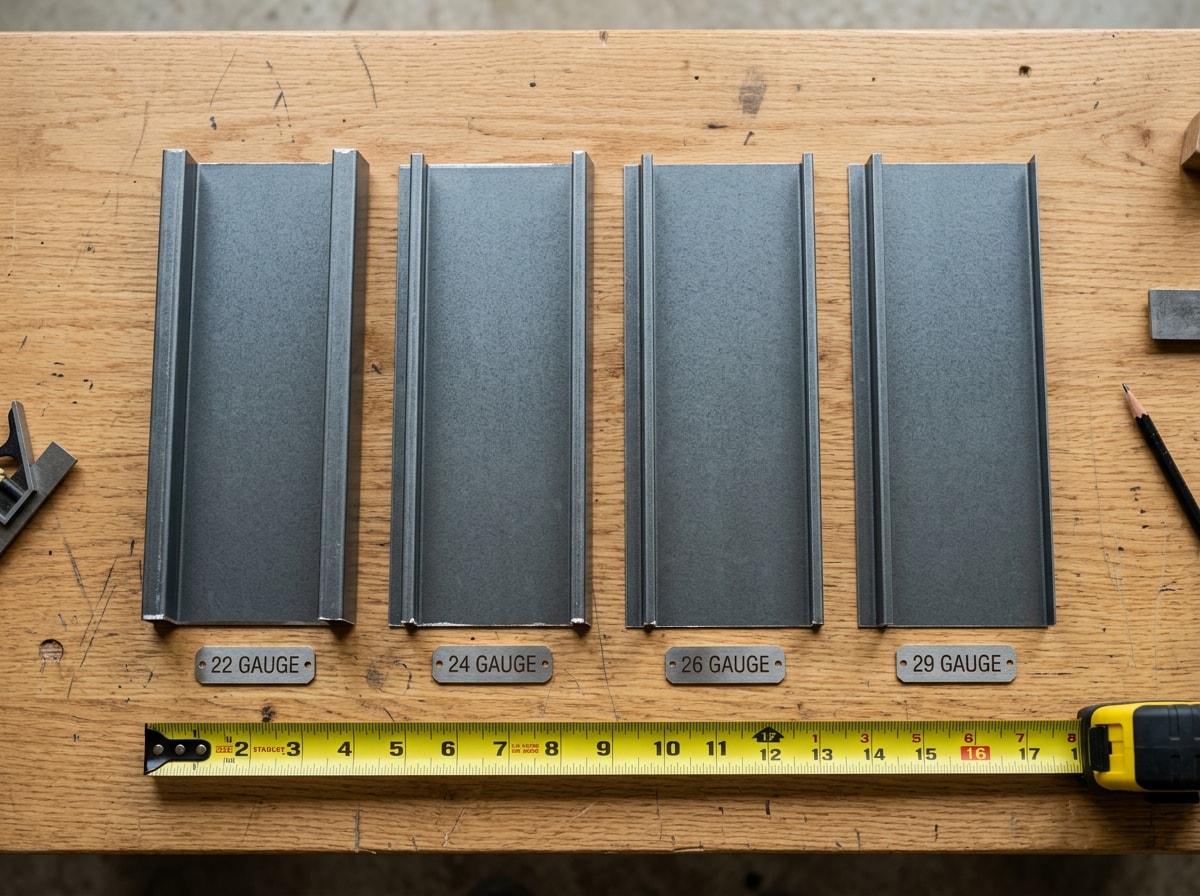
That's why 26 gauge sits in the middle of the residential range. It's thicker than the lightweight 29 gauge panels used on sheds and low-budget projects, but thinner than the 24 or 22 gauge steel reserved for premium standing seam work and commercial buildings. Once you understand that inverse relationship, any gauge chart stops being confusing.
26 Gauge Metal Roofing Thickness in Inches and Millimeters
Manufacturer specs vary slightly, but 24-gauge metal has a minimum of approximately 0.023 inches, and 26-gauge has a minimum of approximately 0.018 inches . Some suppliers list 26 gauge closer to 0.0187 inches (0.475 mm), and a few note a range as wide as 0.0179 inches on the light end to 0.0217 inches on the heavy end , depending on the mill and whether coating thickness is included in the measurement. That's why it's worth confirming the exact number on a specific product's spec sheet instead of treating "26 gauge" as one fixed universal value.
Here's how 26 gauge lines up against the other common roofing gauges:
| Gauge | Thickness (inches) | Thickness (mm) | Typical Use |
|---|---|---|---|
| 22 | ~0.0299 | ~0.76 | Heavy commercial, high-wind zones |
| 24 | ~0.0239 | ~0.61 | Premium residential, standing seam |
| 26 | ~0.0179–0.0187 | ~0.45–0.47 | Standard residential |
| 29 | ~0.0140 | ~0.36 | Budget residential, sheds, outbuildings |
26 Gauge vs. 24 Gauge Metal Roofing
This is the comparison most homeowners actually need to make, since 24-gauge and 26-gauge are the preferred metal roofing thickness for most residential and commercial applications . The difference isn't cosmetic: 24-gauge metal is about 27.8% thicker than 26-gauge , and that extra material shows up in performance, not just price.
24 gauge reduces oil-canning on longer panel runs, handles hail and impact better than 26 gauge, and holds up to heavy snow loads more reliably over decades of service . It's also the default spec for most standing seam systems where a flat, low-wave appearance matters. 26 gauge, by comparison, is a reasonable choice on residential standing seam roofs when budget is the primary constraint, though you're giving up some of the long-term performance advantages that make standing seam worth the investment .
The cost gap is real but not enormous. Most metal roofs use 26 gauge or 24 gauge steel, and the heavier 24 gauge steel typically costs 25% to 40% more than 26 gauge . For a lot of homeowners, that's the entire decision in one sentence: pay more upfront for 24 gauge's rigidity and hail resistance, or save on materials with 26 gauge and accept a slightly higher chance of dents and oil canning.
26 Gauge vs. 29 Gauge Metal Roofing
29 gauge is the thinnest common option, and it shows in both price and performance. When it comes to harsh weather elements like snow, high winds, or hail, a thinner material can become a problem, and 29-gauge is not recommended in a climate with regular snowfall because the weight of the snow could be too much for the roof to handle .
26 gauge is the practical step up. A 26-gauge roof is thicker and heavier than 29-gauge, which gives it a better chance of staying intact in a heavy wind storm, and 26-gauge will outperform 29-gauge material overall . For most primary residences, especially anywhere that sees periodic severe weather, 26 gauge is the more durable long-term pick, while 29 gauge fits better on sheds, carports, or strictly budget-driven projects.
Is 26 Gauge Metal Roofing Tough Enough for Colorado Hail?
This is where most national buying guides stop short, and it's worth calling out directly if you're roofing a home along the Front Range. The Front Range falls in the heart of "Hail Alley," which sees the highest frequency of large hail in North America, and the area averages seven to nine days of hail every year according to the National Weather Service . That's not a rare-event risk, it's a design consideration.
Denver has recorded more than 4,000 hail events within a 15-mile radius since 2015, based on NOAA NEXRAD radar data . On our own crews' repair calls across Littleton, Denver, and the surrounding suburbs, we see the same pattern every hail season: 29 gauge panels and older 26 gauge installations with worn coatings dent first, while properly coated 26 gauge and 24 gauge panels installed with the correct fastener spacing come through with only cosmetic marks. Panel thickness matters here, but so does the impact rating the manufacturer tested it to. Underwriters Laboratories developed UL 2218, the Standard for Impact Resistance of Prepared Roof Covering Materials, which results in four ratings, Class 1 through 4, based on replicating hailstone impact energies with steel balls dropped from various heights . If you're roofing anywhere in Jefferson County, Douglas County, or Arapahoe County, ask your installer for the specific UL 2218 class the panel carries, not just the gauge number.
Benefits and Drawbacks of 26 Gauge Metal Roofing
26 gauge tends to be the sweet spot for homeowners who want solid durability without paying premium-gauge prices.
Benefits:
- Handles moderate hail and strong wind reasonably well when properly coated and installed
- Lighter than 24 gauge, which simplifies handling and installation
- Works across a wide range of climates and panel profiles
- Costs meaningfully less than 24 gauge on a per-square basis
Drawbacks:
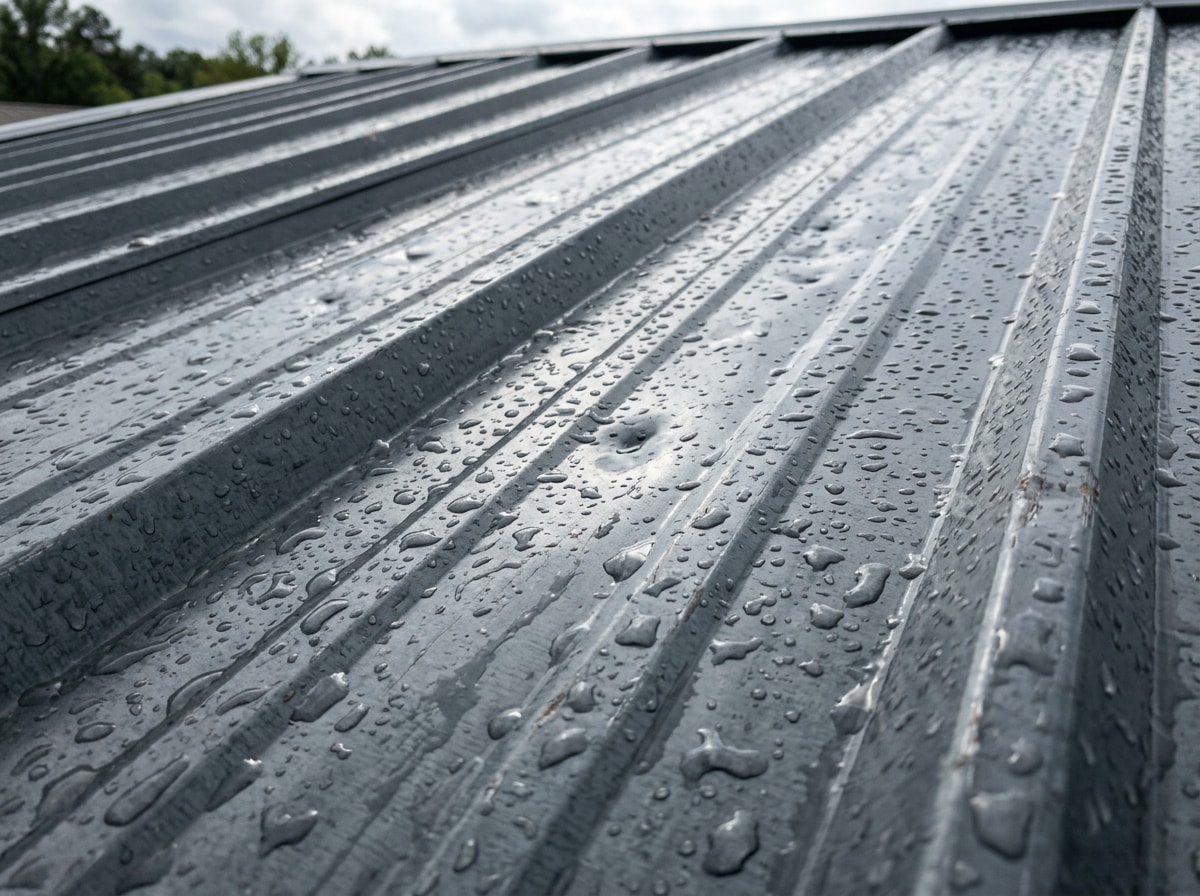
- More prone to denting under severe hail impact than 24 or 22 gauge
- More susceptible to oil canning,
the perceived waviness that is an inherent characteristic of light-gauge, cold-rolled flat metal products
- Not the top choice for wide-open flat panel runs where a mirror-flat finish is the goal
Neither drawback usually affects structural performance, but both are worth knowing before you sign a contract.
Cost of 26 Gauge Metal Roofing
Installed pricing for 26 gauge falls in a moderate mid-range compared to thinner and thicker alternatives. Steel metal panels generally range from $2.00 to $5.00 per square foot in material cost alone, before labor, underlayment, and trim. Exact numbers shift based on panel profile, paint system, and regional labor rates, so national averages can differ meaningfully from what's actually available in your area.
As covered above, thicker gauges cost more upfront but can reduce long-term maintenance and premature replacement expenses. For many homeowners, 26 gauge represents a reasonable balance between initial cost and durability. If you want a full cost breakdown by roofing material and panel type, our roofing cost per square guide walks through current regional pricing. For a project-specific number, a free estimate from a local installer will always beat a national average.
How Long Does 26 Gauge Metal Roofing Last?
With proper installation, 26 gauge metal roofing is often cited as lasting 40 to 60 years, though some sources use a more conservative 30 to 50 year range. The gap generally comes down to coating quality, proximity to coastal or industrial pollution, and how consistently the roof gets maintained over its lifespan. A poorly maintained 26 gauge roof in a harsh climate can fall short of even the conservative estimate, while a well-coated panel with routine upkeep can outlast it.
Coatings and Corrosion Resistance for 26 Gauge Panels
Steel is the most common material for 26 gauge roofing, and its wind and hail performance depends heavily on proper coating and installation. Thickness alone doesn't guarantee durability. A well-coated 26 gauge panel can outperform a poorly coated thicker sheet when it comes to corrosion resistance and lifespan.
Galvalume and galvanized coatings are the two most common corrosion-resistant treatments, each paired with a paint finish for additional protection. If you want a deeper look at how Galvalume specifically performs and how to compare coating warranties, our Galvalume metal roofing guide covers that in detail. It's also worth checking whether a panel meets the technical requirements outlined by the Metal Construction Association, the industry group that develops much of the education and testing guidance manufacturers use for base metal and coating quality.
Factors to Consider When Choosing 26 Gauge Metal Roofing
Choosing the right gauge comes down to a handful of practical factors:
- Local climate severity — frequent hail or high winds may push you toward 24 gauge; milder regions make 26 gauge an easy fit
- Budget — gauge thickness directly affects material cost, often by 25–40% between 24 and 26 gauge
- Roof design complexity — rooflines with lots of cuts and seams may favor a specific gauge for workability
- Appearance preference — homeowners who want a perfectly flat, minimal-wave finish sometimes opt for thicker panels
If you're weighing these trade-offs for your own project, a licensed roofing contractor can walk your roof and tell you what's realistic for your climate and budget rather than guessing from a chart.
Maintenance Tips for 26 Gauge Metal Roofing
Keeping a 26 gauge roof performing well doesn't require much, but a few habits go a long way:
- Inspect the roof after severe weather events for dents, loose fasteners, or coating damage
- Clear debris from valleys and gutters regularly to prevent moisture buildup
- Touch up scratches or cut edges with matching paint before rust has a chance to start
- Schedule a periodic professional roof inspection to catch small issues before they become costly repairs
If your existing roof is already past its serviceable life or was damaged in a recent storm, it may make more sense to plan a roof replacement with a properly rated 26 or 24 gauge system rather than patch around an aging one. Crestline Exteriors handles both new roof installation and replacement work across Littleton, Denver, Aurora, and Highlands Ranch, and we can walk you through which gauge makes sense for your specific roofline before you commit to a bid.
FAQ
Is 26 Gauge Thick Enough for Hail-Prone Areas?
26 gauge can perform adequately in hail-prone areas, particularly with a high-quality coating, a UL 2218-rated panel, and a robust profile. In genuinely severe hail corridors like the Colorado Front Range, some installers recommend stepping up to 24 gauge for the added dent resistance.
Is 24 Gauge or 26 Gauge Better for a Metal Roof?
24 gauge is stronger, more dent-resistant, and holds a flatter appearance, but it costs 25–40% more than 26 gauge. 26 gauge is the better value for mild climates and budget-conscious projects; 24 gauge is worth the extra cost in harsher weather or for standing seam systems.
How Much Does 26 Gauge Metal Roofing Cost Per Square Foot?
Material cost typically runs $2 to $5 per square foot for steel panels, before labor, underlayment, and trim. Installed pricing depends heavily on panel profile, coating, and local labor rates.
Can I Mix Gauges on a Roof?
Yes. Some projects use different gauges across different roof sections to balance weight, structural span, and overall aesthetics.
Should I Choose Steel or Aluminum for 26 Gauge Roofing?
Steel is more common for standard residential 26 gauge roofing due to its cost and strength. Aluminum offers better corrosion resistance and lighter weight but typically costs more per square foot.
Can 26 Gauge Metal Roofing Be Repaired If Scratched or Dented?
Minor scratches and cut edges can usually be touched up with matching paint. More serious coating failures or dents may require professional repair or panel replacement, which is a good reason to have a contractor inspect storm damage before it spreads.
Ready to find out which gauge fits your roof and your budget? Get a free estimate from Crestline Exteriors, or visit our homepage to see the full range of roofing, siding, and window services we offer across the Denver metro.